
Are you looking to increase your hotel’s occupancy rate while also maximizing your profits?
If that’s the case, you’ll need to enable room reservations on a variety of distribution channels—from your own website to various OTAs and metasearch engines—to reach as many potential guests as possible.
But distribution channel management is no easy feat and requires some strategizing.
That’s why today, we’ll uncover the process for building the best hotel distribution strategy that is bound to help you keep your rooms full and your profits high.
Understand Your Target Customers
What distribution channels does your hotel need to be present on to maximize your occupancy?
You might be tempted to say, “All of them” because that sounds like the safest way to capture as many prospective guests as possible.
But the truth is, this approach is neither profitable nor sustainable.
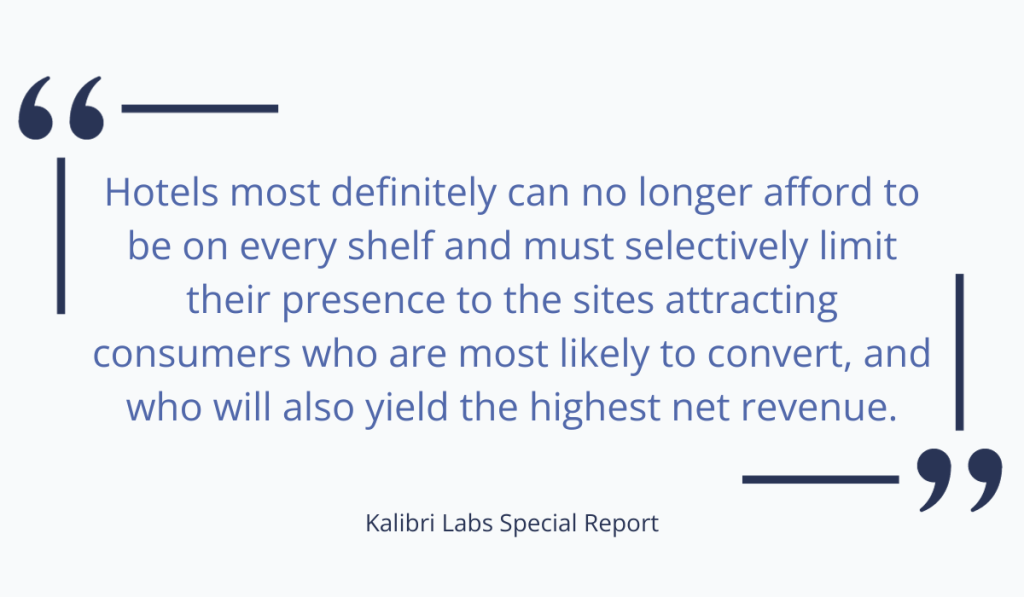
Illustration: WebBookingPro / Quote: Kalibri Labs
Yes, there are dozens upon dozens of distribution platforms you can list your rooms on, but the real question is: are your target customers present on absolutely all of them?
The answer is: most likely, no.
According to research, travelers generally stick to a few well-known booking platforms.
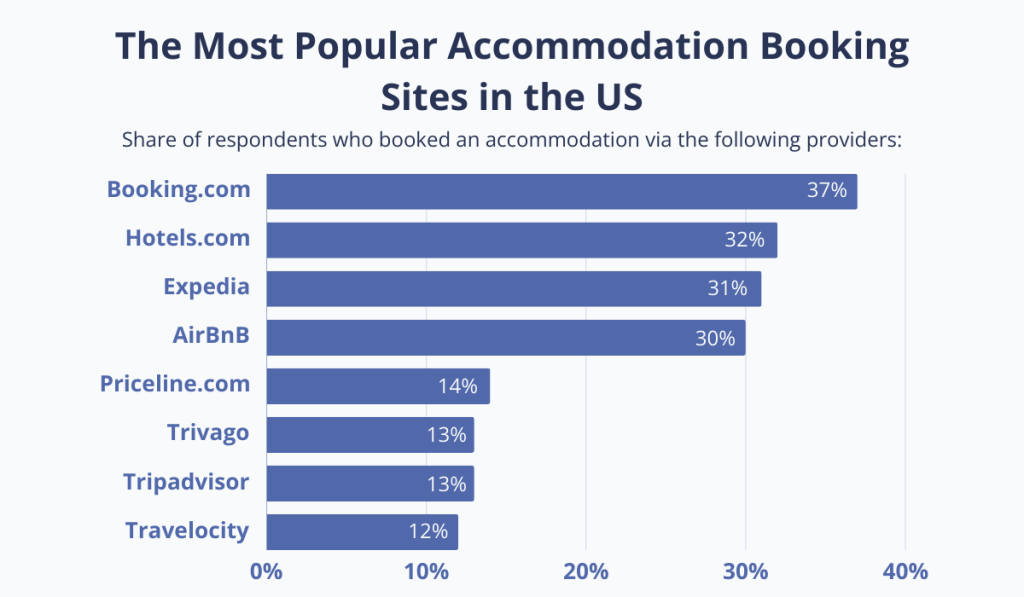
Illustration: WebBookingPro / Data: Statista
This brings us back to the original question: What distribution channels should your hotel be present on?
Well, that depends on what distribution channel your ideal customers—those that will generate the most profit—prefer when booking a hotel room.
- Are you trying to attract a younger or an older crowd?
- Domestic or international travelers?
- Is your hotel ideal for families with small children?
- Or does it attract mostly business travelers?
Whatever the case may be, make sure to take some time and analyze the booking habits and preferences of your target market.
Let’s say that Gen Z-ers are your best guests, and you’re looking to attract more of them.
First, take a look at statistics and research about their travel and hotel booking habits.
For instance, according to a study on Gen Z travelers conducted by the European Travel Commission, 43% of them rely on OTAs when booking their accommodation, whereas 26% prefer to book through direct channels.
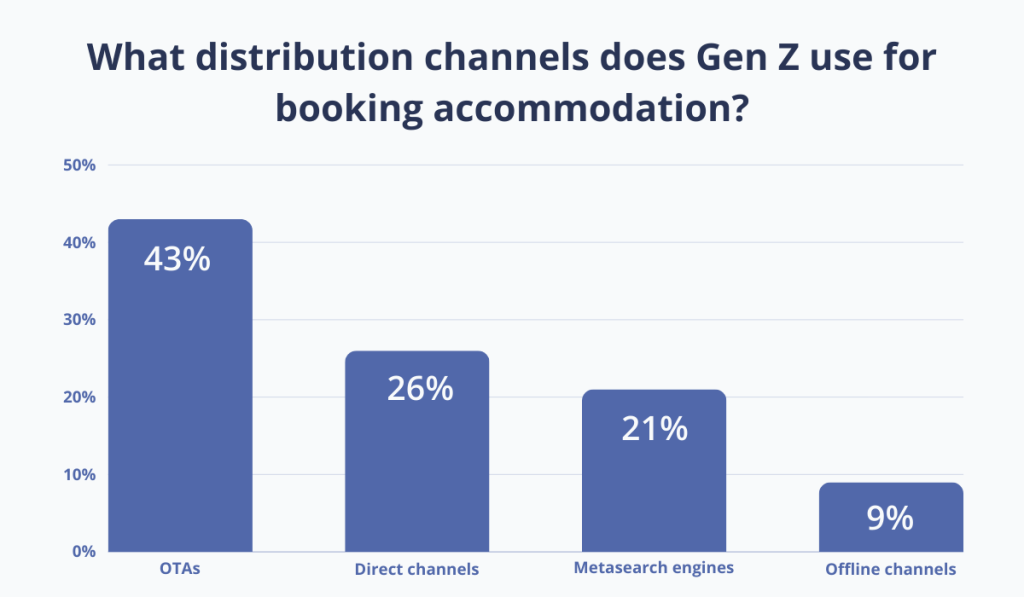
Illustration: WebBookingPro / Data: European Travel Commission
Next, you can make use of the technology in your hotel to get additional insights that are specific to your hotel.
You can take a look at the data stored in your PMS to uncover which distribution channel brings in the majority of Gen Z reservations.
Does that data align with the findings of third-party studies you consulted?
Lastly, you can get more information on your ideal guests’ booking preferences directly from them.
Take a look at your reviews and social media comments.
- Do your guests wish they could book a room with you on a platform you’re not present on?
- Are they complaining about your direct booking process and asking you to fix it?
When put together, all of this data can help you adapt your distribution strategy to reach the right audience through the most profitable channels.
So take some time to look into the booking needs and preferences of your target customers, as it is bound to pay off.
Encourage Direct Bookings
Once you have a thorough understanding of what your guests want, it’s time to discuss what your hotel needs for your distribution strategy to be profitable.
While OTAs are still a very popular booking channel among travelers and can be an important source of reservations for your hotel, the truth is that they’re not the most profitable choice.
This is why more and more hotels are focusing on developing a direct booking strategy.
Tim Peter, an online marketing and e-commerce expert in the hospitality industry, explains:
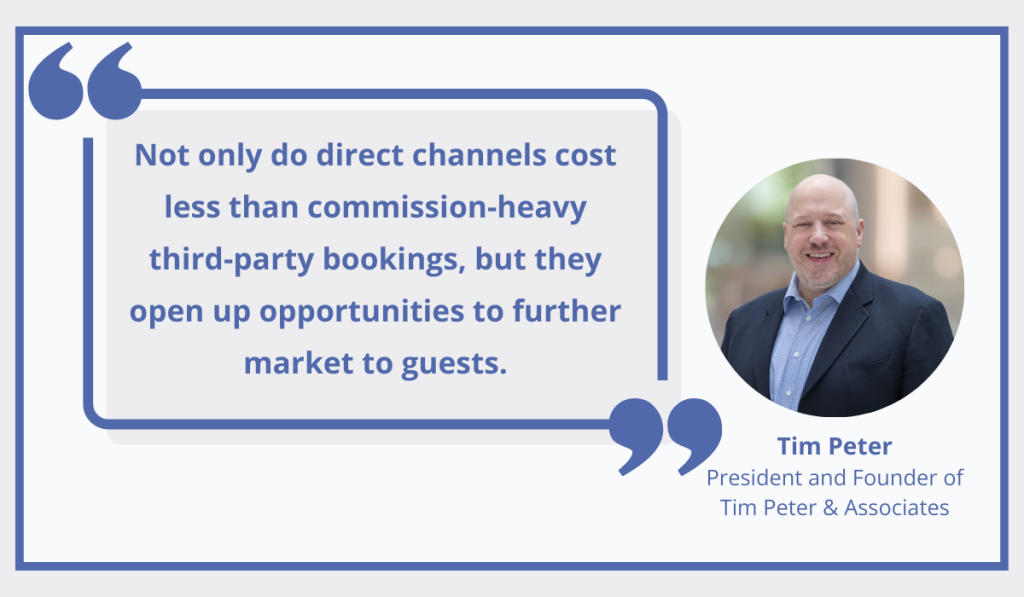
Illustration: WebBookingPro / Quote: Today’s Hotelier
If you develop a solid direct reservations strategy, your website can become your strongest booking channel and help you maximize your profits.
To make that happen, you first need to ensure that your website is user-friendly and visually appealing, and that the booking process itself is intuitive.
We went in-depth on how you can optimize your hotel website in a dedicated article, so you can use it to make sure that your website checks all the boxes—from a user-friendly design to strategically placed CTA buttons.
Once you’ve made your website easy to navigate, the last thing you want is for your direct booking page to stick out like a sore thumb.
That is why you should consider investing in a booking engine that is fully customizable and integrates subtly into your website, like our own WebBookingPro.
WebBookingPro is a cloud-based system that you can integrate into your hotel website within minutes using simple JavaScript code, or our plugin, in case you’re using WordPress.
On top of that, it allows you to customize your direct booking page, making sure that your brand identity is consistent across your entire website.
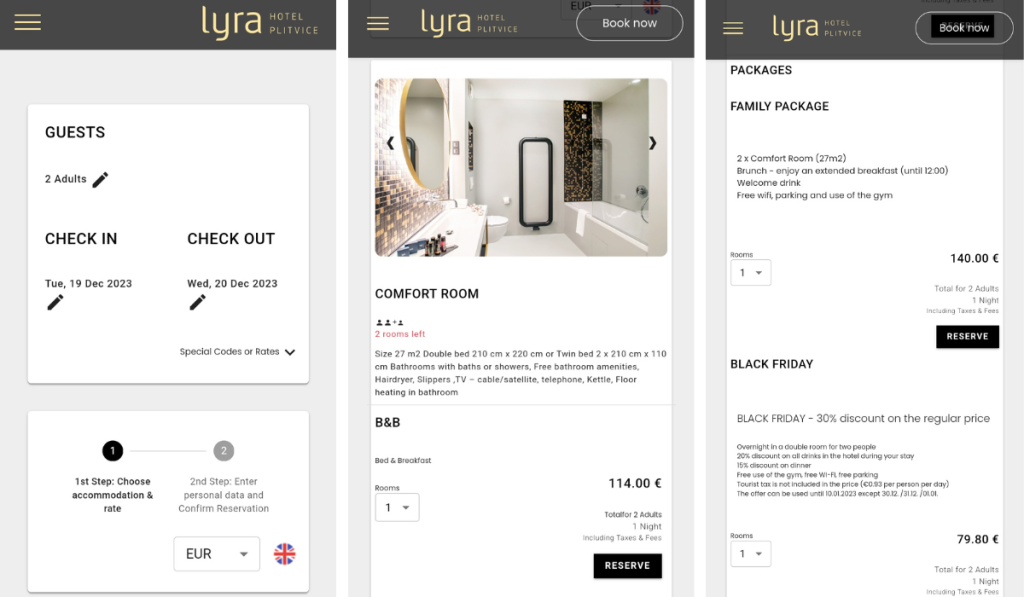
This is what a direct booking page powered by WebBookingPro can look like in practice, on a mobile device:
Source: Lyra Hotel Plitvice
As you can see from the example above, our booking engine is responsive and compatible with various devices.
Given that many travelers prefer booking their accommodation using their smartphones, this is fundamental.
All of this—plus the fact that the entire booking process takes place on your hotel’s website without any redirections—contributes to a seamless direct booking experience.
Now, all there’s left to do is incentivize prospective guests to book a room directly through your website.
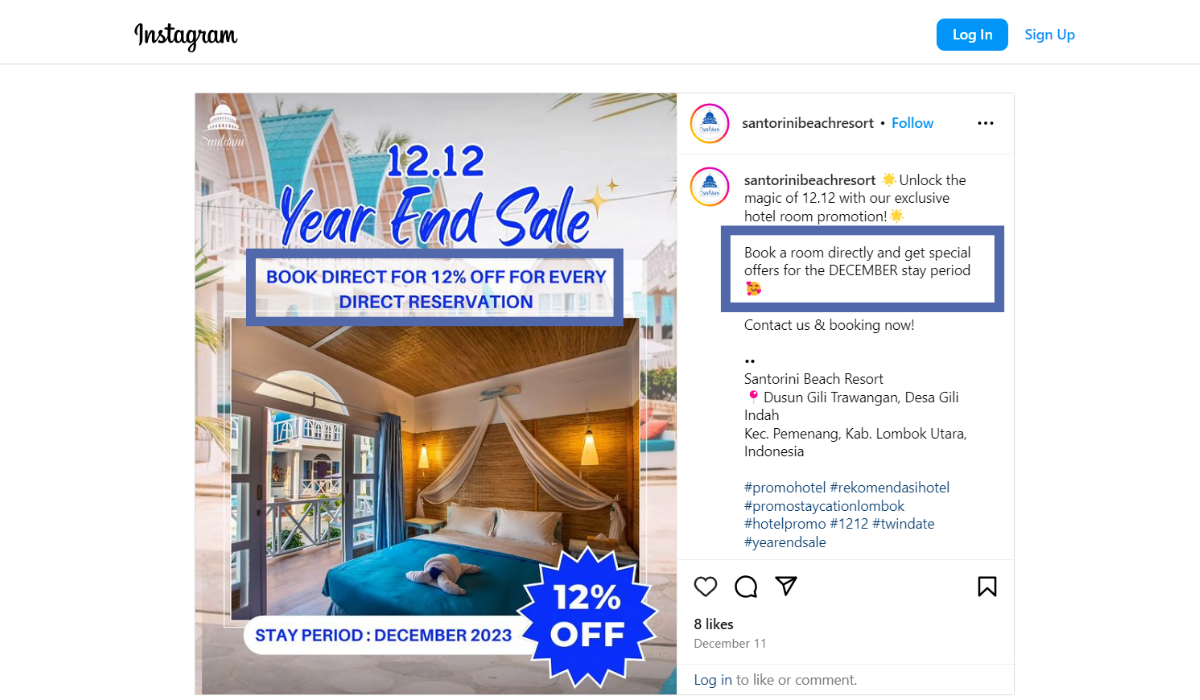
Take a look at how the Santorini Beach Resort in Indonesia does it through social media:
Source: Santorini Beach Resort on Instagram
If you plan to take a page out of their book and offer a discount to guests who book directly, though, make sure the discount isn’t too high.
Namely, if the discount is equal to or greater than the amount you’d pay in OTA commission fees, you’ll end up back at square one.
The bottom line is: If you provide a seamless direct booking experience and incentivize your prospective guests to go for it, you have the power to significantly increase your profit.
Optimize Your Listings
No matter which distribution channels you decide to list your hotel rooms on, there is one rule that applies to them all.
You need to make sure that your listings provide all the information necessary for your prospective guests to choose to book with you instead of a competitor.
The benefits that optimized listings carry are twofold:
Firstly, they increase the odds of your hotel appearing in relevant search results, thus exposing it to a much broader audience.
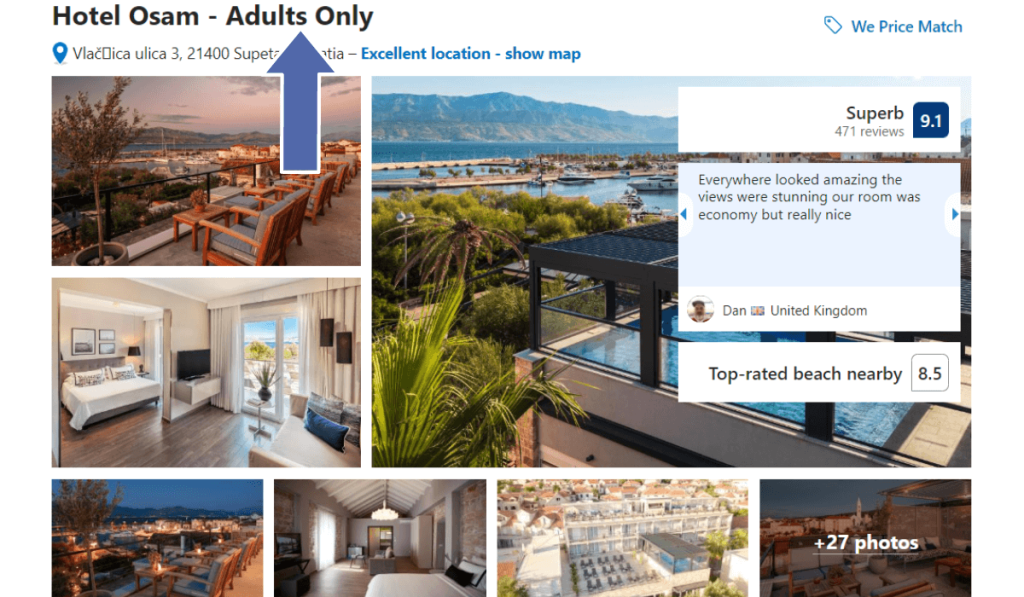
Let’s say one of the main selling points of your hotel is the fact that it is an adults-only hotel.
This is the case for Hotel Osam in Supetar on the Croatian island of Brač.
Source: Booking.com
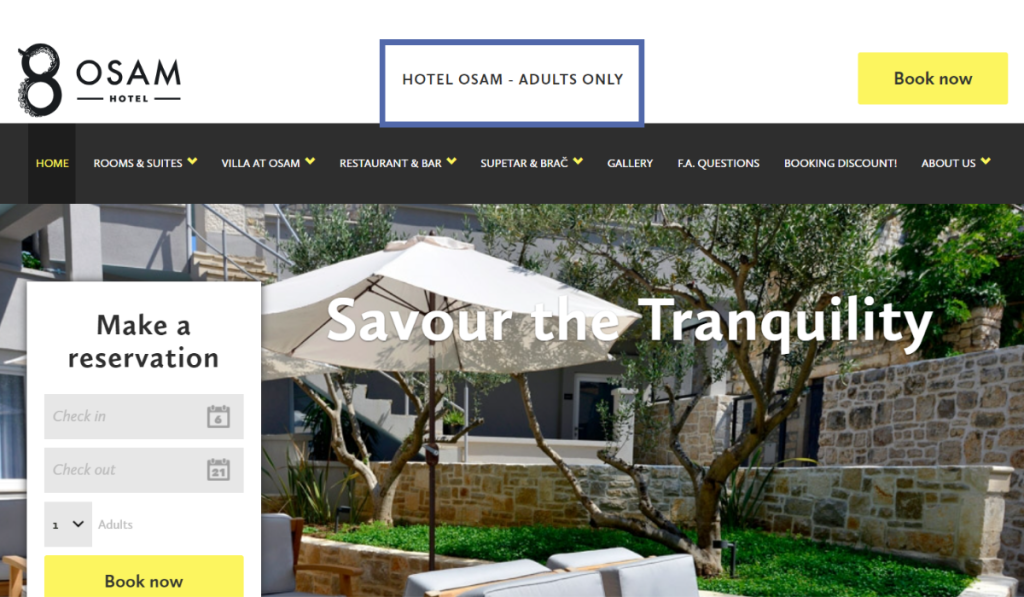
Hotel Osam made it a point to include this important information in the title of their Booking.com listing, as well as on the homepage of their website.
Source: Hotel Osam
Now, whenever travelers looking for an adults-only hotel in Supetar search the term “adults only hotel Supetar”, this hotel will pop right up, easily drawing in their target audience.
Secondly, a great listing can incentivize travelers to book with you because of how informative and appealing it is.
So, let’s go over some key details you should include.
When users first open your listing, they should immediately be able to see where your hotel is located and what types of rooms are available during the desired dates.
They’ll also want to know what the room rate is, as well as whether there are any additional fees or taxes they should consider.
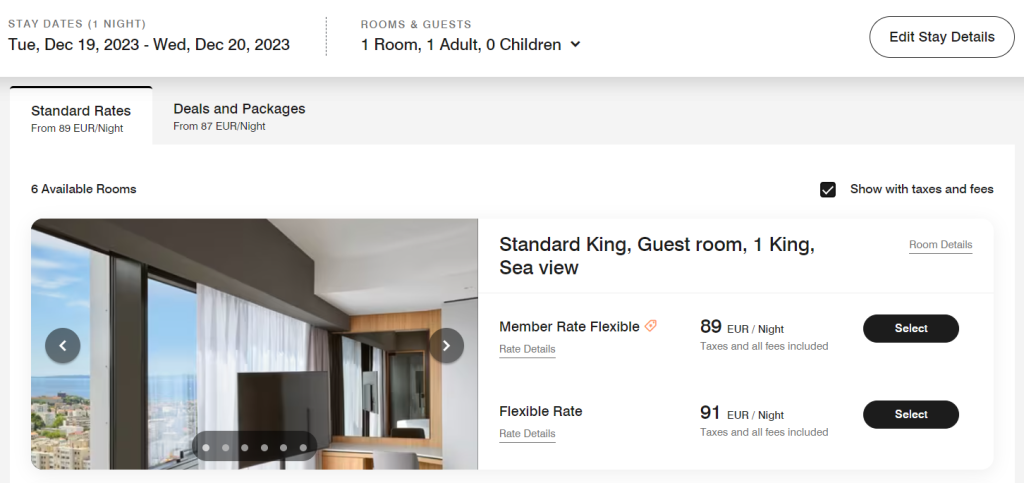
AC Hotel by Marriott in Split, Croatia, checks all the boxes.
As you can see below, they list some basic information about the room, its price per night, as well as clearly state that all taxes and fees are included.
Source: AC Hotel by Marriott
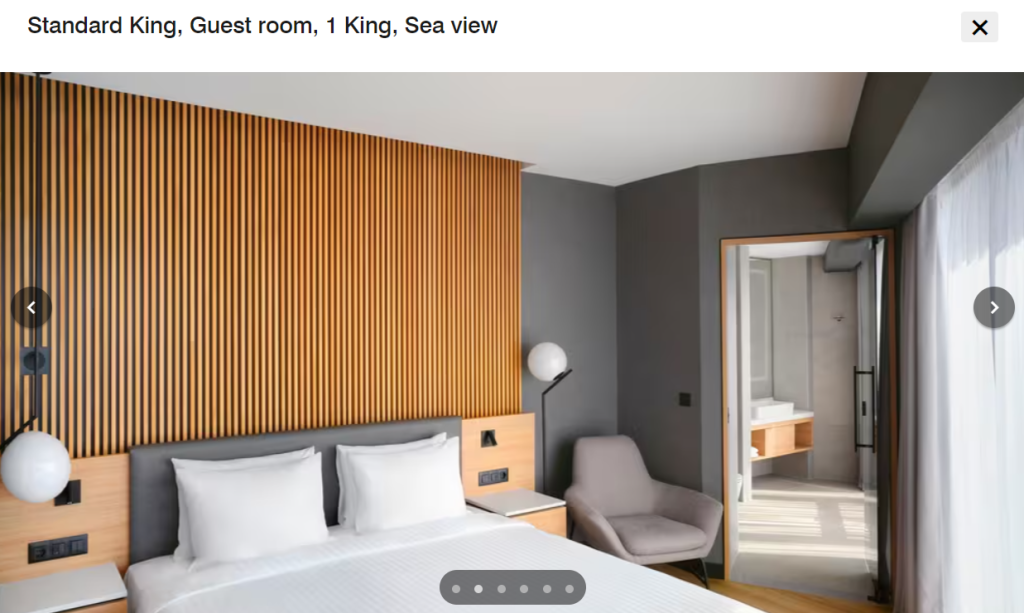
Another crucial element to pay attention to is the visuals.
You want your listing to include plenty of high-quality, aesthetically pleasing photos that show your prospective guests exactly what they can expect, should they book that room.
Source: AC Hotel by Marriott
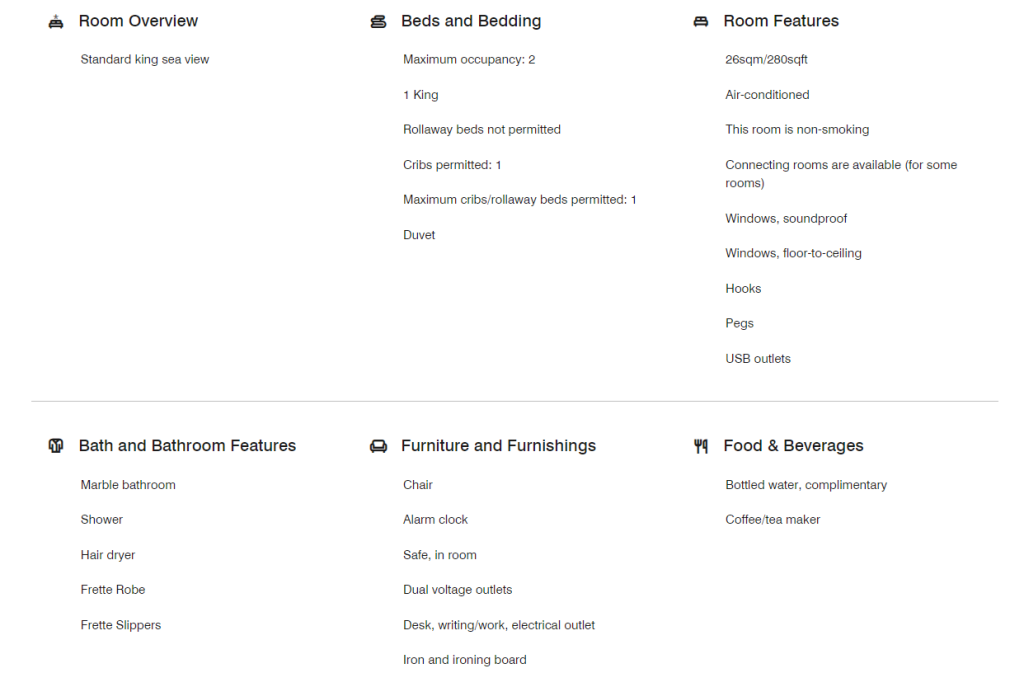
Lastly, don’t forget to provide a detailed description of the rooms, amenities, and any other services your hotel offers, just like this:
Source: AC Hotel by Marriott
AC Hotel in Split provides a clear overview of room amenities by dividing them into categories, making it easier for potential guests to check whether the hotel offers everything they need.
In short, a good listing—whether on your own website or on a third-party one—can do wonders for your hotel, so don’t forget to optimize it.
Implement a Dynamic Pricing Strategy
Even the most thorough listings with amazing photos posted on your most profitable distribution channels won’t bring you guests if your prices aren’t right, though.
And when we say “right”, we mean competitive.
For your prices to be competitive, you’re going to need to adjust them across all distribution channels based on a variety of factors—from seasonality to demand patterns and competitor rates.
This strategy is known as dynamic pricing.
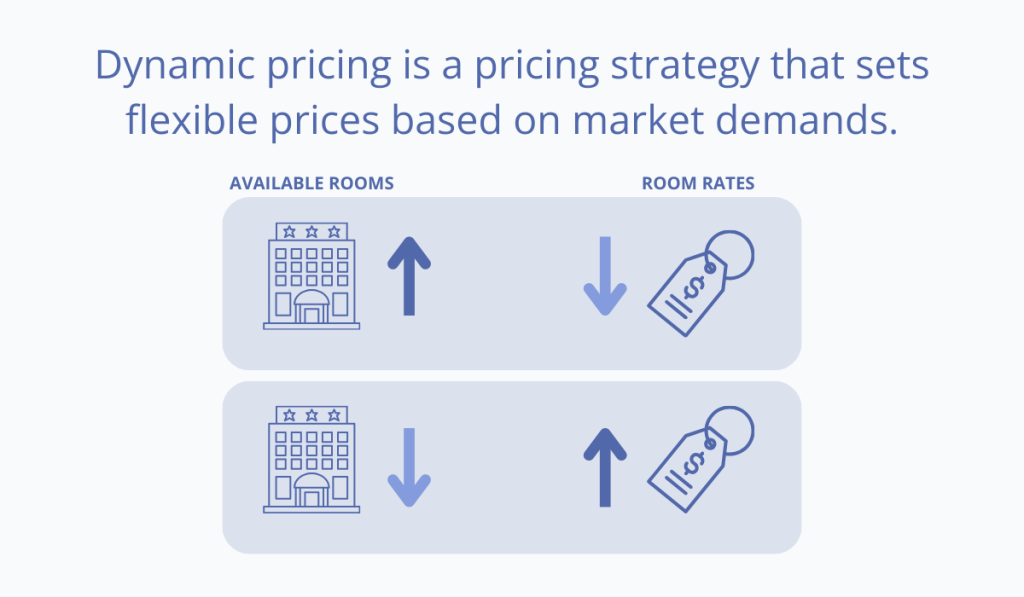
Illustration: WebBookingPro / Data: HotelMinder
Implementing this strategy will allow you to always sell your rooms for the optimal price, thereby keeping your hotel profitable.
But if you keep your room prices the same all year round, you’ll likely end up missing out on both guests and profit.
Namely, maintaining your peak season pricing during the low season will drive travelers to book a room in other, more affordable hotels in your area.
On the other hand, if your peak season rates are lower than those of your competitors, you will fill your rooms, but you will also make much less money than you could have.
It’s a lose-lose situation, which is why more and more hotels are employing the dynamic pricing strategy, and turning to tools that help them automate it.
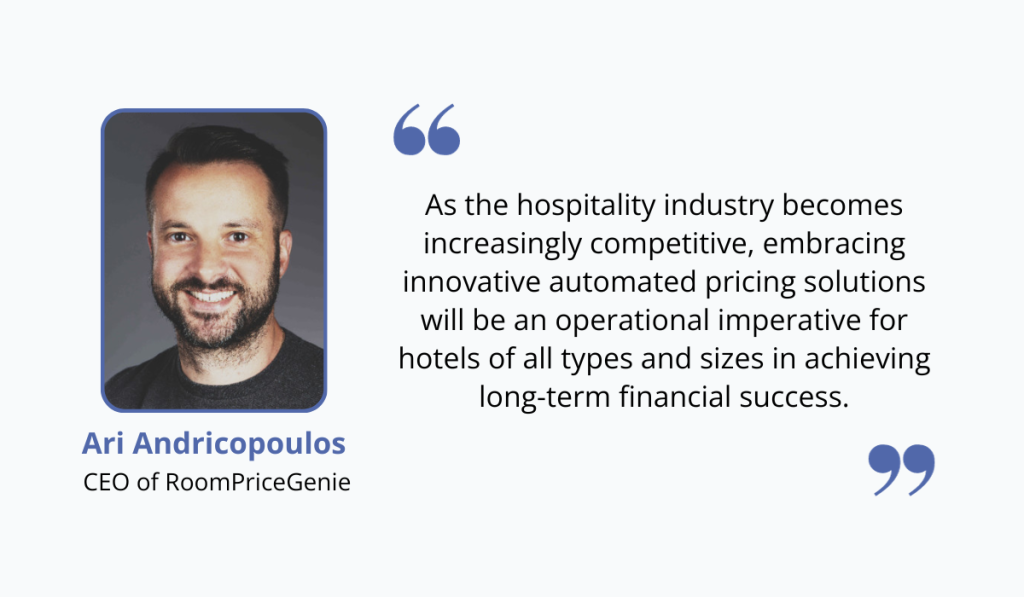
Illustration: WebBookingPro / Quote: RoomPriceGenie
Dynamic pricing tools, such as WebBookingPro’s AI-powered Revenue Manager, take the guesswork out of calculating the optimal room rates for your hotel.
All you have to do is input “if-then” scenarios, and this will define price corrections on all the connected distribution channels using a variety of parameters related to demand and occupancy.
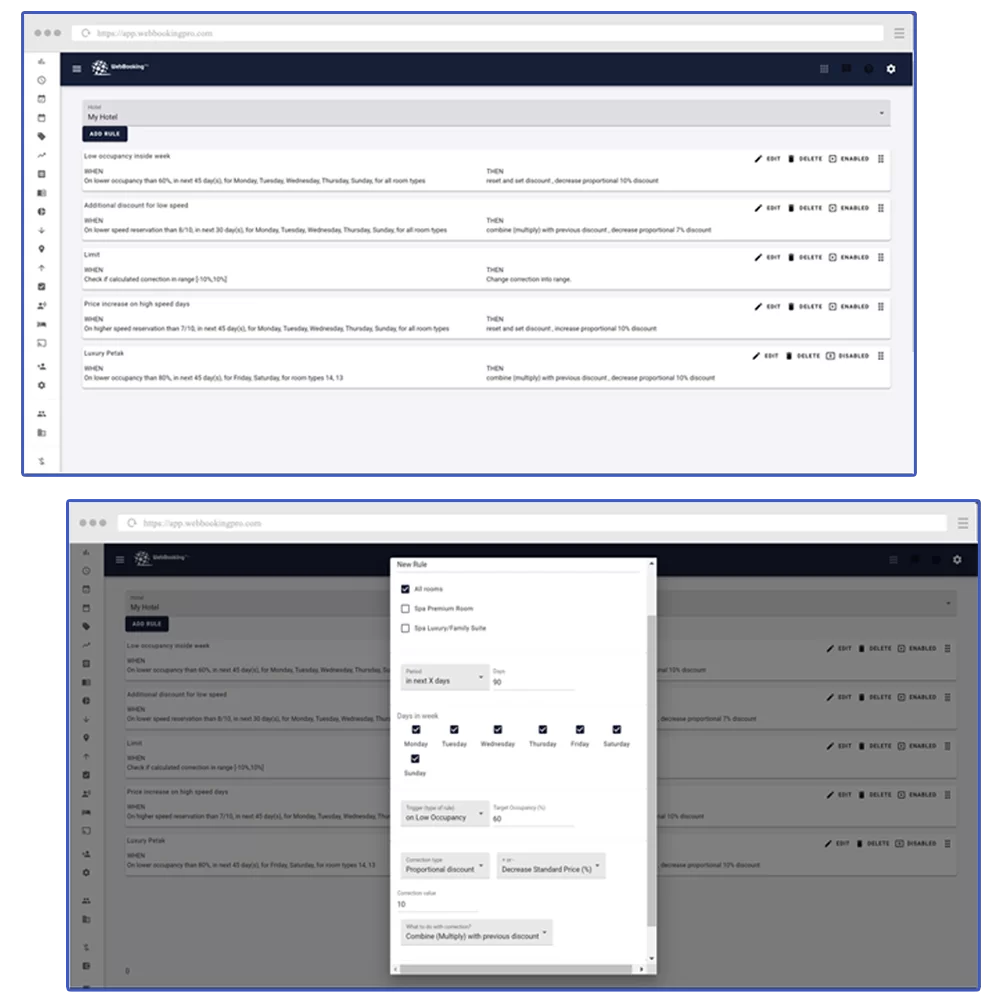
Source: WebBookingPro
Automating tasks related to dynamic pricing doesn’t only help you generate more revenue and ensure all your rooms are full, though.
It also saves you time and resources.
For instance, your staff members no longer have to sit around and constantly check whether the reservation for your last available room for a certain day has been canceled to adjust the price on each and every platform you use.
WebBookingPro will do that for you automatically, allowing your staff to focus on providing the best hotel experience possible.
As you can see, implementing a dynamic pricing strategy is a great way to reach your revenue and occupancy goals more easily, so consider making it part of your arsenal.
Use a Channel Management System
The final part of creating a good distribution strategy we’re going to share with you in this article is bound to help take away the stress of juggling your presence on multiple distribution channels:
Using a channel management system.
A channel management system—or channel manager—is going to be your biggest ally in managing the distribution of your room inventory and rates across all the distribution channels your hotel is present on.
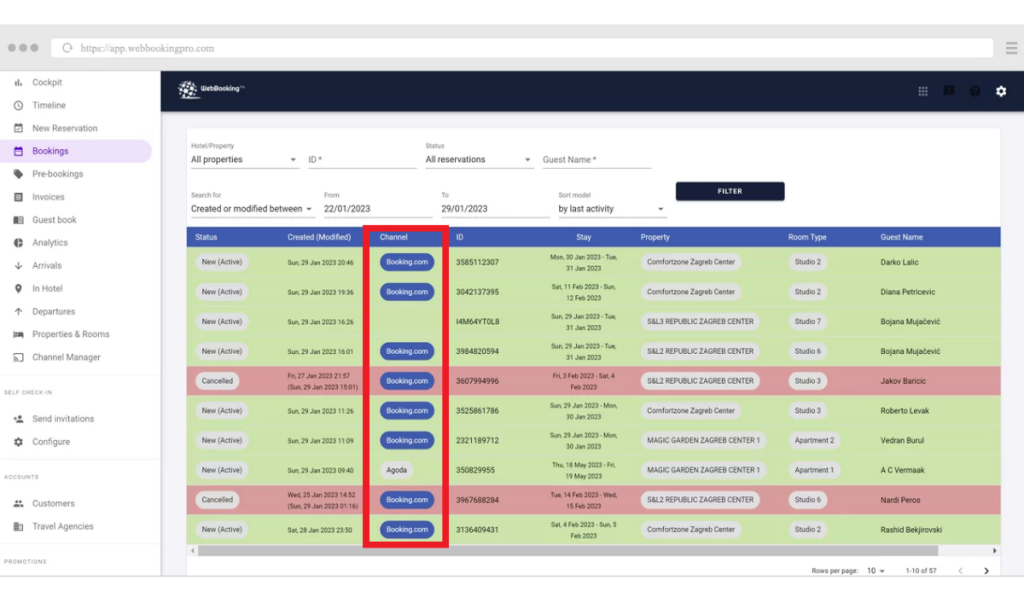
Source: WebBookingPro
This kind of software connects to your PMS to gather real-time information about your reservations, room availability, and room rates.
Then, it transmits that information to the distribution channels your hotel is present on and ensures that it’s up-to-date and consistent across the board.
So why should a channel manager become a fundamental part of your distribution strategy?
Peter Ferris, Head of Sales for resident and property management platform StarRez, says the following:
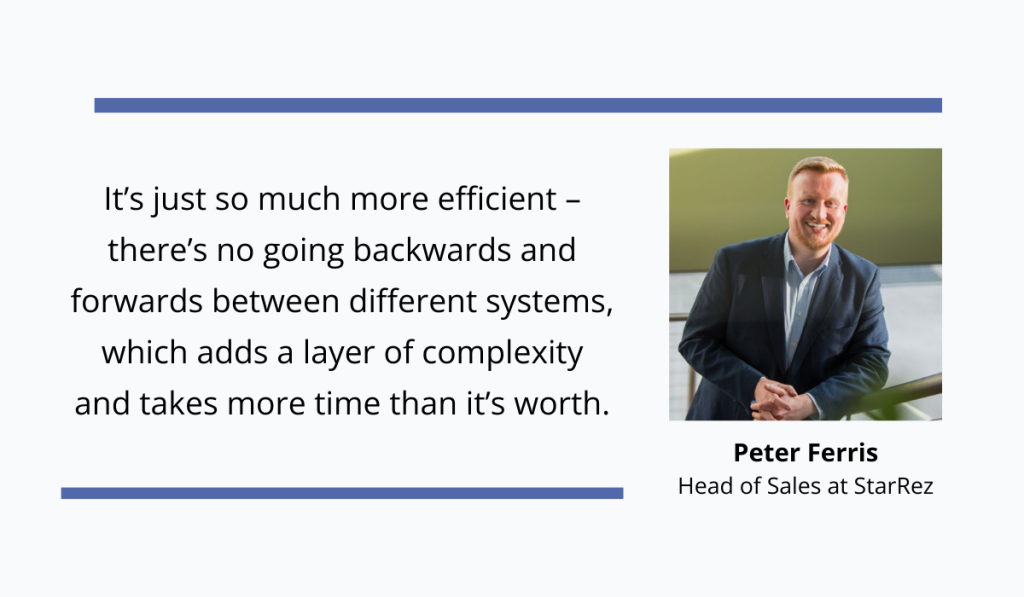
Illustration: WebBookingPro / Quote: RMS
Ferris goes on to explain that speed is of the essence when it comes to updating room rates and inventory, and using channel management software allows hotels to do that in mere seconds.
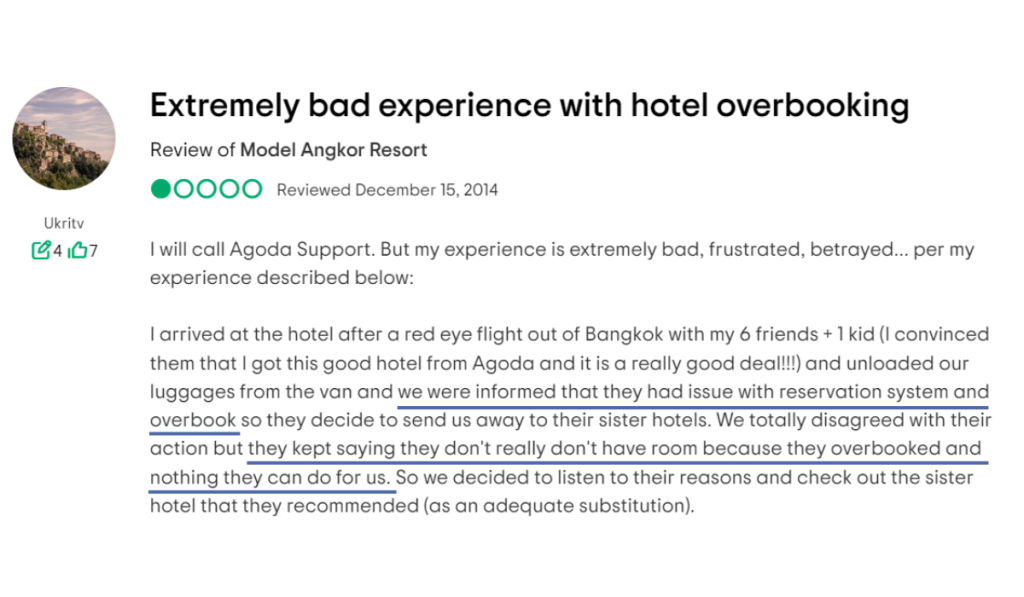
That way, you never have to worry about accidentally overbooking your hotel and ending up in a situation that’s uncomfortable and inconvenient for both you and your guests, like in the example below.
Source: Tripadvisor
As you can see, this traveler booked a hotel room through Agoda, an OTA popular in the Asia-Pacific region.
All they wanted to do after an overnight flight was check in and get some rest, only to be informed that the hotel had oversold the rooms, leaving the guests upset and inconvenienced.
With a channel manager, situations that can seriously damage your reputation become a thing of the past.
Therefore, we believe that a channel management system should become an indispensable part of your hotel’s tech stack, benefitting both you and your valued guests.
Conclusion
Developing a profitable hotel distribution strategy isn’t a walk in the park.
For starters, you need to discover what distribution channel mix is the right choice for your hotel, make your listings informative and appealing, and keep your prices competitive on all channels.
On top of that, you need to find a way to increase direct bookings and choose the right technology to help you manage all of the above.
However, we hope that the tips and tricks we shared throughout this article help you meet your goals and make the process of building your own distribution strategy more manageable.