
Looking to optimize distribution, expand your hotel’s reach, and ensure it stays fully booked all year round?
You’ll need a bit of help from technology.
That’s why, today we explore five valuable technologies that can revolutionize your distribution strategy.
You’ll learn the difference between revenue and property management systems, channel managers, and booking engines, and how these software solutions are reshaping the way hotels connect with guests and distribute their services in an increasingly competitive sector.
Let’s kick things off with the channel manager.
Channel Manager
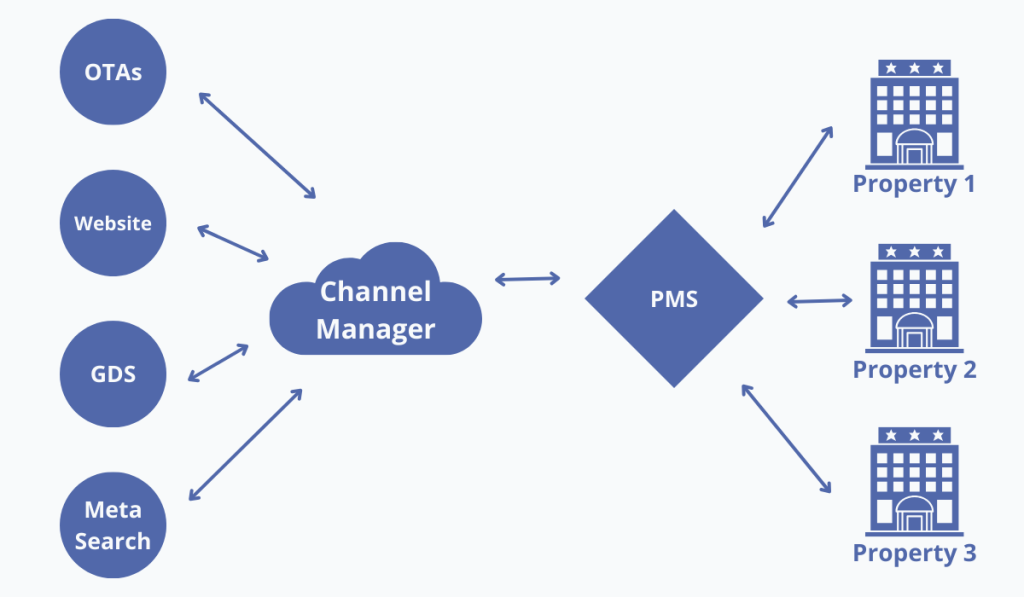
Today, when hotels have to juggle an array of distribution channels, from OTAs and GDS, and their own websites, the role of a channel manager has evolved into an indispensable asset.
As the name implies, this software solution facilitates the distribution of your room inventory across the various channels you use, making real-time updates on room availability and rates—all managed from one central place.
The system empowers you to update information across all platforms without the hassle of visiting each one and immediately notifies you about any changes in your room inventory.

Source: WebBookingPro
Without a channel manager, handling room sales on several channels simultaneously would be a daunting task.
But how exactly do these systems work?
Firstly, they facilitate the flow of data from the Property Management System (more on this piece of tech later) to different distribution channels, making sure that essential information like pricing, availability, and room types is accurately displayed.
This is vital for providing potential guests with what they need to make informed reservation decisions.
The second part of the equation involves the channel manager handling booking data.
Source: WebBookingPro
When a reservation is made, the system updates the PMS or directly notifies the hotelier, completing the cycle.
A great thing about channel management solutions is that hotels of all sizes can benefit from them.
Whether it’s a massive hotel chain or a smaller establishment, having a tool that automates important updates across multiple channels and instantaneously refreshes them when a room is booked is invaluable for increasing overall operational efficiency.
Hotels of all sizes can benefit by eliminating the manual work from channel management. They save time and resources and reduce the possibility of human error.
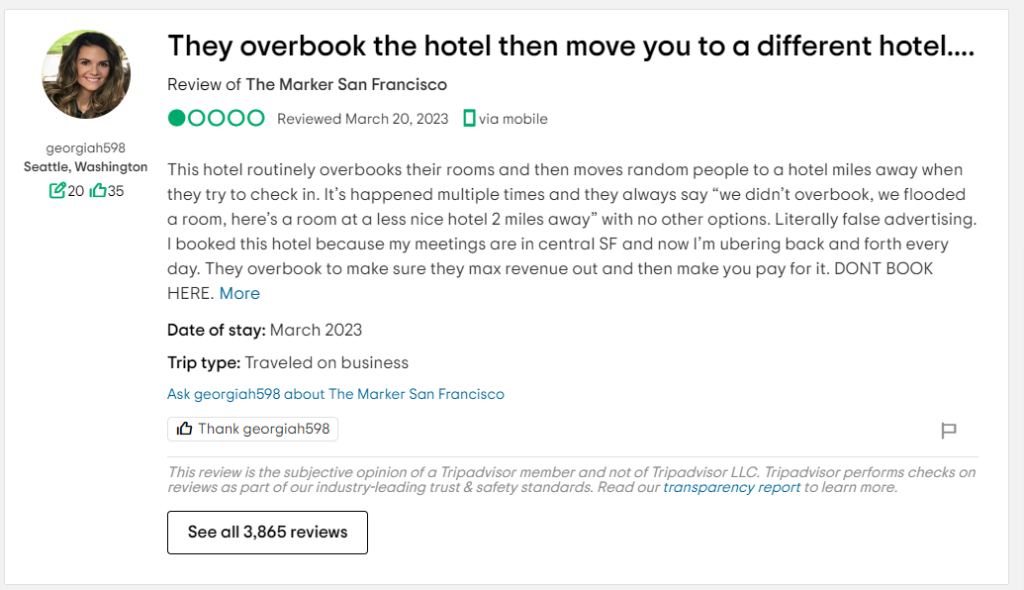
Booking mishaps, such as overbooking, become a thing of the past with the implementation of these automated systems.
Source: Tripadvisor
In turn, you avoid disgruntled customers, negative reviews online, as well a tarnished reputation, all of which affect your future bookings and profitability.
And not to mention, you get complete control over your channels, which enables you to manage them more effectively.
Consequently, this increased efficiency maximizes your bookings and revenue.
In essence, channel managers emerged as a cornerstone in the contemporary hotelier’s toolkit, helping them navigate distribution channels with precision and ensuring a seamless, error-free experience for both hospitality professionals and guests alike.
Central Reservation System (CRS)
A central reservation system is software crucial for optimizing hotel distribution as it facilitates the management of all booking-related processes.
Similar to the channel manager, the CRS centralizes essential information concerning your room inventory, shares it across multiple distribution channels, and synchronizes reservations in real time.
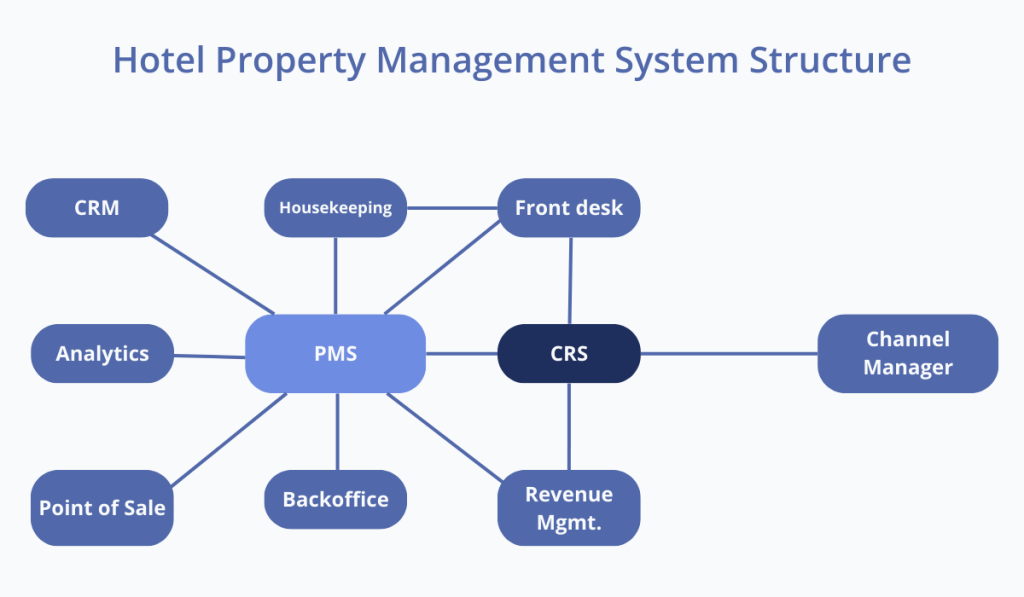
However, it can also seamlessly integrate with other modules, including revenue management, reporting, data collection, payment processing, and front desk operations.
CRS can function either as part of a Property Management System or as a standalone system.
Source: WebBookingPro
When integrated into a PMS, the CRS becomes the most pivotal module, enabling the exchange of information between the channel manager, front desk, and revenue manager modules.
This multifaceted integration empowers hoteliers with a wealth of data, enhancing their distribution strategies and decision-making processes.
It’s important to note that, despite some similarities with channel management systems, the CRS has a much broader scope.
While the channel manager is used for hotel distribution, and distribution only, the CRS, with its extensive functionalities, serves various reservation and room inventory management processes.
In many cases, both are used in conjunction.
The primary advantage of this software lies in its ability to boost efficiency.
Manual data input or analysis, administrative errors, and the risk of lost information are all eliminated with the CRS, saving you money, time, and effort.
As noted by Katie Forrest, Head of Engagement, Learning, and Development from Dakota Hotels, a group of five luxury boutique hotels in the UK, technology can be an effective means for smaller businesses to enhance the service they provide.
“(…)Technology can provide smaller brands like us an opportunity to differentiate and provide great service to both our teams and our guests. (…) Nobody can be good at everything themselves, so we wanted to look for a technology provider who could support our operations.”
Technology speeds up processes that would otherwise slow you down, allowing you to focus on core priorities: making the most out of your distribution channels, increasing occupancy, and delivering exceptional guest experiences.
The CRS is precisely that: a technological solution that handles the hard part of distribution management on your behalf, providing control and visibility over your distribution channels.
This, in turn, enables you to make well-informed sales and pricing decisions, ultimately elevating your overall business
Booking Engine
In the simplest terms, a booking engine is a digital solution that’s used to capture and process room reservations directly on your website.
Your website is the most cost-effective distribution channel—one that allows for commission-free bookings.
But to make the most out of its profitability-boosting potential, you need the right software. That’s what the booking engine is.
The way the system operates is pretty straightforward.
To illustrate, take a look at our very own booking engine, WebBookingPro.
Quickly installed, fully customizable, and compatible with all devices and browsers, it provides an interface that fits perfectly into the aesthetics of your website and is easily navigable by your guests.

Source: WebBookingPro
They can browse available rooms, select their preferred one, and make a reservation—all on your site with just a couple of clicks.
The best part?
No commission fees to pay for each booking.
Essentially, both you and your guests can benefit from this type of software.
For you, it significantly reduces reliance on online travel agencies and other costly distribution channels, resulting in a clean, fee-free profit.
Let’s face it, OTAs might be providing unmatched visibility, but are not the most cost-efficient distribution channels.
Tim Kolman, experienced hotelier and head of customer experience at TakeUp software, suggests that while OTAs can be a useful part of your marketing efforts, investing in a direct booking process is still a must for any hotel.
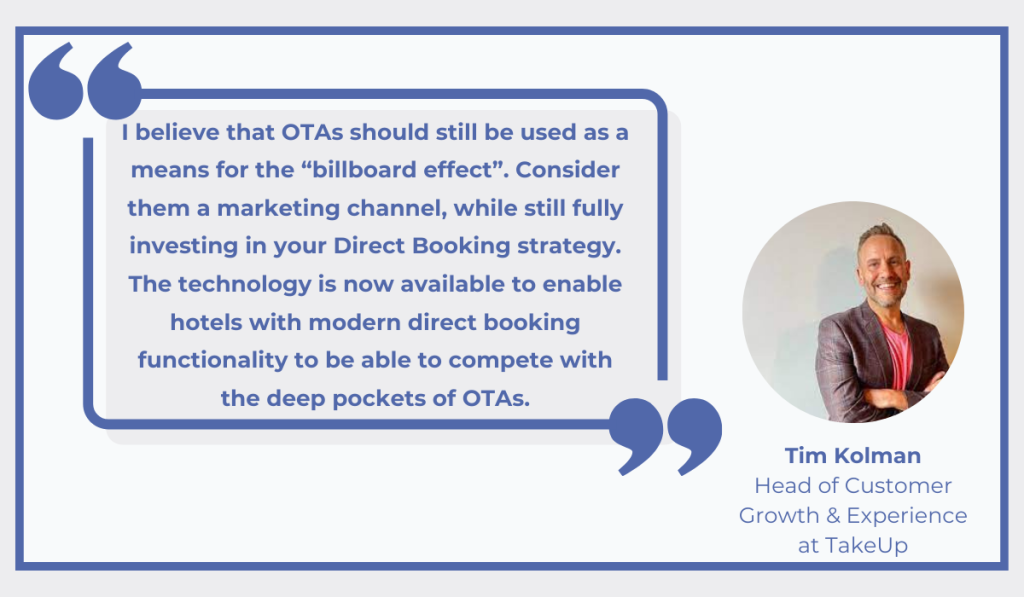
Illustration: WebBookingPro / Quote: Revfine
In fact, he says, provided you use the appropriate software, such as the booking engine, your direct reservations game can become much much stronger, staying on par even with the OTAs.
As for your guests, these engines provide them with an easy, quick, and most importantly, reliable booking process.
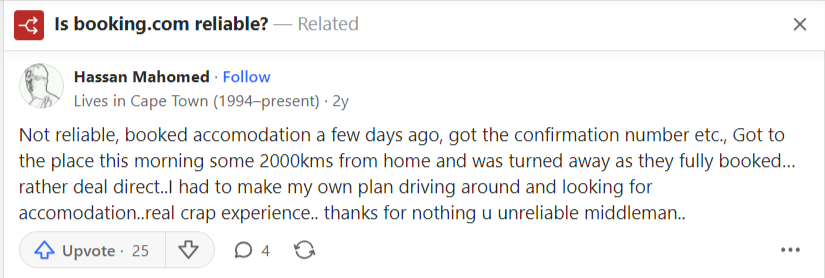
And that matters, because even big OTAs can lose users’ confidence.
With each scam and customer service issue on Booking.com and other OTAs, travelers become warrier about these sites.

Source: Quora
Now, they are looking for safer alternatives, and booking directly with a hotel is just that.
Hence, a booking engine becomes non-negotiable for those aiming to attract guests who prefer direct reservations.
Booking engines are, in a sense, a triple threat.
They streamline the reservation process, reduce dependence on OTAs, and enhance the overall booking experience for travelers.
Revenue Management System (RMS)
A revenue management system (RMS) oversees the financial aspect of hotel distribution.
It does so by compiling and analyzing historical data from your hotel as well as the entire market, using this information to calculate optimal room rates for your hotel.
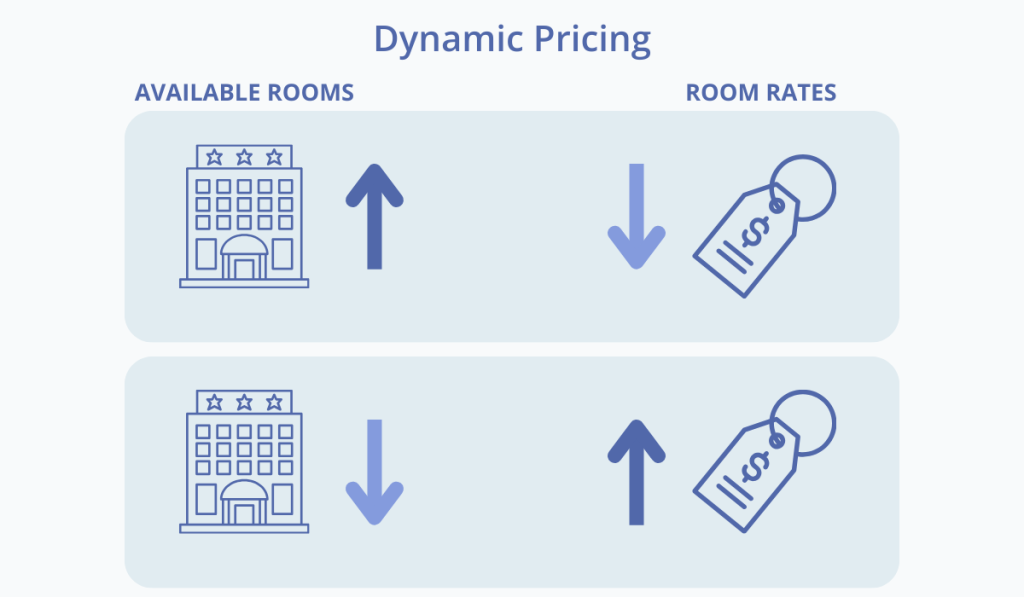
Essentially, it adjusts prices across various distribution channels, responding to fluctuations in demand and the overall market conditions.
Source: WebBookingPro
The software typically lets users define if-then scenarios, such as lowering prices if the demand is low or hiking them during high-season periods, then executing all the necessary calculations and adjustments, eliminating the need for manual price input.
When determining the ideal rates for your rooms, many factors play a role, such as:
- Demand
- Historical data
- Inflation
- Competitors’ pricing
However, manually gathering and studying all this information can be highly inefficient, if not downright impossible.
This is where a revenue management system steps in, efficiently automating these tasks and helping users make sense of such comprehensive data for better-informed decision-making.
But beyond time savings and automatic price correction, RMS offers additional benefits.
Firstly, it minimizes costly mistakes, specifically those caused by manual price input errors.
The most notable example of such errors is the so-called mistake rates.
A miscalculation during currency conversion, or simply leaving out a digit can easily turn, say, a $100 booking into a $10 one, causing the wrong price to appear on the listing.
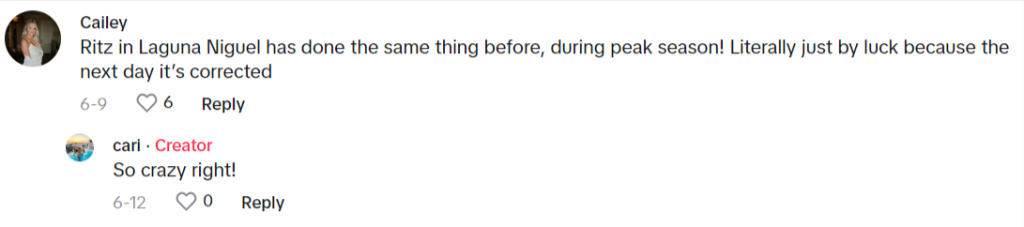
That’s exactly how TikToker @carielizabethh, secured a substantial discount at the Ritz-Carlton in Hawaii due to a mistake rate.
Taking advantage of the situation, she paid only $279 a night, saving around $1,000 per night—a discount of almost 80%.

And it seems other locations made the same mistake.
Source: @carielizabethh on TikTok
Automated RMS reduces the likelihood of such problems, and goes beyond error prevention, actively contributing to revenue maximization by increasing bookings.
During low seasons, RMS enables you to set competitive rates, helping attract guests even in those less busy periods, which is particularly beneficial for properties in areas with seasonal popularity.
It’s crucial to note that some travelers specifically choose to travel during the low season for lower prices, counting on those discounts.

Source: Reddit
With RMS you can capitalize on off-season tourists hunting for lower rates, ensuring that your hotel stays fully booked consistently throughout the year.
Overall, a well-implemented RMS not only streamlines operations but becomes a strategic ally when it comes to navigating pricing and demand in the hospitality industry.
Property Management System (PMS)
Before diving into the benefits of property management systems for hotel distribution, let’s explore what these systems are and what they can do.
Property management systems (PMS) distinguish themselves from other technologies we’ve covered so far by handling many different day-to-day activities and parts of business operations within a hotel.
A PMS is a multifaceted solution that has earned its status as an essential tool for hoteliers, covering tasks like:
- Reservation management
- Guest data compilation
- Billing
- Housekeeping management
- Reporting and analytics
- Check-in/check-out
In fact, according to one survey of hotel executives, the majority of industry professionals agree that these solutions are the most important technology in hospitality today.
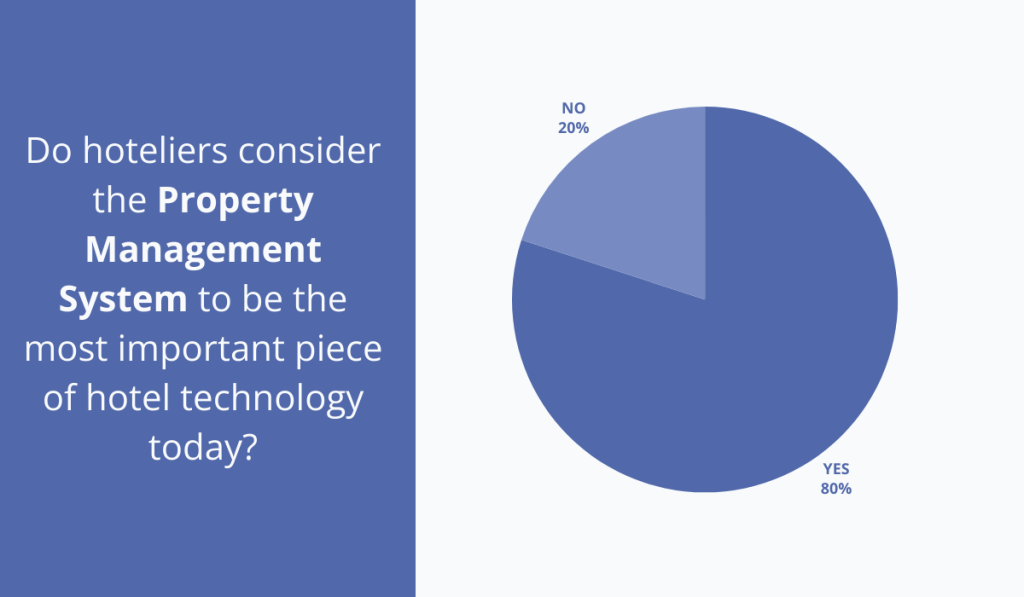
Illustration: WebBookingPro / Data: Property Management System
They highlight their benefits, including revenue growth, time efficiency, and scalability, endorsing the software as a worthwhile investment.
Of course, a PMS also plays a crucial role in the context of hotel distribution itself.
To begin with, it actively tracks room inventory, facilitating real-time updates to multiple distribution channels.
This minimizes the time gap between inventory changes and their reflection on these channels, ensuring guests receive timely and accurate information while simultaneously protecting you against problems like double bookings.
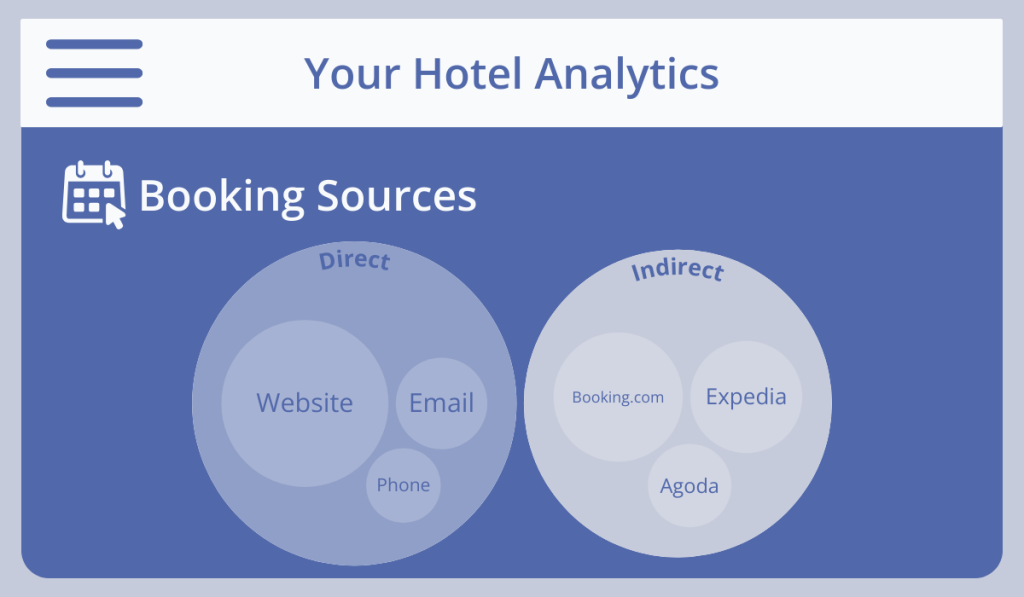
Moreover, the reporting and analytics features of PMS help measure the success of specific distribution platforms, enabling you to fine-tune your current strategy based on these data insights.
Source: WebBookingPro
For instance, if certain channels prove ineffective in attracting guests, PMS reveals this information, allowing informed decisions on whether to retain or remove such platforms from the distribution mix.
In a similar vein, this reporting capability informs future distribution strategies.
By analyzing various data points, such as guests by country, bookings per day, and cancellation rates, you can create detailed customer profiles and possibly discover, for example, that a significant portion of your customers are business travelers.
Then, you can tailor your marketing strategy to cater specifically to this demographic.
This may involve targeting business-oriented channels, such as corporate travel agencies, or enhancing the hotel’s presence on platforms that attract business travelers.
Therefore, while the primary focus of a PMS is on internal hotel functions such as reservations, check-ins, check-outs, billing, and room management, it can still play a considerable role in optimizing hotel distribution.
By leveraging its many features and functionalities, you can manage your channels more effectively, maximize their potential, and make your future distribution strategies a complete success.
Conclusion
Ultimately, you’ll likely discover that relying on just one of these systems is insufficient for making the most out of your distribution channels.
Instead, consider employing a strategic mix of various tools we’ve outlined in order to navigate the complexities of successful hotel distribution more easily.
The dynamic nature of your industry simply demands adaptability and innovation.
Therefore, let this article serve as a guide in your research.
Analyze your business needs, and soon you’ll find the perfect digital toolkit that won’t only address your specific challenges but empower you to reach and surpass your distribution goals.