
In the fiercely competitive hospitality industry, where every hotel’s primary goal is full occupancy, capturing potential guests’ attention is crucial for standing out.
When prospects willingly share contact information, they transform into leads with the potential to become paying customers.
Proactive lead generation facilitates this transformation—it attracts and converts strangers into (repeat) guests while also targeting ideal customers.
So, if you are intrigued by the idea of a consistently booked hotel and a loyal base of ideal guests, read on.
In this guide, we will explore why lead generation is indispensable for hotels, address its challenges, and offer valuable tips to convert as many prospects as possible into satisfied guests.
Let’s get started.
Why Is Lead Generation Important for Hotels?
Lead generation is serving dual purposes in the fiercely competitive hospitality industry.
Firstly, with a staggering 187,000 hotels worldwide as of 2023, the race to stand out is undeniable.
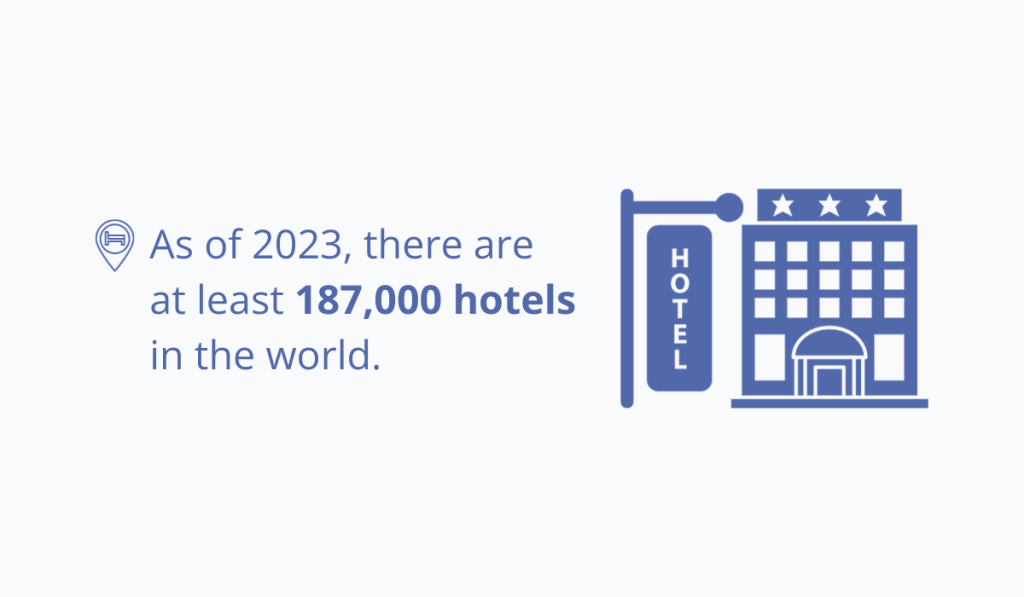
Illustration: WebBookingPro / Data: Zippia
In bustling cities with hotels on every corner, making guests choose your accommodation is hard. Just consider Paris, with 1,600 hotels, or Las Vegas, boasting a staggering 150,000 hotel rooms.
This is where lead generation takes center stage. Through it, you can distinguish your hotel despite the crowded market. We will explain how to do that exactly later on.
The essence is that if you don’t proactively generate leads for your hotel, you can’t survive in such a competitive market.
Secondly, lead generation empowers hotels to target specific groups strategically—their ideal guests.
As a hotel owner or manager, you know better than anyone that attracting ideal guests is imperative for running your hotel successfully.
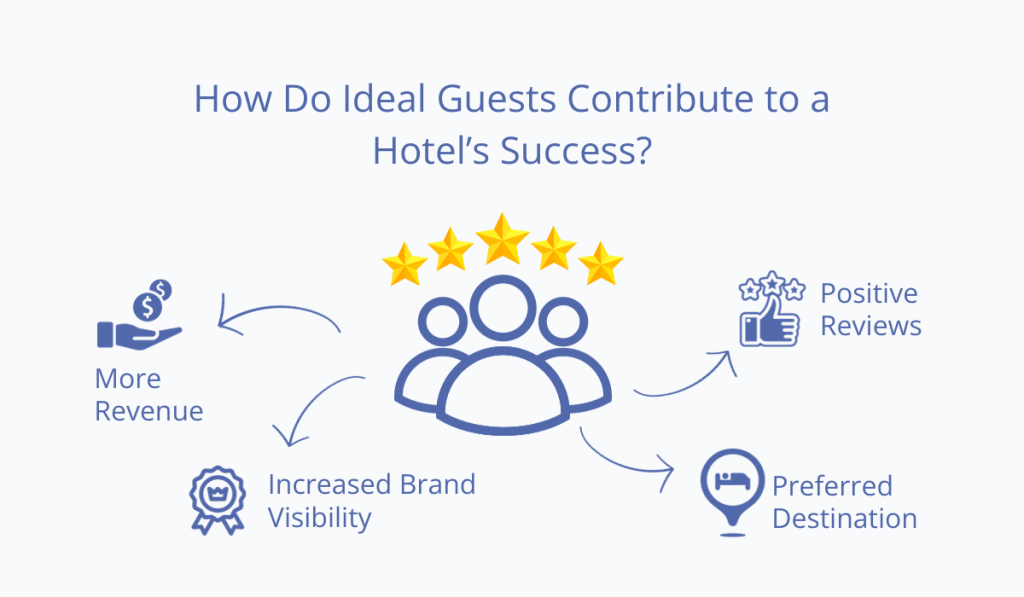
These guests not only bring in the most revenue but also increase your brand awareness and promote your hotel as a preferred destination for such groups.
Source: WebBookingPro
For example, consider a hotel in a busy business district. Ideally, it would target business travelers willing to spend more on accommodation.
But without targeted efforts toward that segment, its location next to an excellent public transportation spot might unintentionally draw in travelers seeking a quick overnight stay, which is less profitable for them.
On the other hand, with marketing strategies for generating specific leads, such as highlighting business-friendly amenities or partnerships with local businesses, this hotel can focus on attracting and converting its ideal groups of guests.
This targeted approach can ultimately bring them more revenue, higher brand awareness, and more satisfaction.
As you can see, hotel lead generation is beneficial for two main reasons: it helps you stand out in a crowded market and attract specific guests.
This can boost your hotel’s popularity and ensure profitability in the ever-competitive world of hotels.
Challenges of Lead Generation in Hospitality
Generating leads in the hospitality sector poses some challenges, which vary based on your lead generation tactics.
These challenges are common in hospitality, especially if you aren’t aware of them. But that’s why we are here—to explain them and make sure your lead generation is successful.
So, let’s discuss them one by one.
High Customer Acquisition Cost
One way hotels generate leads is through online travel agencies or OTAs.
And while OTAs like Booking.com and Expedia have revolutionized how individuals book hotel rooms, they’ve also brought challenges for hotels.
Despite effectively generating leads due to their widespread popularity, OTAs pose a substantial drawback for hotels—they increase customer acquisition costs with high commission fees.
According to Preno, these commission rates range from 10 to 30%. For instance, Booking.com and Expedia typically charge around 15%, with potential increases for certain promotions or programs. Agoda, a popular Asian OTA, can charge up to 25% in commission.
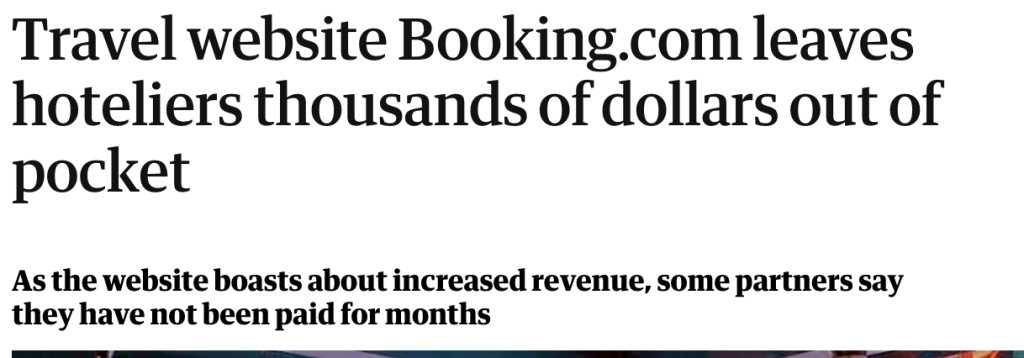
And if OTAs delay their payments toward hosts like it happened this summer with Booking.com, it hurts you even more.
Source: Guardian
When you factor in OTA fees for each booking and potential payment delays, this can significantly impact your revenue.
However, there’s a solution. Nowadays, hotel owners and managers can use a central reservation system (CRS) to sell rooms directly from their website.
This not only bypasses intermediaries but also empowers hotels to increase direct online reservations—without extra commission fees.
That’s why, at WebBookingPro, we’ve designed our own central reservation system that allows your guests to book rooms directly from your website instead of through third-party platforms.
This way, you get full control over pricing, discounts, room availability, and payments—without any commission costs.
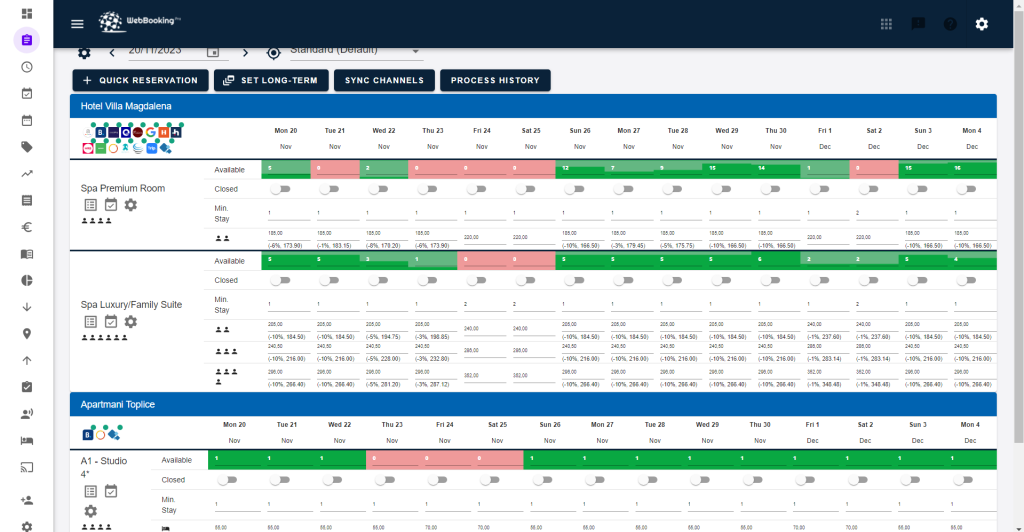
To give you a sneak peek into our tool, just take a look at how clear the room availability sheet looks like:
Source: WebBookingPro
On top of that, your guests will encounter a user-friendly web booking engine that will simplify their booking process without hassle or third-party redirections.
This approach to booking rooms not only reduces your customer acquisition costs but also provides better financial autonomy for your hotel—all while enhancing your customers’ booking experience.
And not to mention that with a great website and simple booking process, you can generate more qualified leads. It’s truly a win-win!
Low Marketing ROIs
Another significant challenge hotels face in lead generation is experiencing a low return on investments (ROIs) in their marketing efforts.
This especially occurs when the marketing strategy doesn’t align with the specific characteristics and preferences of the hotel’s target audience.
In simpler terms, adopting a generic approach, where the same message is broadcast to everyone, often results in ineffective marketing campaigns.
Guests are diverse, and a one-size-fits-all approach fails to capture the attention of every potential guest.
Therefore, the crucial first step is thorough research to understand your target audience before investing in lead generation strategies.
Understanding your audience allows you to tailor marketing efforts, whether through email marketing, social media marketing, pay-per-click, or content marketing.
For instance, Smiling House Luxury Global, a platform for exclusive and luxury properties, exemplifies the importance of this tailored approach.
Their Chief of Marketing, Moriya Rockman, emphasizes the significance of focusing on one target market audience and allocating the marketing budget strategically.
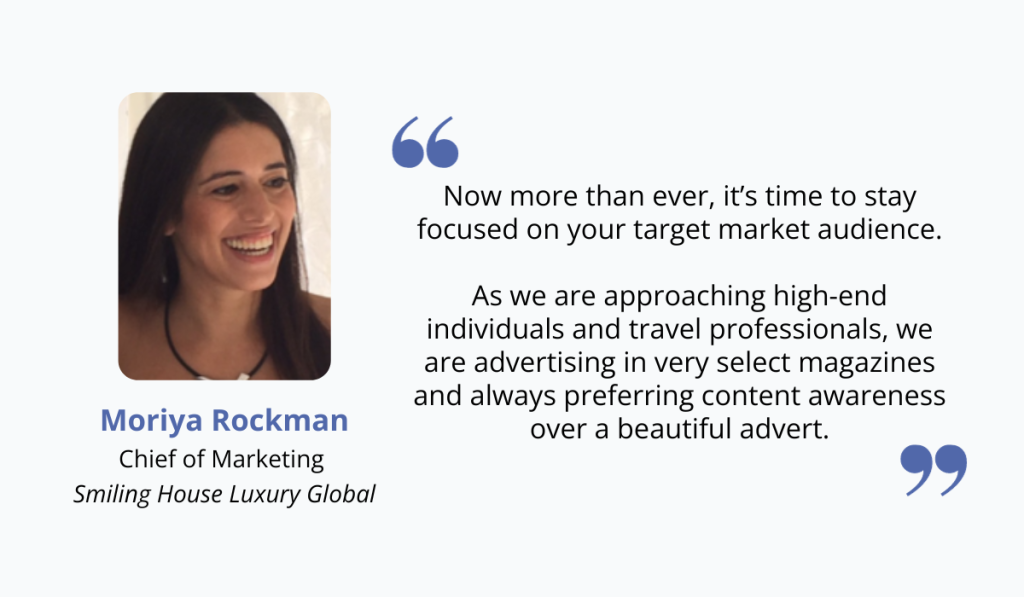
Illustration: WebBookingPro / Info: Revfine
For Smiling House, this is how they get the best ROI from their lead generation efforts.
On the other side, consider a hostel targeting younger travelers. Advertising in such select magazines would be both pointless and very costly.
Instead, they could benefit from collaborations with influencers and content promotion on platforms like TikTok, widely used by the younger population.
Clearly, the challenge of low Marketing ROIs can be mitigated by understanding your target groups and then investing in precisely tailored marketing strategies that resonate with them.
Keeping Up with Guest Expectations
Today, hotels face another critical challenge. They are not meeting the ever-evolving expectations of their guests.
Individuals turn to online sources for nearly every aspect of their lives, including travel plans and accommodation. Guests expect hotels to have a strong online presence.
That’s because, before they even consider booking a room, they want to research the area and things they would be able to do.
Then, they want to know as much as possible about the hotel itself:
- What are the rooms like
- What other amenities does the hotel offer
- What’s the atmosphere like
- What’s the food like
- Would they feel like they belong in that hotel
Offering as much information about your hotel’s offering as possible on your website and social platforms can address this challenge and aid your lead generation efforts.
But apart from researching the hotel before booking, guests also demand an effortless room booking process, whether they are using PCs or smartphones.
When hotels fail to provide this seamless experience, they risk missing out on converting their leads.
Moreover, not meeting these expectations puts them at a disadvantage compared to the competition, as guests naturally gravitate towards accommodations with a smooth booking process.
To overcome this, the solution is simpler than you might think—ensuring a functional website that allows clients to find comprehensive information and book rooms directly on the site is key.
Statistics emphasize the importance of this approach, revealing that two-thirds of online travel booking sales are made directly from the hotel’s own website.
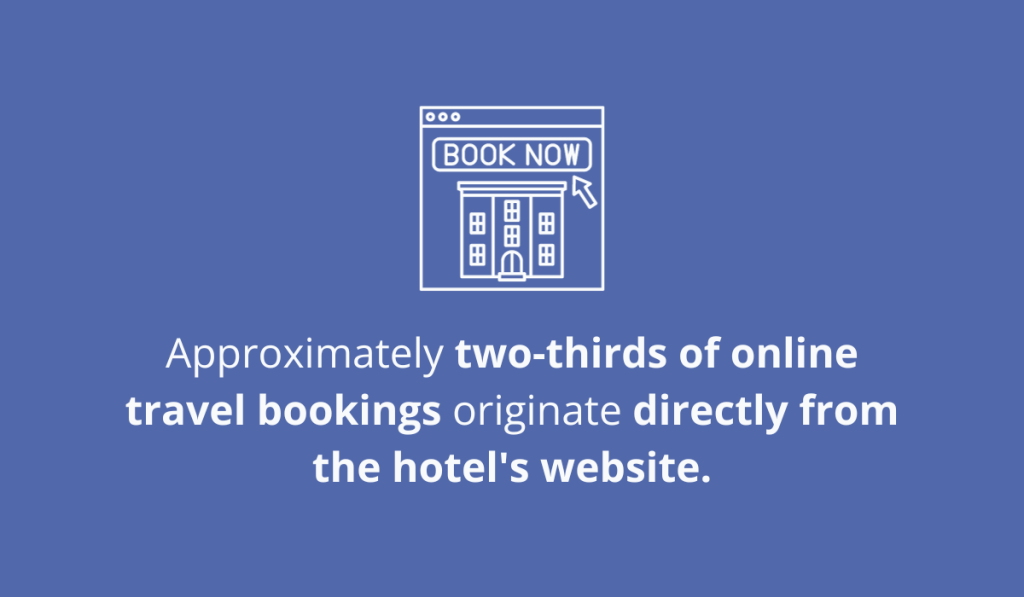
Illustration: WebBookingPro / Data: StratosJets
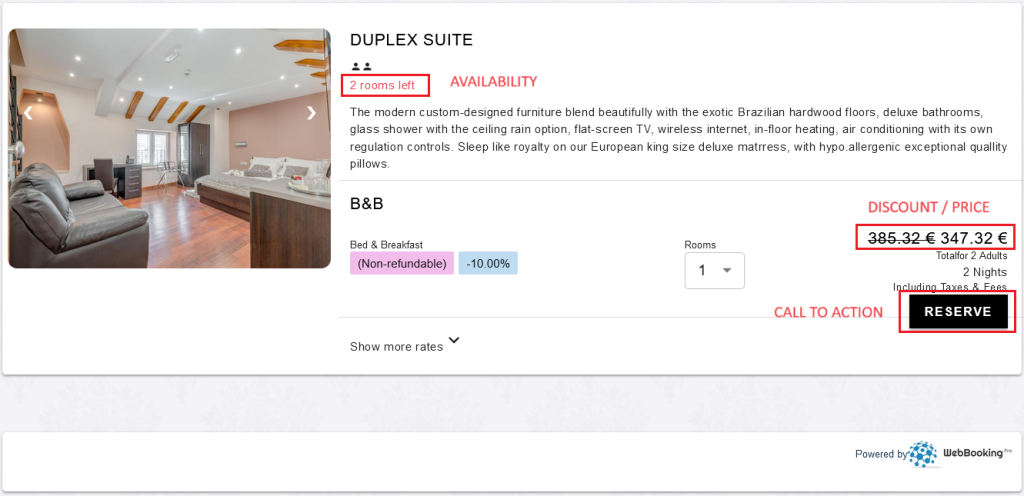
Notably, solutions like WebBookingPro can assist in this regard. Our booking engine seamlessly integrates into your hotel’s website, enabling your guests to check room availability and make reservations without being redirected to third-party sites.
Here’s a glimpse of how WebBookingPro looks when integrated into a hotel’s webpage:
Source: Palace Suites Heritage Hotel
As you can see, guests can check the availability on their preferred dates, check the price, and immediately book a room through an inviting call to action button.
Moreover, WebBookingPro is fully customizable, ensuring a consistent look for the header, menu, and footer across your pages, enhancing your hotel brand awareness.
All in all, only by giving your customers what they want—information and a seamless booking experience—can you meet their expectations, and secure more guests.
Tips for Hotel Lead Generation
Having explored the significance and challenges of lead generation for hotels, let’s now focus on how you can generate leads that will be your ideal guests.
We’ll cover three essential tips: defining your target market, building an online presence, and creating lead magnets.
Define Your Target Market
For lead generation efforts to yield results, hotels must precisely define and understand their target audience—their needs, expectations, and habits.
This understanding is crucial for formulating strategies that attract qualified leads. Without this clarity, no matter how much money you invest in marketing your hotel, your return on investment will be low, as we explained in the lead generation challenges.
So—how can you define your target market to generate leads?
The first step is determining the identity of your hotel. Is it aimed at business professionals, travel enthusiasts, families with children, or other groups of customers?
Once you’ve identified your ideal guest group—and, with it, your hotel’s identity—you should research those specific audience’s interests and consider where you can find such guests.
Which online platforms are they most active on? Do they use social media? Are there any magazines you could advertise your hotel that those customers read?
Next, it would also be wise to analyze competitors targeting the same demographics.
Check their reviews to discern what those guests are looking for, scrutinize their marketing strategies to understand how they attract guests, and assess pricing and amenities to identify attractive features.
Now, let’s explore how large hotel chains go about defining their target market and structuring their marketing strategies accordingly.
Take the example of Marriott International, a global hospitality company with a presence in 131 countries and over 7,000 properties offering 1.4 million guest rooms.
Marriott has identified five distinct target groups based on the diversity of their accommodations:
| Brand | Target Group |
| Marriott Courtyard | Over-the-road travelers |
| Ritz-Carlton Hotels | Luxury travelers |
| Marriott Conference Centers | Corporates that conduct meetings |
| Marriott ExecuStay | People needing month-long accommodations |
| Marriott Vacation Clubs | Travelers seeking to shop for timeshares |
Source: IIDE
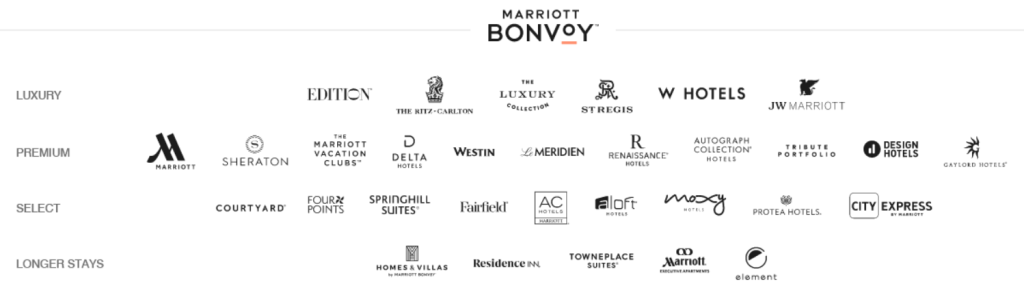
If you take a quick look at Marriott International’s website, you will see that they cater to these groups of guests, guiding them on what to look for depending on the type of traveler they are and their needs.
Source: Marriott
Besides that, Marriott’s innovative marketing strategies, including campaigns with TikTok influencers targeted at younger travelers, showcase the importance of precisely defining target audiences.
In essence, defining your target market is critical for generating qualified leads. Only when you know who your target guests are, can you shape marketing strategies to attract those customers.
Build an Online Presence
Now that you know who your ideal guest is, it’s time to build a robust online presence for your hotel.
And that means being present and discoverable on every possible search engine. Google is just one of them, but platforms like YouTube and TikTok are also being used as search engines more and more.
Therefore, being present online is no longer a choice but a necessity—it’s an expectation from customers.
While having a well-designed website with direct booking capabilities is crucial, it’s only one facet of a comprehensive online presence.
An impactful online presence goes beyond just a website. It involves strategic positioning on platforms like Google My Business, ensuring potential customers immediately encounter your hotel when searching for accommodations in a specific location.
Social media is also crucial. Every platform presents numerous marketing opportunities for effectively marketing your hotel. You just need to start with the one or two that your target audience uses the most.
For instance, take inspiration from Hotel Punta Tragara in Capri, which captivates audiences on Instagram with breathtaking photos and videos, or follow the lead of the NHHotel chain, sharing insightful tips for sightseeing.
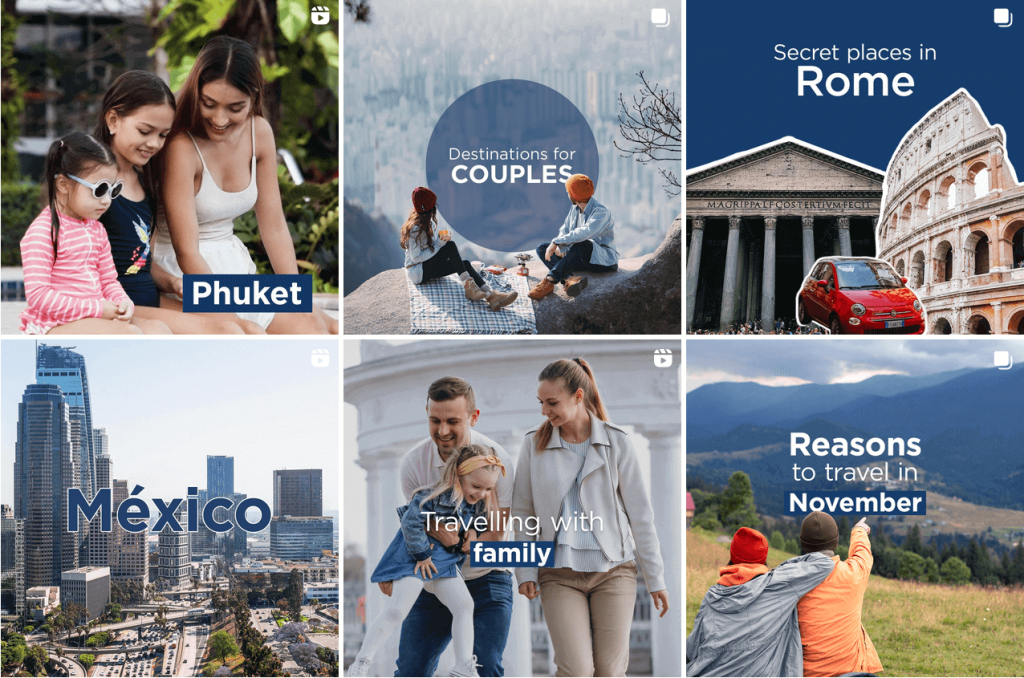
Source: NHHotels on Instagram
Whether you use your website’s blog, social media accounts, or other platforms, the key is to create useful content that caters to your target audience’s needs, provides advice, and addresses their pain points.
Marriott hotels, which we have previously mentioned, have adeptly embraced platforms like TikTok.
Through collaboration with influencers and famous people, they share travel tips, but also some technical advice, such as how to convert flight miles into loyalty points for their hotel stays.
Such educational content helps their audience but also engages people and brings a lot of awareness to their brand.
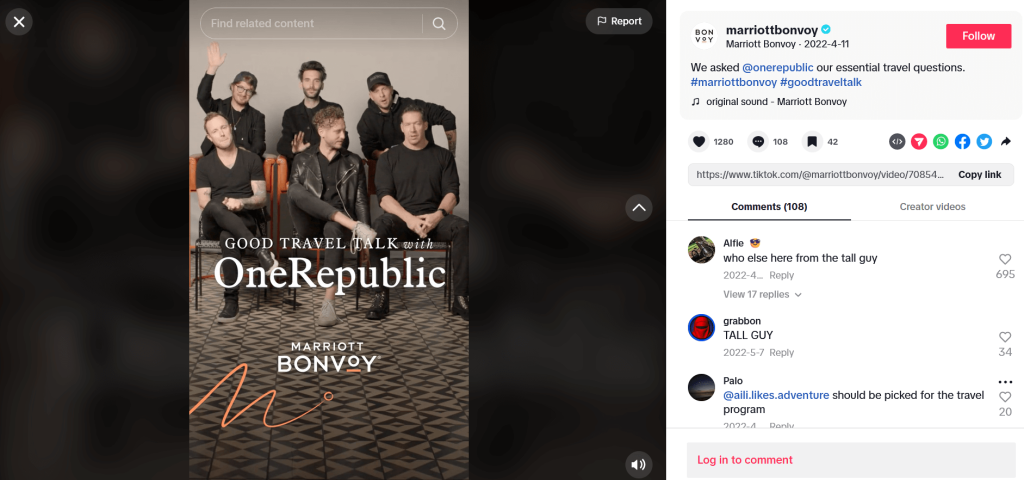
Source: Marriott Bonvoy on TikTok
In summary, when you establish a strong online presence with the goal of providing assistance to potential customers, your hotel not only gains leads but also boosts sales, which is the ultimate objective of lead generation.
Create a Lead Magnet
Lead magnets are powerful tools in the hotel industry. They are strategically designed to provide value to the target audience, who, in exchange, give hotels their contact information.
By providing a compelling incentive, such as a free resource or exclusive insights, hotels can entice potential guests to share their contact information willingly. Those lead magnets can be used both on social media platforms and on a hotel’s website.
This information is a foundation for building relationships with potential guests and eventually converting them into actual patrons.
Hotels can offer a variety of free resources as lead magnets tailored to the interests of their target audience. Examples include:
- Comprehensive guides to local attractions, dining hotspots, and unique experiences.
- Virtual tours showcasing the hotel’s amenities, rooms, and ambiance.
- A cheat sheet for pairing wine with the hotel’s menu items.
- Up-to-date calendars highlighting local events, festivals, and activities.
- User-friendly templates to assist guests in planning their itinerary effectively.
However, alternative approaches can also be effective.
For instance, inviting potential guests to sign up for a newsletter today could result in a free breakfast with their first stay.
Another option is offering a birthday discount if guests provide their birthday details and email addresses. Since people love celebrating birthdays this way, such lead magnets could be highly effective.
For a simple but effective example of a lead magnet, consider Terme Olimia from Slovenia and its affiliated hotels. They invite potential guests to provide their email addresses on their website to become the first to know about Olimia’s special offers.
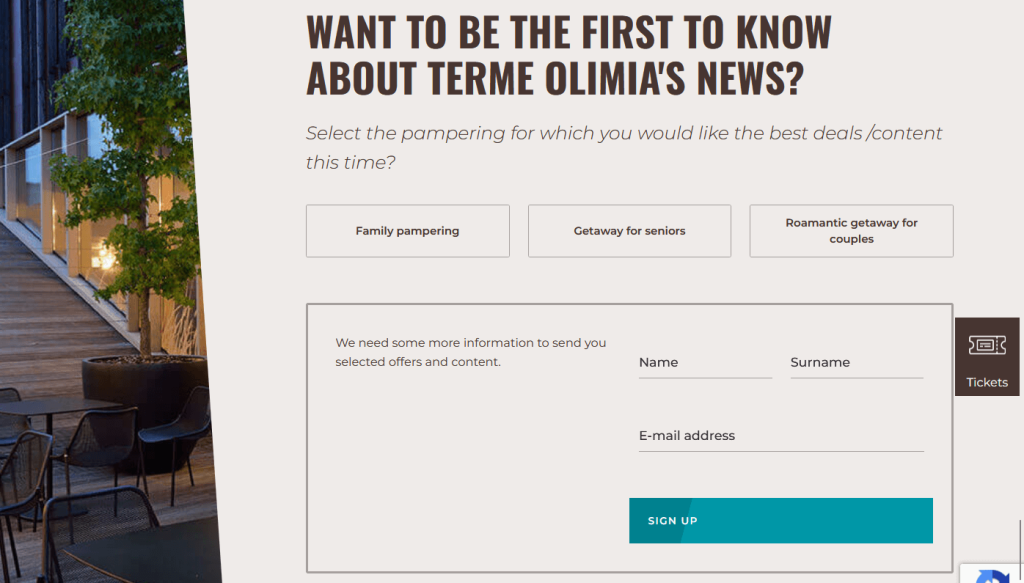
Source: Terme Olimia
Moreover, when customers choose what kind of content they want (family pampering, getaway for seniors, or romantic getaway for couples), the marketing team can segment them into different groups and send them tailored emails based on their preferences.
This demonstrates how lead magnets align with targeting market audiences and creating leads that resonate with specific guest groups.
To conclude, the essence of lead magnets lies in exchanging value: to think of an attractive offer that convinces potential hotel guests to share their contact information (usually an email address) in exchange.
This forms the basis for building and nurturing lasting relationships with your leads.
Conclusion
And that wraps it up!
In this comprehensive guide, we’ve covered the ins and outs of lead generation.
Why it matters, the challenges hotels can stumble upon, and three practical tips for generating leads and transforming them into happy guests.
As we part ways, we sincerely hope that this guide nudges you into a deliberate lead-generation journey.
Truth be told, identifying your target market, strengthening your online presence, and crafting appealing lead magnets are the essentials to thrive in today’s competitive hotel industry.
We wish you success in bringing in those leads and standing out in the bustling world of hotels!