
Today, when travelers rely heavily on online platforms to discover and book accommodations, understanding and optimizing your lead generation has become more critical than ever.
In this article, we will delve into hotel lead generation and explore six ways to measure its effectiveness.
Whether you’re a hotel owner or a general manager, these methods will provide valuable insights into the efficiency of your lead sources.
So let’s get started.
Compare the Results from Different Lead Sources
Nowadays, competition is truly fierce, so hotels have to use various marketing channels to appeal to paying customers.
To stay competitive today, you also likely rely on various lead sources, ranging from the hotel’s website and online travel agencies (OTAs) to social media, email campaigns, or referrals.
After all, this is the norm in today’s digital landscape.
Sean O’Neill, a journalist from the travel magazine Skift, confirms that.
He knows that traditional marketing tools such as old-school signs in front of hotel buildings are no longer sufficient in this age of information overload.
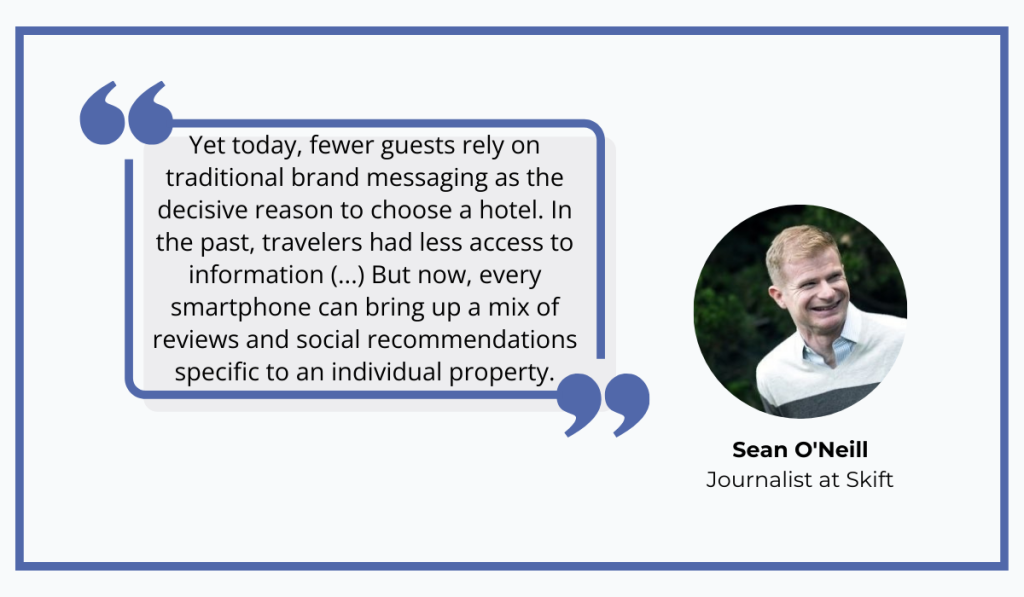
Illustration: WebBookingPro / Data: Skift
Yet, not all marketing channels are created equal, and their effectiveness in generating leads varies.
That’s why it’s crucial to assess the performance of each source in order to make better-informed decisions in the long run.
For example, if you find that a significant number of guests book through social media, or you get an increase in website traffic and bookings after a certain social media campaign, consider investing more in this channel.
Conversely, if you’re investing a lot of effort in the email campaigns, but they result in fewer conversions than you expected, either reassess the strategy and make some changes or reallocate resources to other, more successful channels.
And there are some tools that can help you with the analysis.
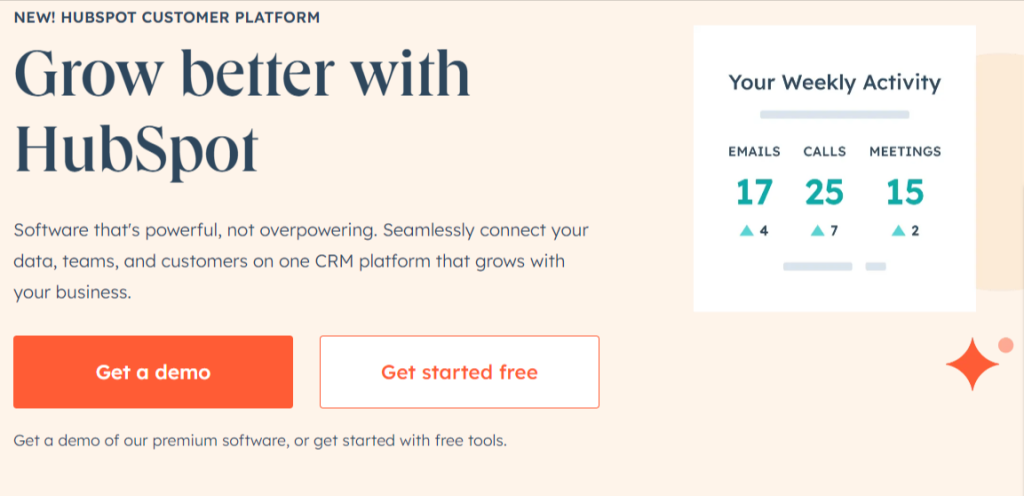
To compare results from different channels, you can also use specialized analytics tools that can integrate them, like for example Hubspot.
Source: HubSpot
Hubspot can analyze both your website content performance, your email campaigns, and certain social media posts. But there are many other tools to explore in this arena.
Such tools can offer you an in-depth analysis of your lead generation, allowing you to see how potential customers interact with your marketing efforts, and enabling you to utilize that data to fine-tune your sources and make them more effective in generating conversions.
Overall, identifying your strengths and weaknesses is the very first step you need to take if your goal is more leads and sales.
Only then can you truly understand what needs to be done to attract more guests, make the whole experience special for them, and ultimately, ensure long-term success.
Check the Industry Benchmarks
Another way to assess the effectiveness of your lead generation efforts is by benchmarking your performance against industry standards.
In fact, regularly analyzing your lead generation metrics and comparing the numbers with the industry standards isn’t just advisable; it’s a necessity.
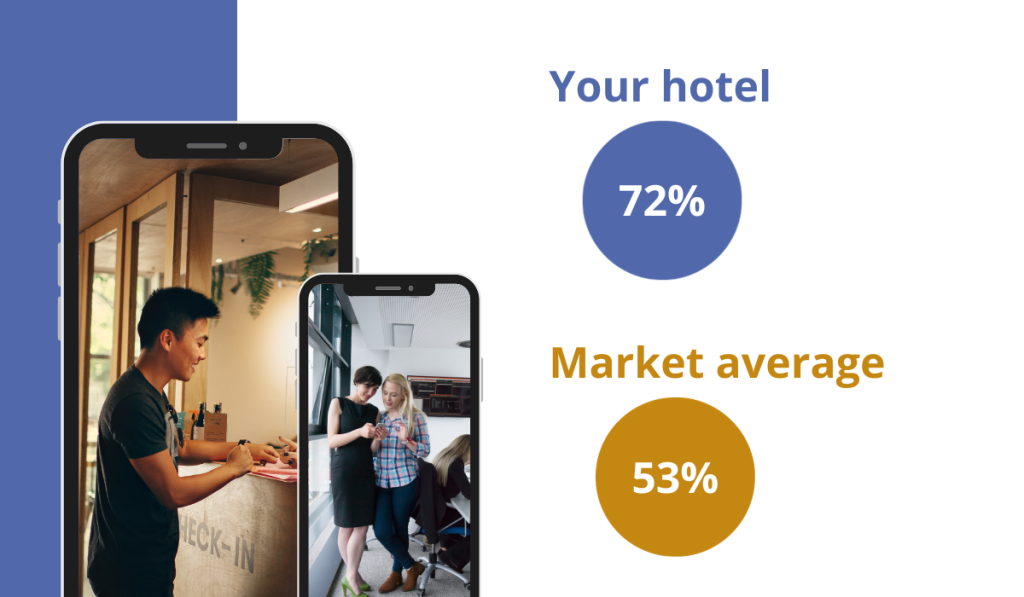
For example, the research from Revinate shows that hoteliers sending card abandonment email campaigns manage to achieve a 12% conversion rate, on average.
If you’re doing the same but are way behind these numbers, it’s time to think about how to improve your campaign.
Similarly, the industry benchmark for gross marketing cost to acquire a lead including both paid and organic sources is calculated at $266. Now, if your numbers are higher, then it’s time to change your strategy.
Source: WebBookingPro
Essentially, staying current with industry best practices and standards ensures not only meeting but also exceeding expectations in this highly competitive landscape.
To survive in such an environment, it’s essential to pay close attention to how you fare against other competitors.
In this context, we should also include following the current trends.
Just to illustrate, one of the significant trends today is green travel, as highlighted in booking.com’s 2023 Sustainable Travel Report.
According to this survey, a considerable number of travelers prioritize sustainable options, with nearly half of them willing to pay more for eco-friendly accommodation, and the majority expressing a desire for hotels to provide more such alternatives.
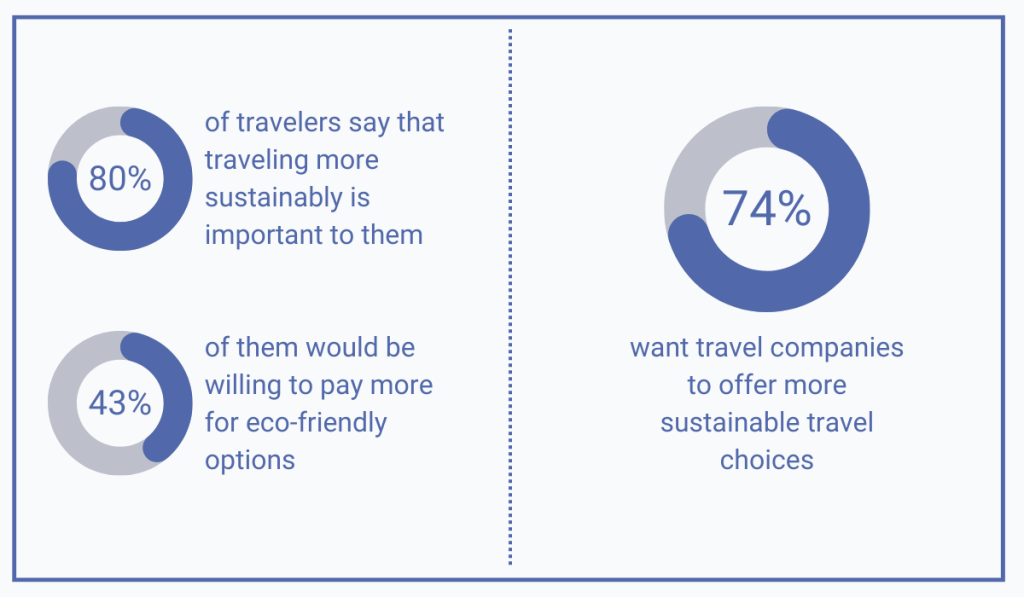
Illustration: WebBookingPro / Data: booking.com
So if your establishment offers these options but isn’t attracting many environmentally conscious visitors, this might indicate a communication gap across your channels.
Evidently, the demand is there, but for some reason, your website, social media, and email campaigns are not bringing in these specific groups of guests.
Even Tripadvisor’s users are asking for more sustainability-focused ratings.
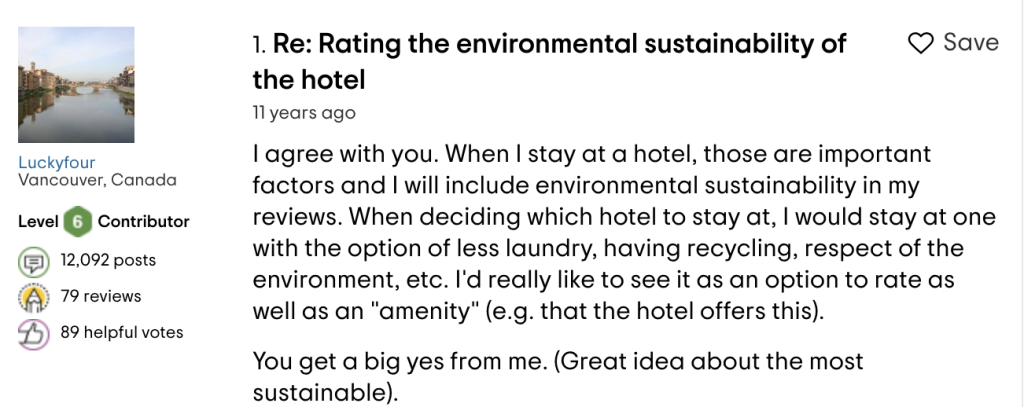
Source: Tripadvisor
However, despite the growing importance of sustainability, pricing remains a pivotal factor for travelers when selecting accommodation.
Naturally, this is also something you can leverage to determine the success of your lead-generating efforts.
Just by checking different listings on booking.com, or checking your top competitors’ websites, you can see whether or not your prices are significantly higher than theirs.
If they are, this might explain why you aren’t getting as many bookings as you’d wish.
In summary, staying vigilant and conducting thorough research on industry benchmarks, trends, and best practices is paramount for any hotel seeking to maintain a competitive edge.
All the information you need to succeed is out there—you just have to pay attention to it.
Measure Your Lead Volume
Your lead volume gauges the number of leads the hotel generates within a specific timeframe, providing insights into the efficacy of your current strategy and whether it warrants further investing.
Since only a small portion of leads will convert into paying customers, the logic behind the metric is simple: the more leads acquired, the greater the likelihood of converting them into actual paying guests.
To gain a comprehensive understanding of your lead volume, utilize web analytics tools, such as Google Analytics, which track online sources of leads.
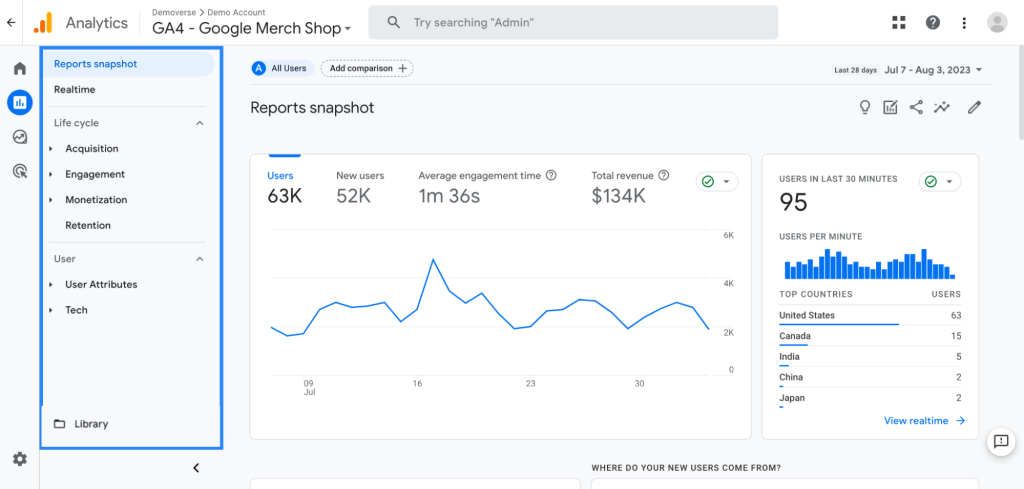
Source: Google Analytics Academy
Google Analytics is a free tool that aids in comprehending website traffic and guides your future activities by revealing what’s effective and what isn’t.
As such, it can be quite useful for evaluating how efficient your website is in helping you reach your sales goals.
For instance, your aim might have been:
- To increase website traffic by 15% each month.
- To achieve 150 views of the premium room photo gallery per month.
- To receive 20 availability inquiries per month.
Analytics can help monitor the progress toward these goals.
If you find that you’re not meeting your objectives, it could signal that the website needs some adjustments, like changes in content structure or design.
For example, if your website bounce rate is significantly higher on mobile phones than on PCs, it may indicate that it isn’t suitable for cell phones, which might deter potential visitors from booking a room.
However, it’s crucial to remember that lead volume is just one facet of assessing your marketing efforts’ success.
It alone does not provide a complete picture but merely indicates how many leads you generate in a given period.
The quality of a lead must also be taken into consideration because otherwise, their sheer volume will not result in many conversions.
Determine Lead Quality
The lead quality metric helps determine if you’re attracting prospects that are a suitable fit for your business.
Lead quality goes hand in hand with lead volume, as it’s easier to assess the quality of your leads when there are more of them.
After all, not all leads are created equal, and lower-quality ones may not be worth the investment of time, effort, or money.
One method used to assess the quality of leads is called BANT.
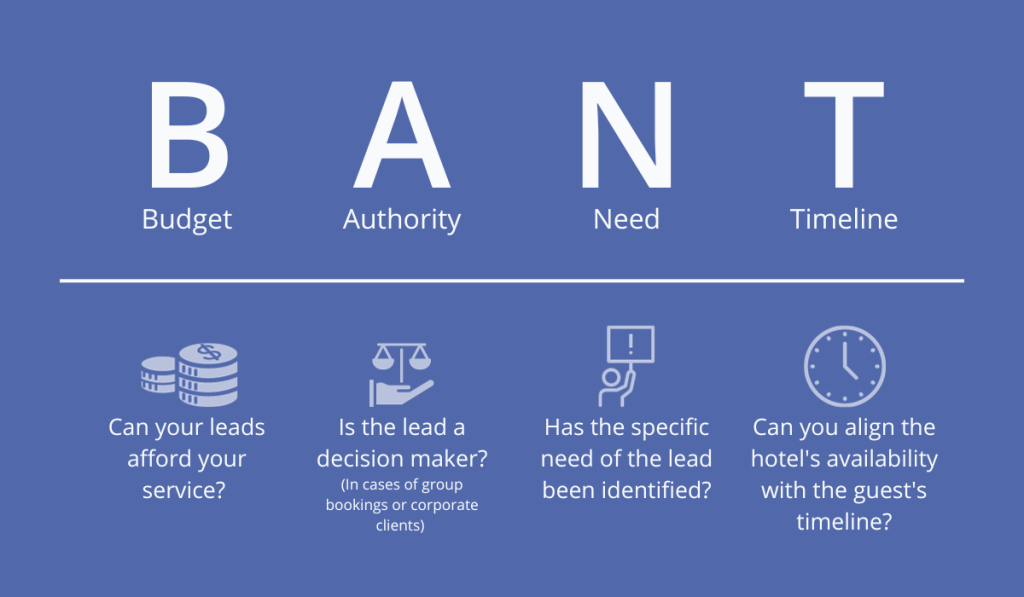
Source: WebBookingPro
Although implemented mostly by B2B companies, it can be useful to hoteliers as well, when it comes to gauging the potential commitment of a prospect to making a purchase.
The framework operates on a series of questions, with each affirmative answer indicating a higher likelihood of the lead converting and booking a room.
However, relying solely on the BANT methodology won’t provide you with a comprehensive assessment of lead quality.
Instead, to gain a fuller insight, consider customizing the approach and incorporating additional parameters, such as:
| Time of interaction | the more recent interaction, the better |
| Type of interaction | downloading a brochure, for example, is worth more than a “Like” |
| Number of interactions | more interactions mean the lead is more likely to convert |
| Pages viewed | if the lead has checked different website pages, it might indicate they are more likely to book |
| Stay frequency | a guest who’s already stayed at your hotel might be more likely to convert |
Once you’ve set your own criteria for lead quality, shift the focus to those of higher quality and nurture them based on their position in the sales cycle.
For instance, say you tested two separate audience segments with your marketing campaigns: wellness travelers and business travelers. And, the second group turned out to provide higher-quality leads.
Armed with that knowledge, you can tailor your future marketing efforts toward that group and stop targeting the segments that are such a great fit for your hotel.
Analyze Conversion Rates
Conversion rates signify the proportion of leads who complete the desired action. For the purpose of this article, we will focus on website visitors who make a room reservation.
Therefore, this metric directly correlates with profit generation.
A high conversion rate indicates more individuals are reserving rooms through your website, affirming the success of your marketing strategy, while, on the other hand, lower rates prompt the need to identify and rectify underlying problems.
You can analyze your website conversion rates using some already mentioned tools: Google Analytics, or even Hubspot.
But for this to be accurately measurable, you need to have direct bookings enabled on your website.
If you rely on an overly complicated booking process, you may deter potential guests, particularly if your booking resides on a third-party domain, which decreases the user experience and their trust.
To address such issues and convert as many leads as possible into paying customers, we at WebBookingPro have developed a booking engine that fully and easily integrates into your website.
As a result, you get a streamlined process that makes reserving a room a breeze, instills trust, and reduces the likelihood of users resorting to third-party platforms.
Below you can see our product in action:
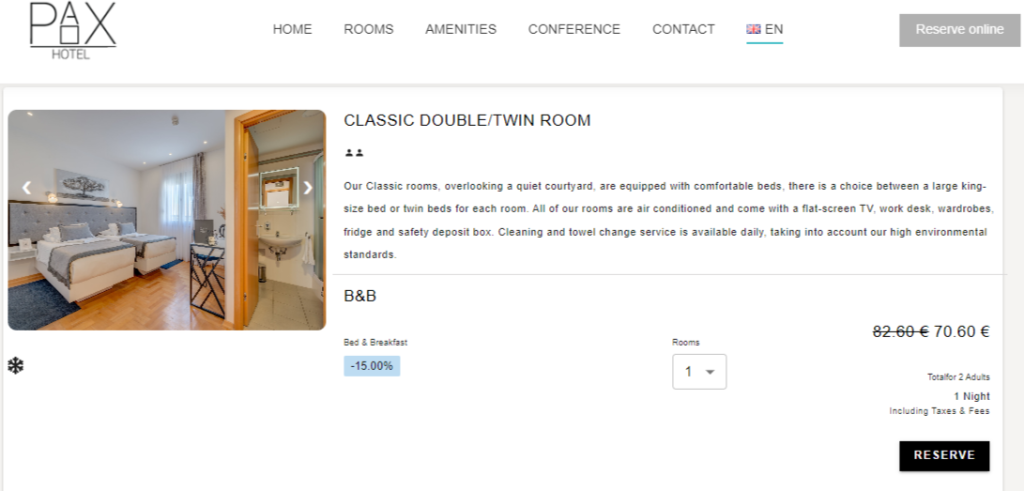
Source: Hotel Pax Split
Since it’s highly customizable, it can fit into any website seamlessly without disrupting its look and feel.
Plus, our booking engine is compatible with all devices, and works on both Android and iOS! So regardless of the device a lead uses, they will be able to make a reservation without the hassle.
In short, every hotelier’s dream is to boost direct bookings and make the website bring in revenue. Booking engines like WebBookingPro are designed to help you do that, making the most out of your own website visitors.
Calculate the Cost Per Booking
Marketing plays a significant role in the hospitality industry but often incurs substantial expenses.
For instance, if we look at the big picture, US hotels and motels have collectively spent a staggering 2.8 billion dollars on advertising in 2022 alone.
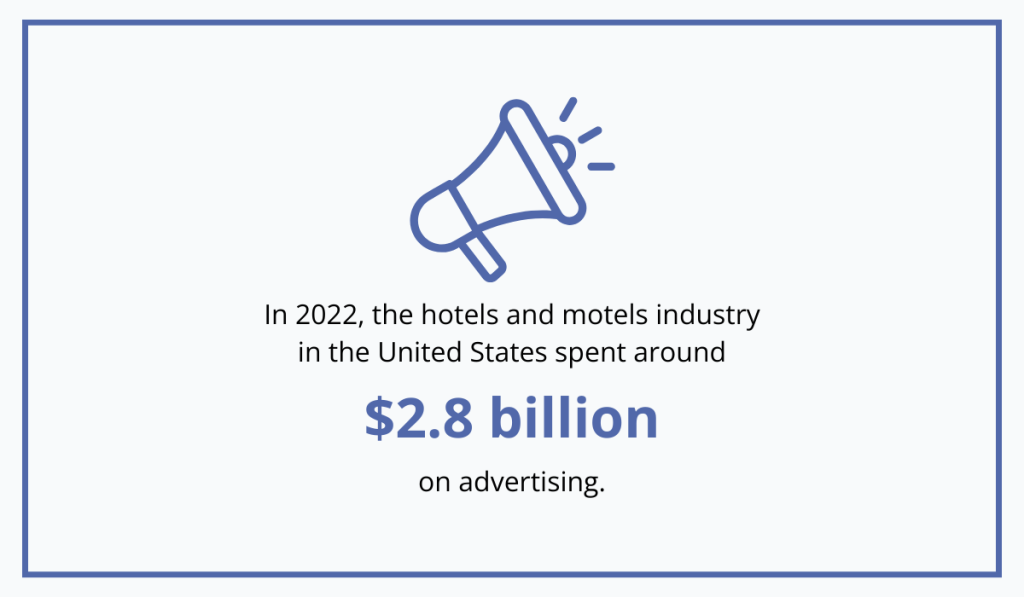
Illustration: WebBookingPro / Data: Statista
However, this isn’t to say that the effectiveness of a marketing strategy is solely dependent on the quantity or cost of your ads.
Strategic planning is also required.
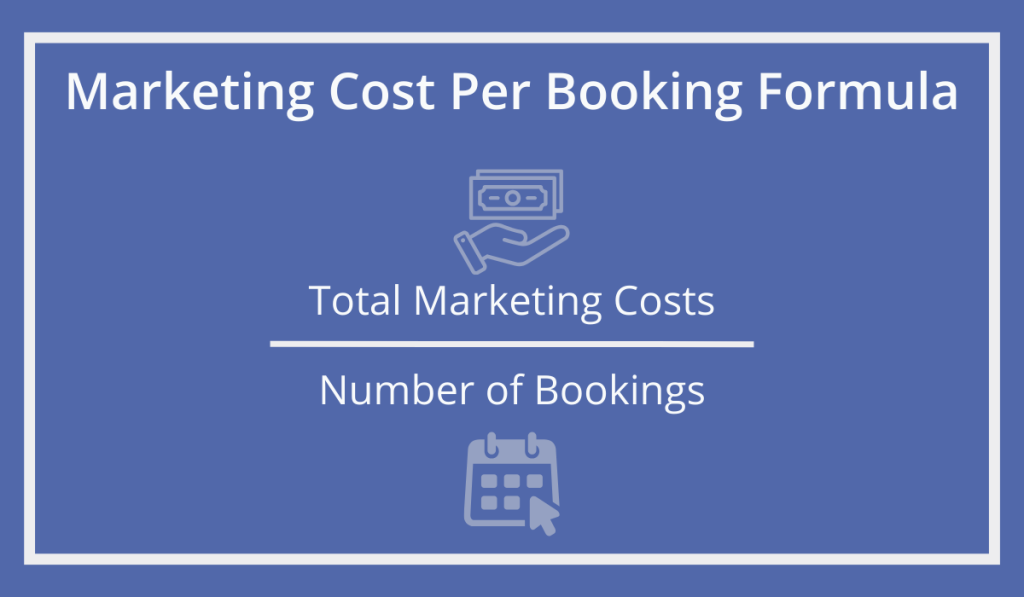
This is precisely where the final metric we’ll explore in this article comes into play: marketing cost per booking (MCPB).
MCPB, a key indicator of lead generation success, involves comparing the costs associated with guest acquisition to the actual value of bookings, making it a valuable tool for measuring return on investment (ROI).
To calculate this expenditure, you deduct the expenses incurred from each lead-generating source from the total amount of room reservations in a given period.
Source: WebBookingPro
For example, if you spent $10,000 on marketing in a month and generated 100 bookings, the MCPB would be $100 ($10,000/100).
A high MCPB indicates that your lead acquisition may not be as cost-effective, signifying that it’s relatively expensive compared to the number of leads it generates.
In such cases, it is advisable to consider reallocating resources to channels that bring in more leads for the same or a smaller cost.
Overall, tracking and calculating this value ensures a more efficient and optimized use of your marketing budget, especially when you analyze it in tandem with all the above-mentioned metrics.
After all, when it comes to successful lead generation, data emerges as the key player in making informed decisions, which leads us to our final thoughts.
Conclusion
To recap, measuring the success of hotel lead generation requires a dual focus: internally evaluating and tracking your performance metrics and externally benchmarking them against your industry and competitors.
In short, there’s a lot of calculating, analyzing, and researching involved in this process.
However, you know how the saying goes: if you don’t measure it, you can’t improve it.
This effort pays off in the long run, as it yields a deeper understanding of how your leads think, what they want, and how to attract more of them.
Ultimately, the reward for such diligence is enhanced customer satisfaction, booked rooms all year long, and long-term success for your hotel business.