
In an industry that’s constantly evolving, like hospitality, staying ahead of the curve is essential.
Success in this business, however, isn’t just about filling rooms; it’s about maximizing revenue, enhancing guest experiences, and ensuring long-term sustainability.
As technology continues to reshape the way travelers make decisions, hoteliers must adapt and refine their distribution strategies.
That’s why, in this article, we’re putting the spotlight on this crucial aspect of hotel management.
Specifically, we’ll be exploring actionable steps that you can take to optimize your hotel distribution, boost your revenue streams, and ultimately enhance your overall business performance.
Let’s dive in.
Focus on Fewer Distribution Channels
When it comes to increasing bookings and maximizing profitability through your distribution channels, the saying “less is more” definitely applies.
Contrary to common belief, more channels will not necessarily bring in more guests to your hotel, but will certainly translate to more costs.
Why keep paying for that magazine ad, when it’s not making you any money?
It’s not about how many channels you have, but about how well they work for you.
However, finding the right mix of distribution channels is a personalized journey and one that will require a bit of research and analysis on your end.
There’s no one-size-fits-all solution, and the optimal strategy ultimately depends on your unique set of circumstances, influenced by factors like your location and target audience.
Just to illustrate, let’s take a look at the top distribution channels in Sweden.
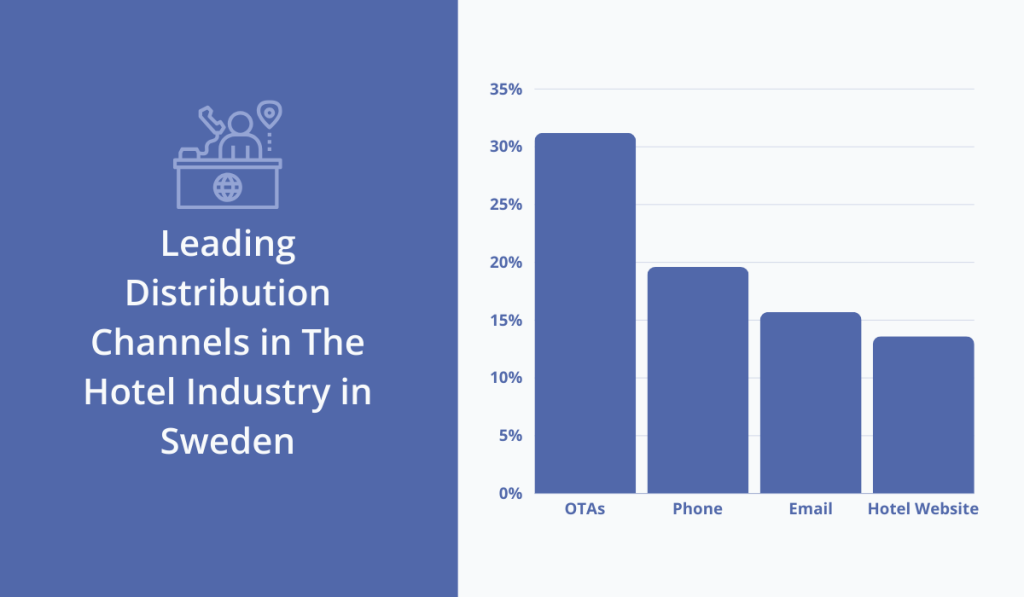
Illustration: WebBookingPro / Data: Statista
Unsurprisingly, OTAs take the first place among travelers’ preferred booking platforms, but then direct bookings via phone come right after them, followed by direct bookings via email in the third place, and direct bookings via the website in the fourth.
Nowadays, booking a hotel room via phone call might seem almost outdated to some people, especially younger travelers, but that doesn’t make it an unviable channel option for certain hotels.
Even the choice of the right OTA requires a strategic approach.
Your first instinct may be to go straight for the big names like Booking.com, but depending on the country you or your target demographic is in, there may be even better options for your hotel.
If we look at the popular online travel agencies in Japan, for example, Booking.com plays catch-up, with Ikyu, Jalan, and Rakuten Travel.
Those three are leading the race.
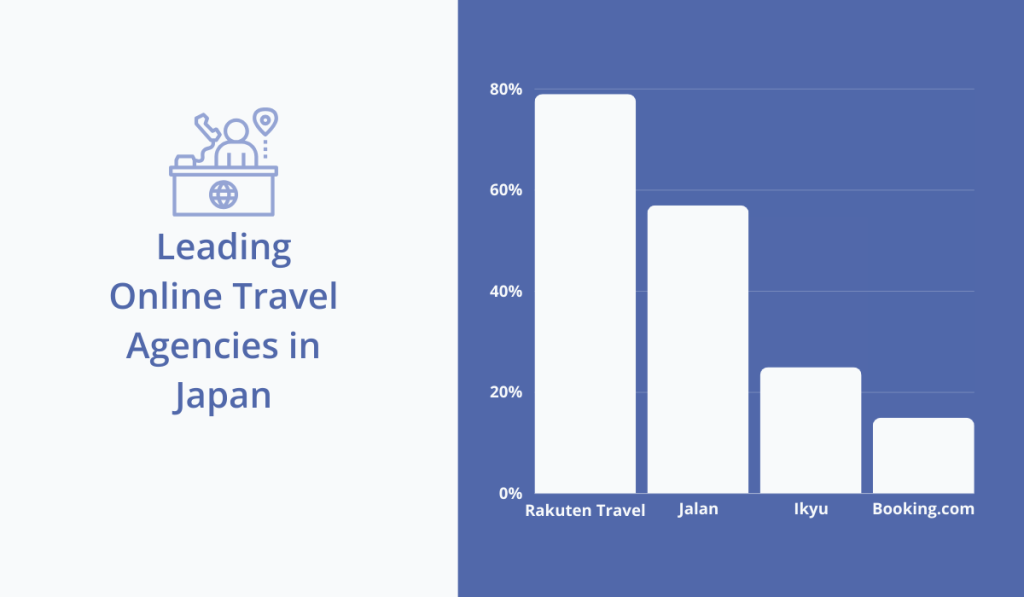
Illustration: WebBookingPro / Data: Statista
Keeping up with such trends is pivotal, ensuring your distribution channels align with the preferences of your target audience.
To avoid wasting resources on ineffective channels, it’s essential to measure and analyze their performance through Key Performance Indicators (KPIs) like:
- Conversion rates
- Distribution expenses
- RevPAR
- Cancellation rate per channel
- Average length of stay
They’ll show you the trends, the patterns, and the demographics—everything you need to fine-tune your strategy.
Yet, the ultimate guide is your customers.
Pay attention to their reviews regarding particular channels to stay on top of the latest trends or issues.

Source: TripAdvisor
What do they like or dislike about specific channels? What makes them use them?
You can’t have happy guests if you’re not tuned into their preferences, after all.
Armed with information from KPIs and customer feedback, you can optimize your distribution strategy, eliminating those unnecessary channels and managing the ones you keep more effectively.
This approach not only maximizes their potential but also expands your reach to new audiences, all while keeping marketing costs under control.
Invest in Technology that Drives Direct Bookings
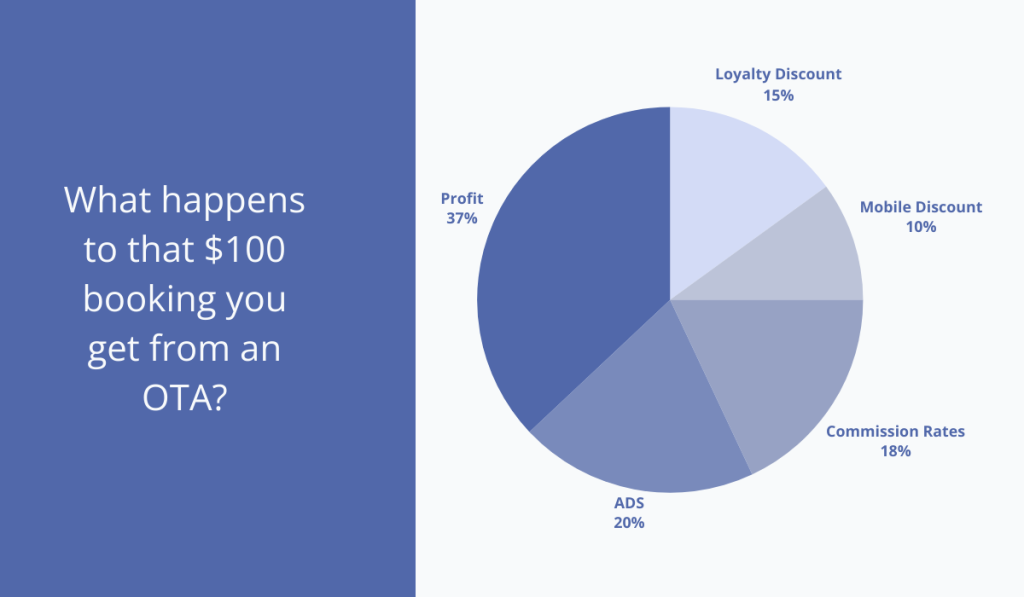
In the competitive landscape of the hospitality industry, where profit margins are squeezed by various fees imposed by online travel agencies, hoteliers are increasingly recognizing the cost-effectiveness of direct bookings.
The limited profitability arising from OTA loyalty or mobile discounts, visibility boosters, and other similar fees truly underscores the importance of optimizing the hotel’s website for bookings.
Source: WebBookingPro
In short, OTAs might be somewhat efficient for increasing your visibility but not so much for improving your bottom line.
Another compelling reason to focus on this direct channel is the fact that a big portion of travelers actually prefer booking via a hotel website.
While it’s undeniable that OTAs probably aren’t going anywhere any time soon, statistics show that direct channels are here to stay as well.
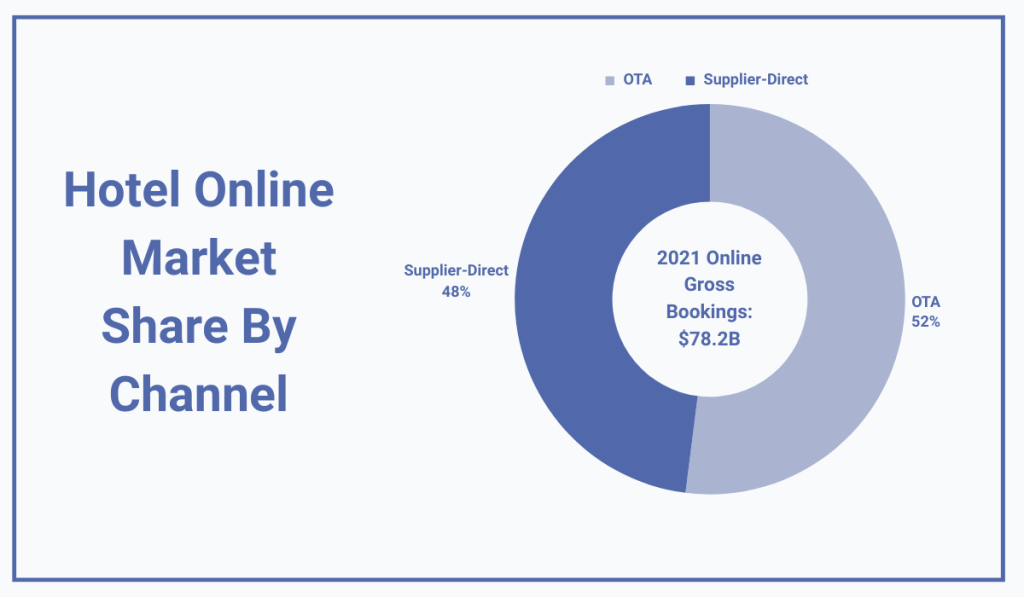
Illustration: WebBookingPro / Data: Phocuswright
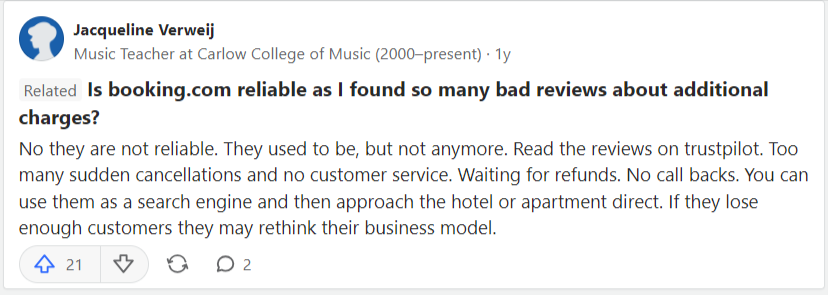
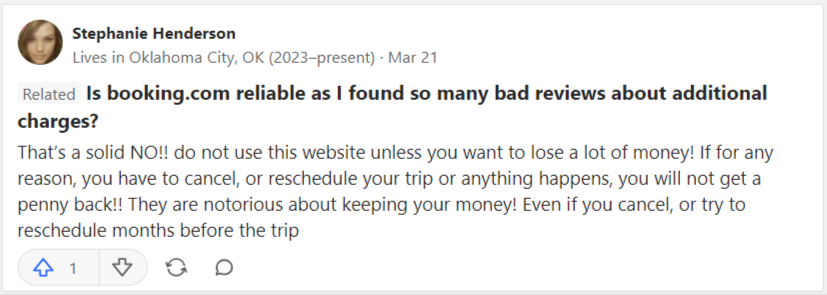
With growing awareness of the risks associated with third-party websites—ranging from miscommunication to scams—travelers are seeking the safety and reliability offered by direct bookings.
Source: Quora
A complicated room reservation process, however, diminishes that reliable image and causes travelers to go look elsewhere, causing you to miss out on those direct bookings and extra profit.
In other words, neglect to provide a seamless booking process, and your potential guests won’t waste their time on either your hotel or its website.
Luckily, website abandonment can quickly be fixed through the implementation of the right software, like our own web booking engine, WebBookingPro.
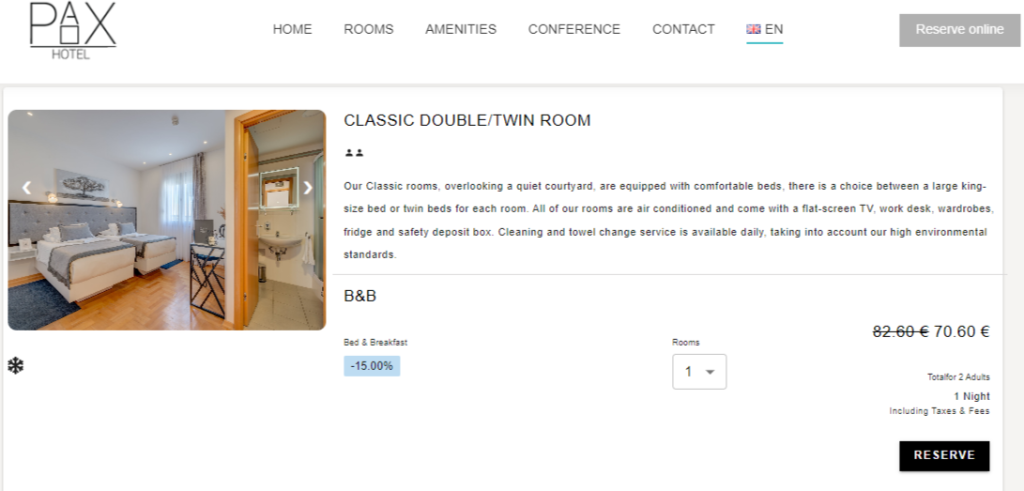
As demonstrated in the image below, this system effortlessly integrates with your website and aligns with your brand identity, enabling users to check room availability, select a suitable room, and make reservations in just a few clicks.
Source: Hotel Pax Split
Besides, the solution is compatible with any device, operating system, and browser.
Regardless of your property’s size, WebBookingPro streamlines the booking process for customers while providing you with complete control over room inventory, discounts, and payments—all without any commission cost!
Recognizing the pivotal role of user-friendly interfaces in travelers’ decision-making, our solution is tailored to enhance the overall booking experience and actually motivate users to stay on your site until they complete that room reservation.
At the end of the day, your website is your most profitable distribution channel, so why not harness technology’s power to redirect your clientele there, instead of having them navigating potentially unreliable third-party websites?
That way, you get satisfied guests, fully booked rooms, and increased profits.
That’s a win-win-win situation.
Build Relationships with Distribution Partners
Believe it or not, the symbiotic relationship between you and your distribution partners holds the key to unlocking considerable improvements to your bottom line.
Negotiating mutually beneficial commission rates or terms can lower your distribution costs, thereby increasing the hotel’s profitability, while, by working together with your partners on various campaigns, you can reach wider audiences and book more guests.
For instance, in 2022, IHG Hotels and Resorts, a Windsor-based multinational hospitality group, selected Expedia as its official preferred distribution partner, fueling growth and profit for both companies.
“We are thrilled to join Expedia Group’s Optimised Distribution Program. This arrangement will enable us to more seamlessly manage our wholesale distribution by providing cost savings, better control over our channel mix, and enhancements to our revenue management strategy, ultimately driving additional value for our owners and hotels.”
In fact, George Turner, IHG’s chief commercial and technology officer, credits Expedia’s Optimized Distribution Program for maximizing their channels’ potential and improving revenue strategy.
Apart from partnering up with special programs on a preferred basis, which is more suitable for larger enterprises, several other actions can strengthen these partnerships.
Firstly, be sure to prioritize open and constant communication.
Keeping partners in the loop about relevant updates, such as pricing changes, promotions, discounts, new amenities, or renovations, is vital.
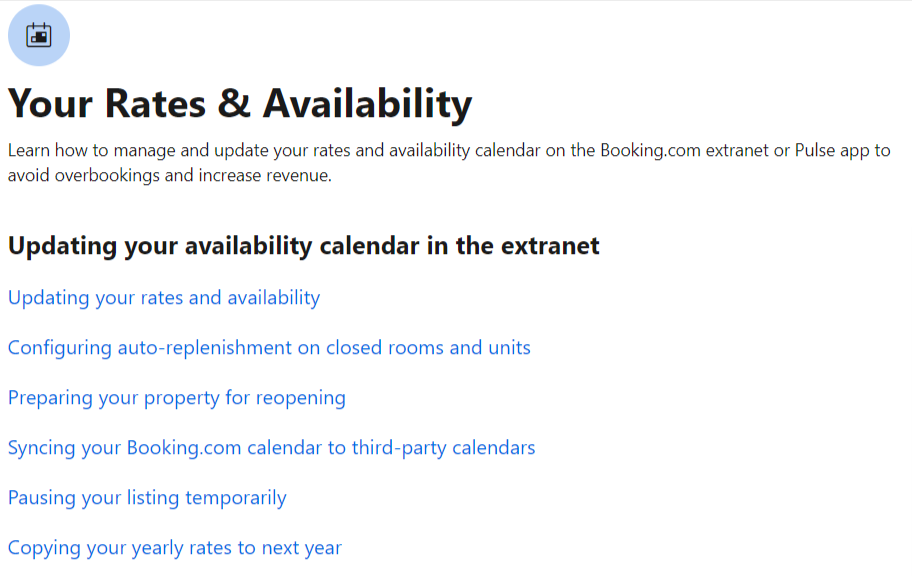
While OTAs sometimes have automated processes for such updates, as illustrated by Booking.com’s Partner Hub below, offline channels require timely information to avoid miscommunication and to make sure they stay aligned with your marketing strategy.
Source: Booking.com
It’s best to appoint one person as a point of contact, whose task will be providing such information to specific partners.
Also, make sure to regularly share high-quality images, videos, and other marketing materials with your partners.
As highlighted by Expedia’s survey, compelling visuals can make all the difference for your booking rates so make sure your partners have what they need to create those stunning brochures, banners, or ads that’ll keep bringing guests to your hotel.
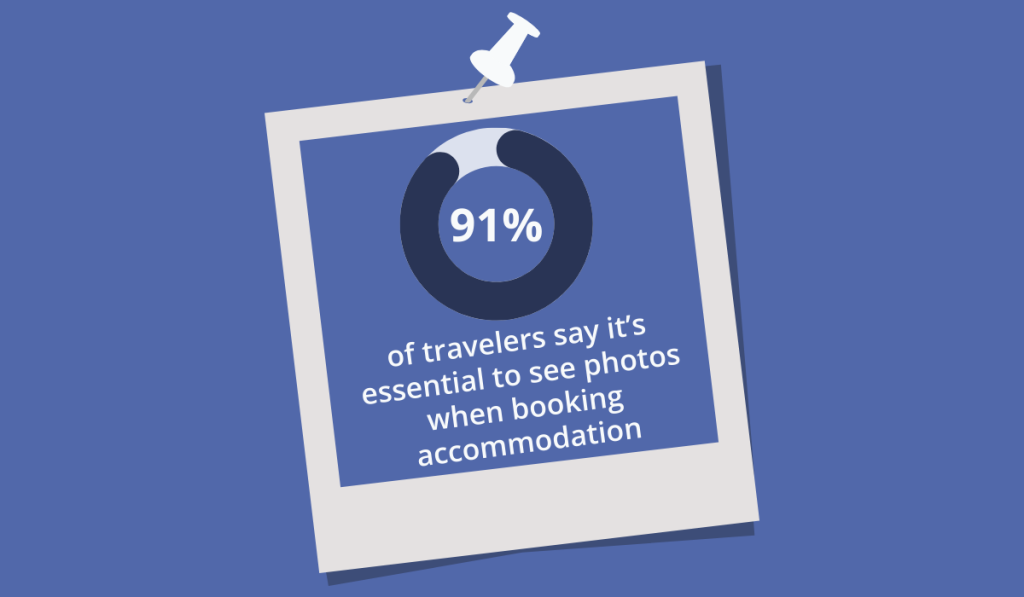
Illustration: WebBookingPro / Data: Expedia Group
Ultimately, it’s about helping your partners help you.
Collaborative campaigns further cement the bond between hotels and distribution partners, with advantages for both entities.
Marriott’s integration with the Latin American super app Rappi serves as an interesting example in this context.
Here’s how their program works.
Rappi Prime users in Mexico receive Bonvoy points for their orders via the app, with extra points for deliveries to affiliated Marriott hotels.
Similarly, Bonvoy members can convert their loyalty points into Rappi credit and use them for purchases via the app.
Essentially, by linking Rappi and Marriott Bonvoy accounts, users can unlock different exclusive benefits, incentivizing them to use the services both companies provide.
Guido Becher, global head of travel for Rappi sees this collaboration as opening doors to new means of customer acquisition.
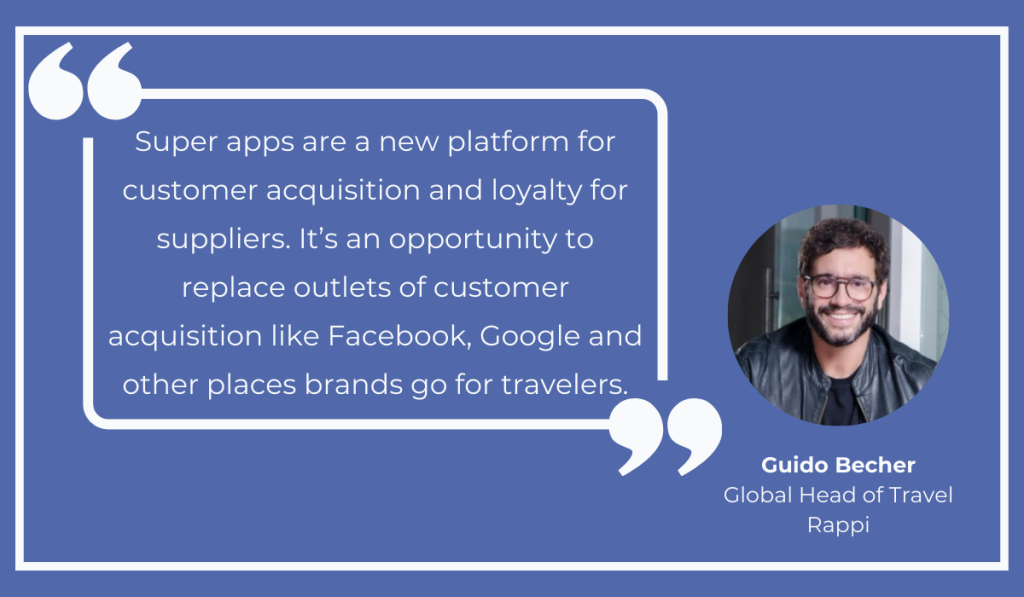
Illustration: WebBookingPro / Data: PhocusWire
While such collaborations are still not that common (in fact, this is an industry-first), exploring creative ways to work with the partners, whether it’s online promotions, social media campaigns, or co-branded advertising efforts, can open new avenues for hotel exposure.
Embracing unique opportunities for cooperation, regardless of the hotel’s size, can truly yield unprecedented results.
The hospitality industry is ever-evolving, and hotels that actively seek out and cultivate strong relationships with distribution partners may find themselves on a path to enhanced visibility, increased booking rates, and ultimately, unforeseen success.
Enhance Your Social Media Presence
In the hospitality industry, it’s widely understood that neglecting social media platforms means overlooking a golden opportunity to increase bookings, boost profits, and improve the bottom line.
This is especially true if you’re aiming to appeal to younger travelers.
Research from American Express underscores the influence of social media on Gen-Z and Millennial travelers’ trip planning.
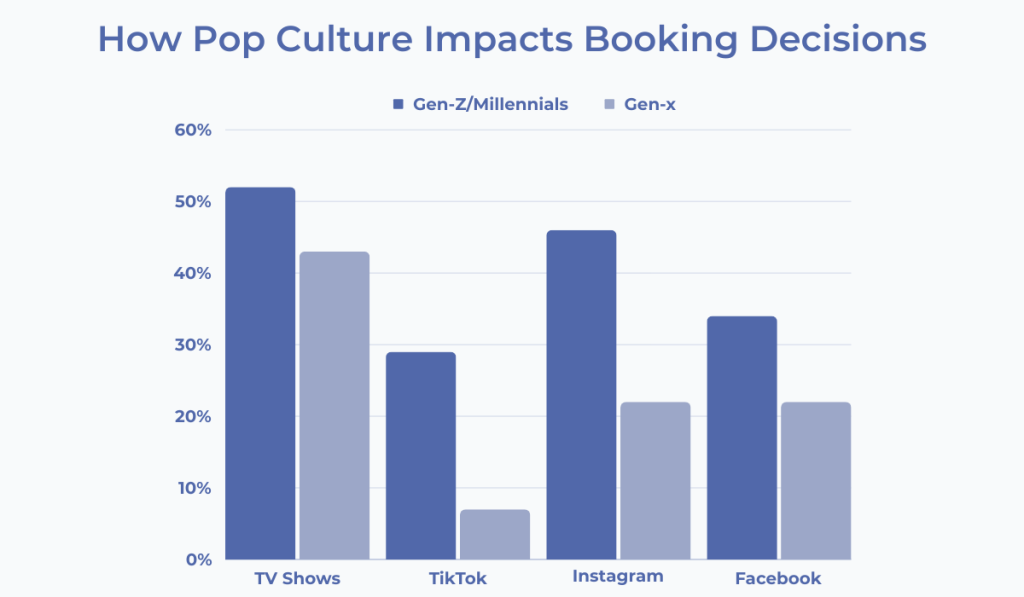
Illustration: WebBookingPro / Data: American Express
The survey reveals that the majority of them are swayed by what they see on these platforms, often choosing their destination based on its appearance in photos or videos shared on social networks.
Therefore, relying on platforms such as Instagram, Facebook, or TikTok to showcase your hotel can be a compelling factor in attracting younger guests.
Social media is not only a promotional avenue, but also a means of connecting with your audience on a more personal level.
Unlike traditional ads in magazines or on Google, it allows for creativity and a more intimate approach, enabling people to relate to your brand and its values.
That’s also what Rivero Delgado Ramos, Managing Director of Luxury Europe at Marriott International emphasizes.
She highlights the importance of this personal touch in grabbing the attention of modern-day travelers.
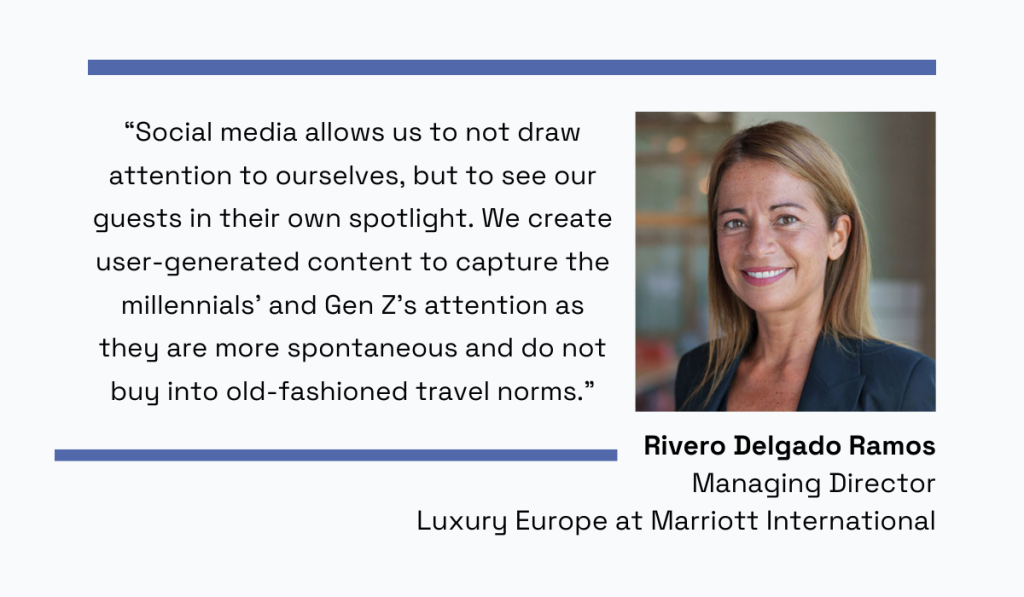
Illustration: WebBookingPro / Data: TTG Asia
According to her, old-school magazine ads just don’t do it anymore. If you want to attract guests, you need to go a step further.
So, what’s the key to boosting your social media game?
For starters, regularly post high-quality, engaging content.
This will make your social media followers feel like they know you and that they can trust you, making your hotel their go-to solution when they need accommodation.
As you know, familiarity breeds favoritism, and with the right social media strategy, your guests will be typing your website URL instead of scrolling through the big players like Booking.com or Airbnb.
Another thing you can do is to consider running exclusive promotions on your social media platforms to further incentivize users to book directly.
Here’s an example:

Source: LxHotel on X
This doesn’t necessarily have to involve discounts if such an approach doesn’t align with your financial strategy.
You can also think about offering complimentary amenities such as drinks, breakfast, or spa treatments.
The guests will surely appreciate the creativity and the effort.
All in all, social media, more than any other distribution channel, provides a platform for creativity and meaningful connections, all at no cost.
By leveraging this powerful tool, you can significantly expand your reach, build trust, and ultimately increase the likelihood of guests choosing to book with you.
All it takes is a dash of effort to consistently share captivating content.
Conclusion
There’s no denying that a well-structured and efficient distribution strategy can significantly impact revenue, occupancy rates, and overall guest satisfaction.
By adopting a holistic approach to hotel distribution, incorporating technology, analyzing data, and fostering direct guest relationships, you can enhance your business’s profitability and long-term success in this dynamic and competitive industry.
Hopefully, this article illustrated that the optimization of your distribution strategy is a journey well worth undertaking.
With dedication, a strategic mindset, and a touch of patience, the dividends reaped from this effort can be nothing short of remarkable.