
After facing challenges such as a decline in demand and travel restrictions over the past several years, hotels all around the world had to adapt to the new state of things.
However, as travel bans slowly became a thing of the past, new trends in hotel distribution emerged.
In today’s article, we’re going to cover some of the top hotel distribution trends and discuss how they can impact your hotel business.
Let’s dive right in.
Stronger Focus on Direct Bookings
High commission rates, less control over terms and conditions, and more competition in one place.
These are some of the factors that are pushing hoteliers to minimize their dependence on OTAs and shift their focus to earning more room bookings through their website.
Yes, OTAs might seem like the perfect solution for hotels that need exposure and don’t have the marketing budget to give themselves enough exposure.
There’s also no denying that being present on OTAs helps fill up hotel rooms.
However, it is essential for hotels not to rely on OTAs entirely, but rather use them to capture potential guests’ attention and then convert them into direct bookings.
A Google study has found that over 50% of travelers are going to visit your hotel website after they’ve seen your hotel on an OTA, states the QUIC Research Report.
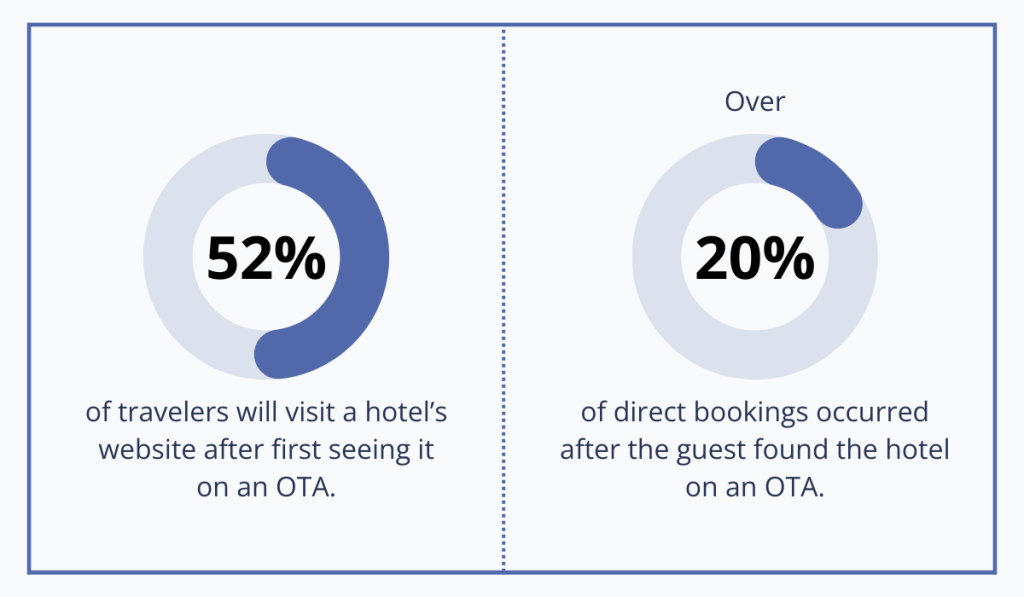
Illustration: WebBookingPro / Data: QUIC Research Report
These numbers go to show that, with the right approach, high commission fees paid to OTAs can become a thing of the past for your hotel.
More and more hoteliers are realizing this, which is why they’re looking for ways to increase their direct bookings and, consequently, their revenue.
So, how can you make it happen at your hotel?
First, make it easy for your prospective guests to book a room directly with you.
Whether they’ve come to your website from an OTA listing, a Google search, or a recommendation from a friend, one thing is for sure:
Your guests do not want to deal with a complicated room reservation process.
They want to get to your website, hit “Book Now”, and have their reservation sorted within a few minutes.
A direct booking engine, like our own WebBookingPro, can make this happen.
Let’s take a look at how.
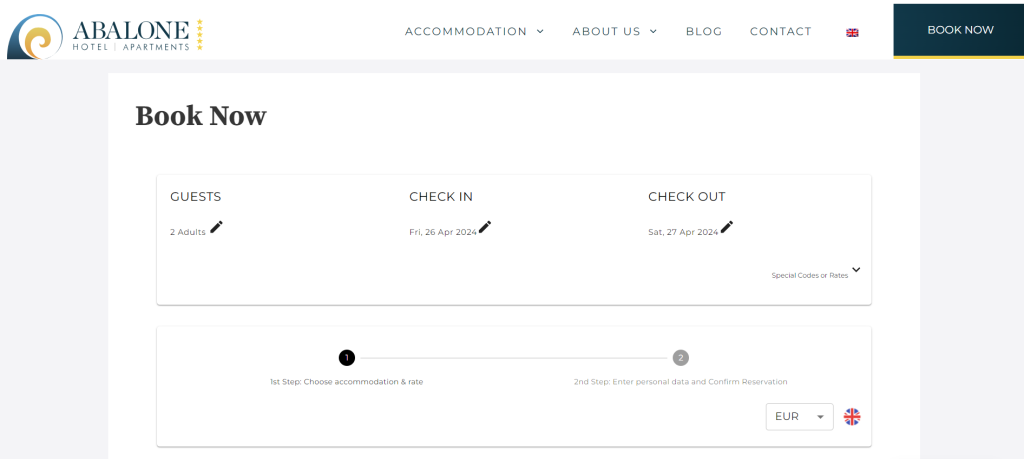
Source: Abalone Hotel
As you can see in the image above, the room booking process directly on the website of Abalone Hotel, which uses WebBookingPro, takes only a couple of steps.
All travelers need to do is enter the number of guests, their desired check-in and check-out dates, and scroll down to select the room they want to book.
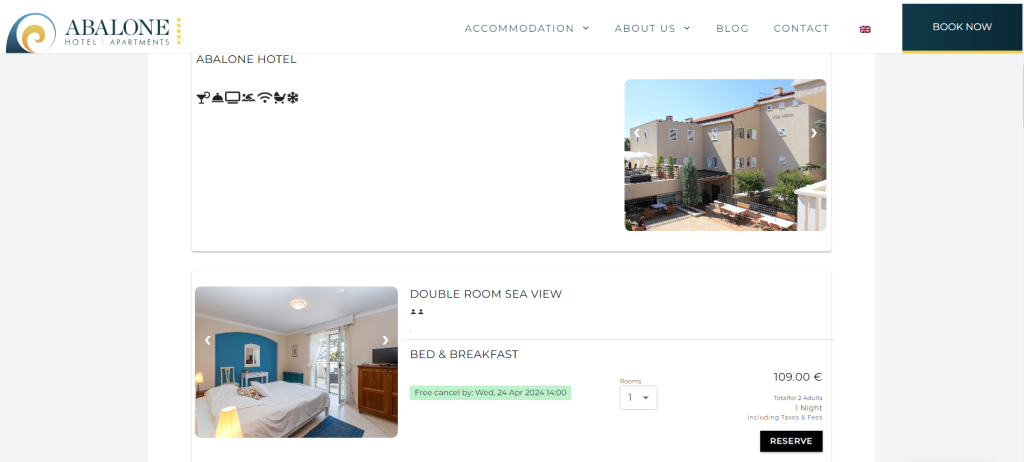
Source: Abalone Hotel
Once they’re happy with their selection, all there’s left to do is make the payment.
With WebBookingPro, this step is also taken care of directly on the website, using the Payment Manager feature.
Our payment system is compliant with the highest security standards (PCI-DSS), and it won’t redirect your guests to any third-party websites to complete the payment, which is bound to instill a sense of security.
With such a streamlined process, booking a room becomes quick and convenient.
But how do you convince your potential guests to book directly instead of through an OTA?
Well, you need to show them that they’re going to get better value for their money if they do.
Take a look at how Hotel La Luna on the Croatian island of Pag does it.
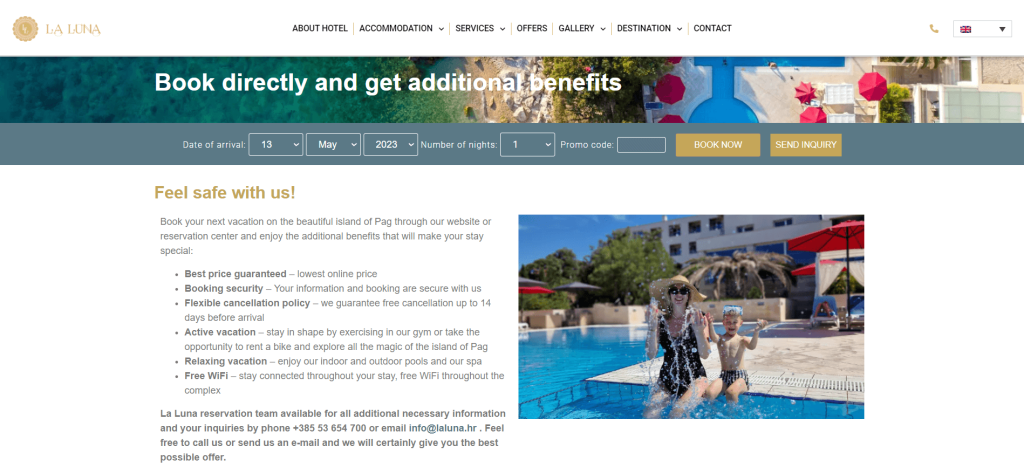
Source: Hotel La Luna
As you can see, they offer a plethora of additional benefits for guests who choose to book a room directly with them.
Even if you’re unable to offer a lower price because of your commitment to price match OTAs you’re selling your rooms on, you can always incentivize direct bookings with free transportation to and from the airport, early check-in and late check-out, or perhaps complimentary spa treatments.
The bottom line is, an increasing number of hotels are recognizing the advantages of reducing their reliance on OTAs and shifting their focus towards getting more direct bookings instead.
So, it might be a good idea for you to hop on this trend too, and reap all the benefits.
Central Reservation System Adoption
Although direct bookings are bound to be more profitable for your hotel than bookings your guests make on third-party platforms, there’s no denying that most hotels still rely on a mix of distribution channels to maximize their reservations.
Being present on multiple platforms will require you to manage all of them simultaneously, which can become quite challenging and time-consuming.
This is why an increasing number of hotels are investing in distribution management solutions such as central reservation systems (CRS).
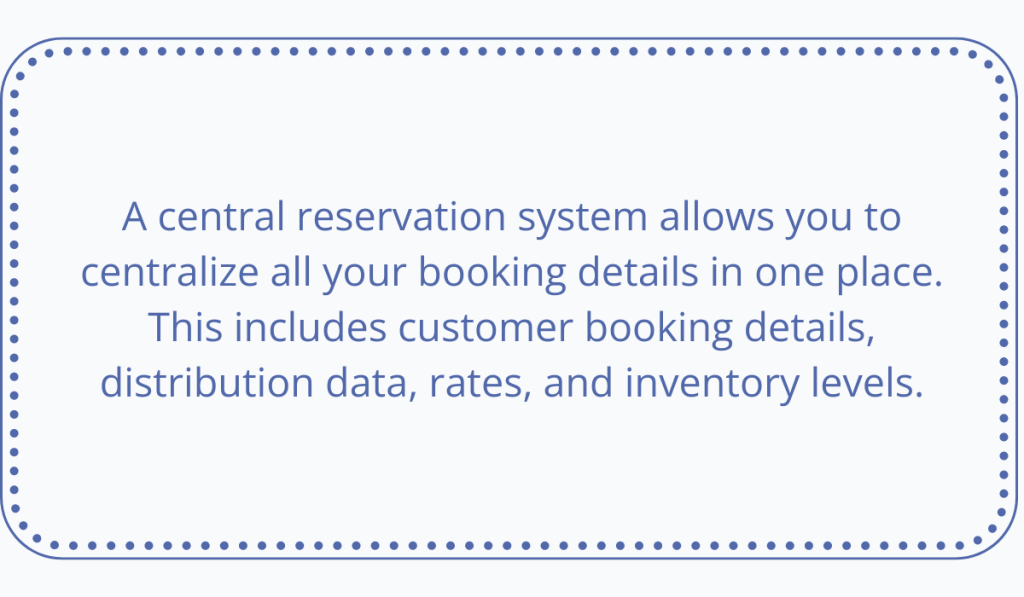
Illustration: WebBookingPro / Data: BEONx
Investing in a CRS means not having to worry about data from various distribution channels being scattered all over the place, or having to consolidate it manually.
A CRS centralizes all data from all the distribution channels you connect it to, thus increasing the efficiency of your operations and eliminating human error.
If you’ve ever had to double and triple-check all of the booking platforms you’re present on to ensure you didn’t accidentally double-book rooms, you know exactly what we’re talking about.
Apart from automatically updating room availability across platforms, a CRS can also help you increase your revenue through dynamic pricing.
Namely, you can easily define the scenarios for price corrections and set if-then rules for the system. You can adjust your room rates depending on demand, seasonality, booking trends, and other factors that can affect your occupancy.
That way, you can ensure that your prices remain competitive in all periods, thus maximizing your revenue.
Then, a CRS automates the task of updating your prices across all of your distribution channels.
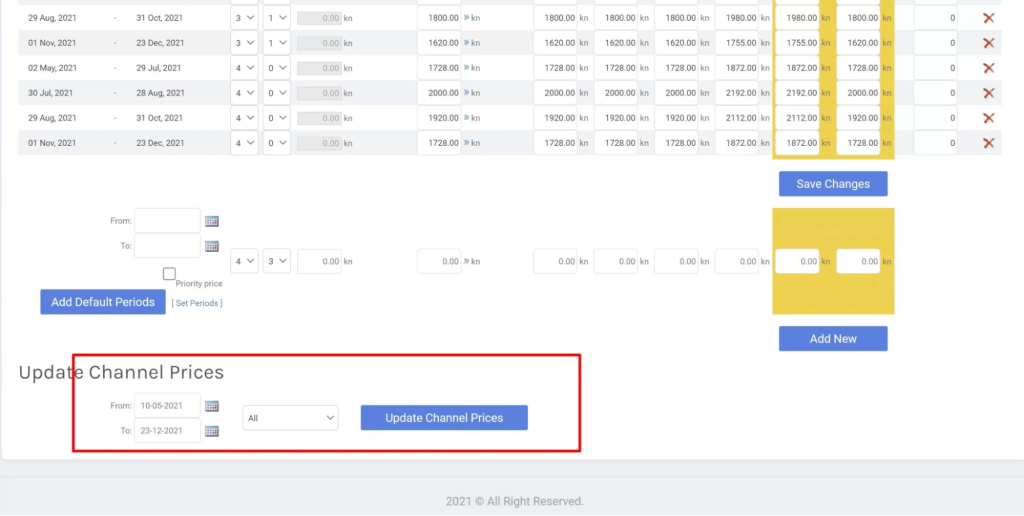
As you can see below, if you’re using the WebBookingPro CRS, all you need to do is change your prices and simply hit “Update Channel Prices”.
Source: WebBookingPro
In a matter of seconds, the connected distribution channels are going to sync, and the new price is going to be reflected across all of them, saving you valuable time and resources.
We’re sure that, by now, you’ve concluded that a CRS can have a tremendous impact on the efficiency of your booking-related operations, as well as your revenue.
That is why it’s becoming an increasingly popular solution in the hotel industry, and more hotels are expected to jump on the bandwagon in the future.
Rise of Niche Distribution Channels
As a hotelier, you know that different travelers prefer different types of vacations.
Some are into activity-packed vacations, while others want to relax at a luxurious resort.
This diversity also translates to accommodation, as more and more travelers are looking for a booking experience that is in line with their travel preferences.
To deliver just that, an increasing number of hotels is becoming present on niche distribution channels that cater to specific traveler segments.
And if you’re wondering why you should consider adding niche channels to your mix, Sebastien Leitner, VP of Strategic Partnerships at Cloudbeds explains:
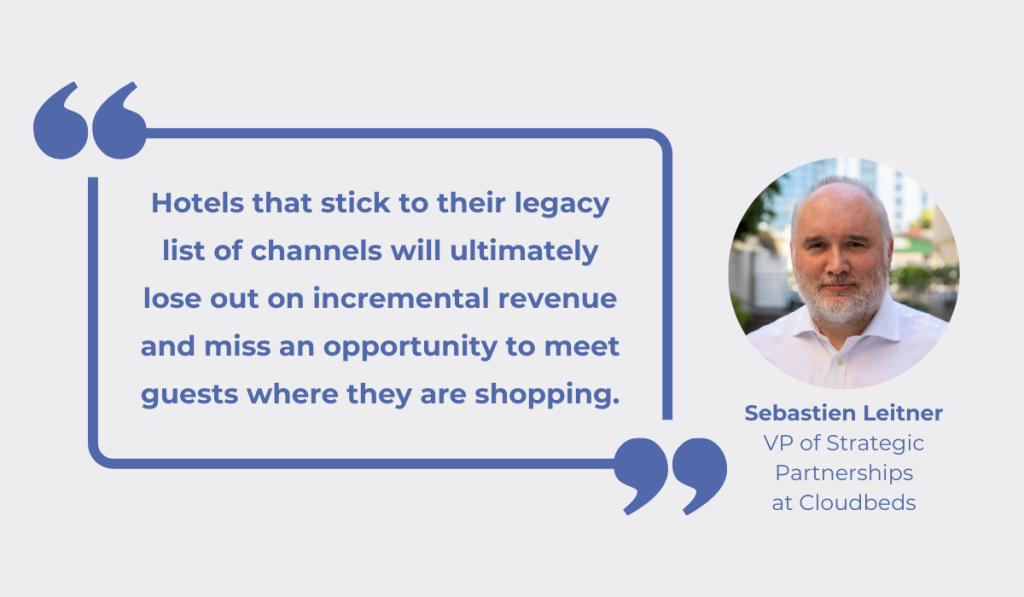
Illustration: WebBookingPro / Source: AltexSoft
Which niche distribution channels you should be on is going to depend on what kind of guests you’re trying to attract to your hotel.
So, let’s take a look at a couple of examples.
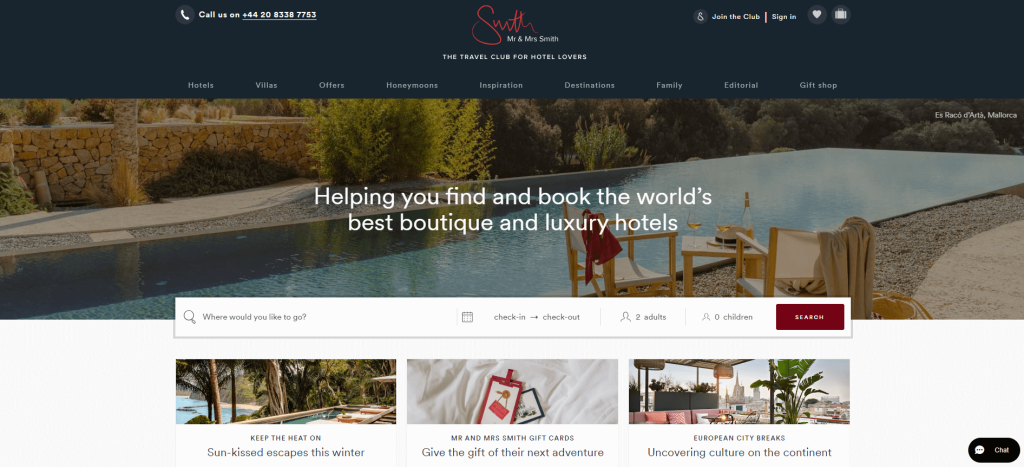
If your guests tend to visit your hotel because you provide a one-of-a-kind, luxurious experience, and you want to attract more such individuals, you may want to consider selling your rooms on a platform like Mr & Mrs Smith.
Source: Mr & Mrs Smith
Mr & Mrs Smith is a boutique hotel booking platform that is focused on helping its customers find the best luxury accommodation.
Because of their commitment to ensuring a top-of-the-line experience, your hotel needs to meet certain requirements in order to become a “Smith hotel”.
On top of that, this OTA is invitation only, and each hotel is carefully vetted by “trusted tastemakers”—a testament to how dedicated they are to providing nothing but the best for travelers who book through them.
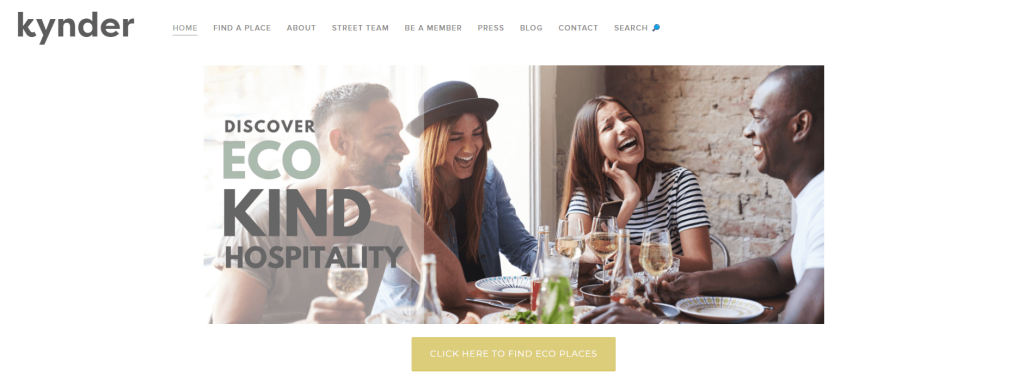
If you, on the other hand, pride yourself on being an eco-conscious establishment, a platform like Kynder might be more your thing.
Source: Kynder
This platform is dedicated to helping its users find hospitality establishments that value “kind, ethical action towards staff, guests, their community, and the environment”.
If you find that your hotel fits this description, joining a platform that gathers like-minded individuals might be a smart move.
So take a good look at your hotel.
- What kind of guests do you generally attract?
- What kind would you like to attract?
Depending on your answers, consider adding a niche distribution channel to your mix that will help spread the word about your hotel to the right audience.
Continued Use of Metasearch Sites
Apart from finding hotels that meet their needs and preferences, travelers are also looking for ways to get the best deal on accommodation.
For that purpose, they turn to metasearch sites—and hoteliers know that.
That is why hotels continue to list themselves on metasearch engines such as Google Hotels, Trivago, and TripAdvisor.
Source: WebBookingPro
The job of metasearch engines is to consolidate information—like hotel availability and pricing—from various sources to give users an overview of different accommodation options and help them decide which hotel they want to book a room at and through which channel.
With 94% of travelers using metasearch for this purpose, your presence on this channel is crucial.
Firstly, metasearch sites are a very efficient tool for increasing your hotel’s visibility and exposing it to prospective guests who haven’t heard of it before.
Think about it: How many times have you decided to buy something from a specific brand, but then you did some comparison shopping and ended up opting for a brand that was new to you, but turned out to be a much better choice?
Well, it is safe to assume that your potential guests might do the same.
Secondly, being present on metasearch sites is a great way to get more direct room bookings.
You can use your metasearch site listing to emphasize the perks of booking a room directly on your website.
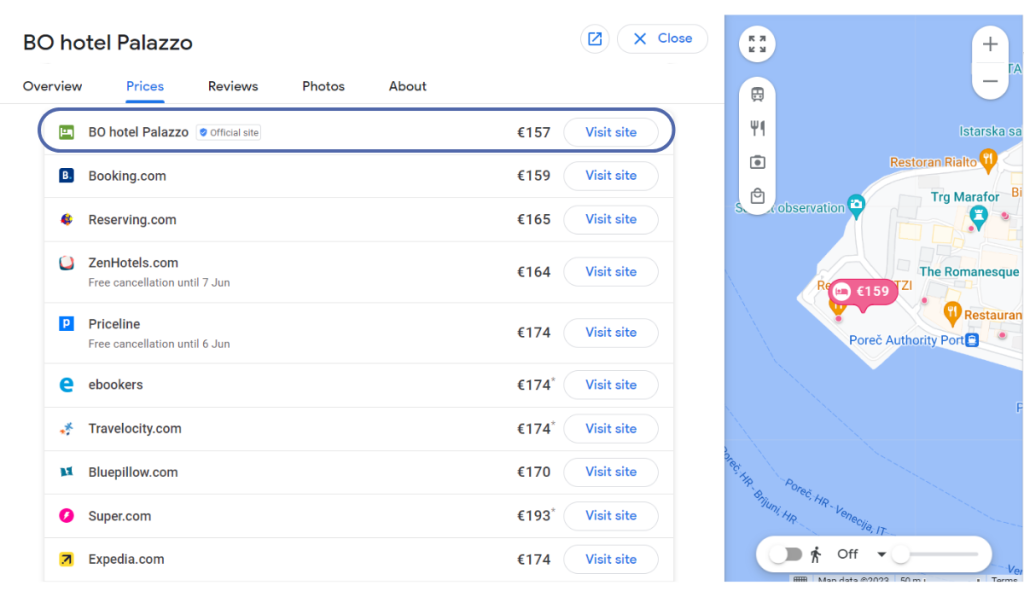
Let’s take a look at how the BO Hotel Palazzo in Poreč, Croatia does it.
As you can see below, their Google Hotels listing provides users with an overview of all the platforms they can use to book a room with them.
Source: BO Hotel Palazzo on Google Hotels
However, the direct booking option is the most affordable one.
Combine price with other direct booking incentives that the hotel outlines on its website, and prospective guests will be much more likely to book through them, rather than an OTA.
So, if you haven’t yet taken the plunge and listed your property on a metasearch site such as Google Hotels, now is the time to do so.
More Reliance on Social Media
The last, but certainly not least hotel distribution trend to know about is the growing popularity of social media as a tool for driving room reservations.
As we already mentioned, more and more hotels are realizing that the disadvantages of using third-party booking platforms outweigh their benefits.
That is why they’re looking for alternative distribution channels that don’t eat into their profit margin.
As it turns out, social media is a great choice.
Not only are social media platforms free to use, but they are also one of the primary sources of accommodation inspiration for travelers.
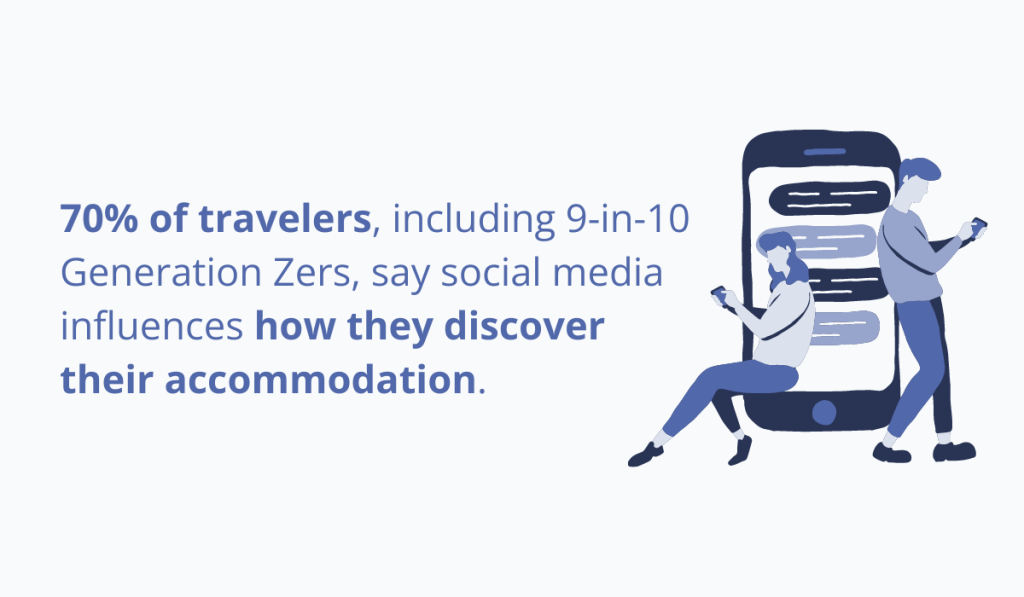
Illustration: WebBookingPro / Data: SiteMinder
This compelling statistic shows that, if utilized properly, social media can be a lucrative distribution channel for your hotel.
But what platform should you build your hotel’s social media presence on?
With 2 billion monthly active users, 60% of them being between the ages of 18 and 34, Instagram is a good place to start.
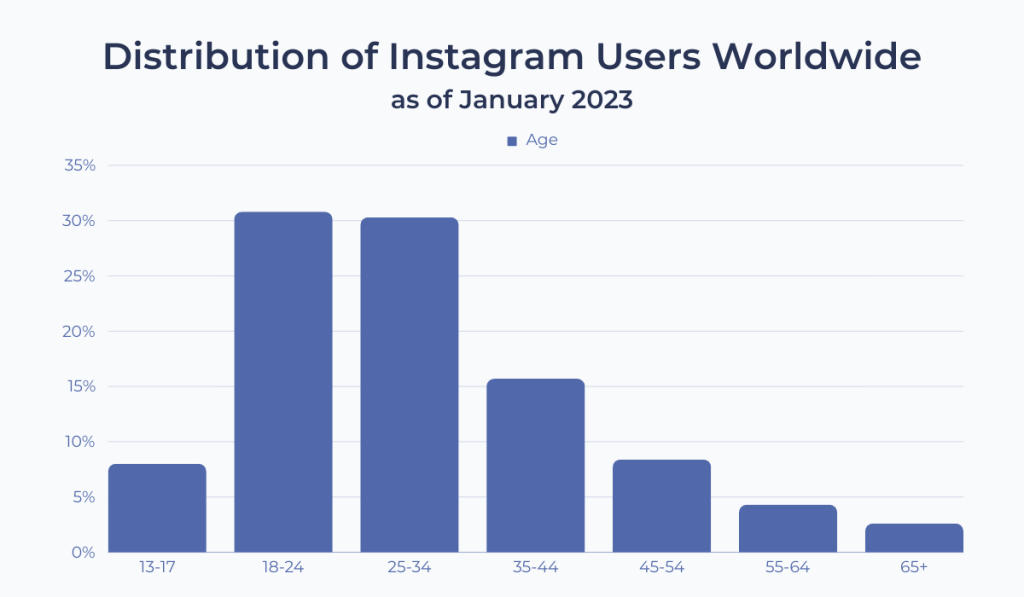
Illustration: WebBookingPro / Data: Statista
If you want to turn your Instagram account into a profitable distribution channel, you’ll need to check several boxes.
Firstly, you need to build a feed filled with engaging visuals that transport the person on the other side of the screen straight to your hotel.
But a picture is worth a thousand words, so take a look at the Instagram feed of The Lygon Arms Hotel in the Cotswolds, UK for some inspiration.

Source: The Lygon Arms Hotel on Instagram
The hotel does a great job of painting a full picture of the Lygon Arms experience, and goes way beyond posting repetitive photos of their rooms.
They’re showcasing their amenities and space in a way where users can feel the atmosphere of the hotel just by looking at the photos.
This can inspire your prospective guests to book a room with you, so don’t underestimate the power of engaging Instagram content.
With that being said, Instagram is not all about having a beautifully curated feed—at least not when it comes to using it to increase your occupancy.
Apart from posting enticing photos of your establishment, make sure to encourage your audience to book a room with you using calls to action in your captions.
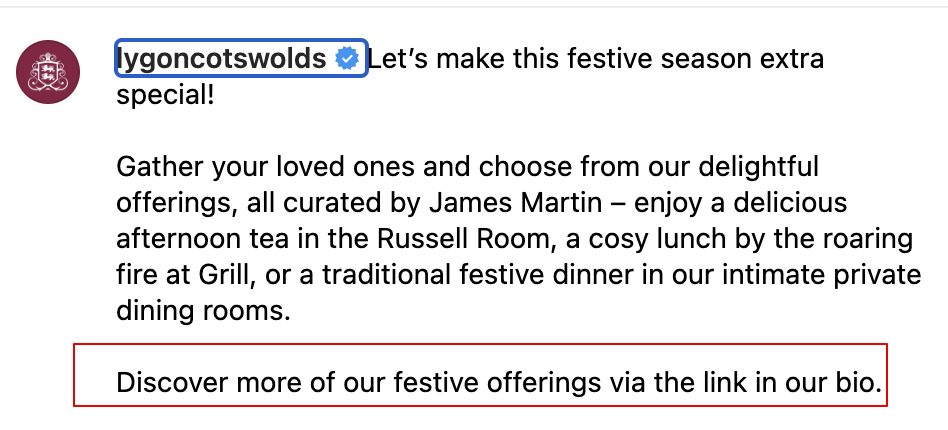
The Lygon Arms Hotel paired a photo on their feed with an informative and inviting caption that directs people to book a room.

Source: lygoncotswolds on Instagram
You can do the same by directing people to check the link in your bio. That link will then lead to your hotel’s website.
Given the number of travelers who turn to social media for accommodation inspiration, following the trend of building your hotel’s social media presence for better distribution might be well worth it.
Conclusion
With that, we conclude our list of the current hotel distribution trends that you need to know about.
More and more hotels are adopting CRS solutions, listing their property on niche distribution channels and metasearch engines, as well as building their social media presence in order to turn their website into their most profitable distribution channel.
And while jumping on the bandwagon for every one of these trends might not make sense for your hotel in particular, they are definitely something worth considering during your next distribution strategy review.