
Finding ways to attract guests to choose your hotel for their stay is likely always top of mind. And rightfully so, given how competitive the hospitality industry is.
Fortunately, you’ve landed on our page, and we’re about to discuss five straightforward ways to generate more interest in your hotel or, in industry-related terms, generate more leads.
This is achievable through various marketing strategies, and in this article, we will address the five most effective ones.
So, without further ado, let’s explore how to generate leads and then convert them into satisfied guests.
Pay-Per-Click Advertising
Pay-per-click advertising (PPC) can be your hotel’s fast track to catching the eye of potential guests on search engines.
Have you ever noticed those sponsored ads on Google when you’re searching online? Those are PPC ads, and they appear right at the top of search results when someone looks up specific keywords.
When these keywords match those you’re bidding on, prospective guests can easily discover your offer on search engines. And as the name suggests, you only pay when they click on your ad.
PPC is a bidding system, and it’s a straightforward strategy that brings instant results for hotels of any size, making it an excellent method for lead generation.
However, diving into PPC requires preparation. But its precision is worth it—you can target and attract precisely the guests you’re looking for, maximizing your leads and turning them into guests.
So, how can you start with PPC advertising?
Firstly, you must set up a Google Ads account. Then, you must think about what your target audience is searching for on Google.
In other words, you have to identify keywords that guests are searching for when looking for accommodation that could be relevant to your hotel. Tools like Google Search Console, Google Ads Keyword Planner, or Ahrefs are designed to help you identify such relevant keywords.
At this point, you should focus on specific phrases known as long-tail keywords rather than short, generic ones. Such keywords have less competition, cost less, and convert better.
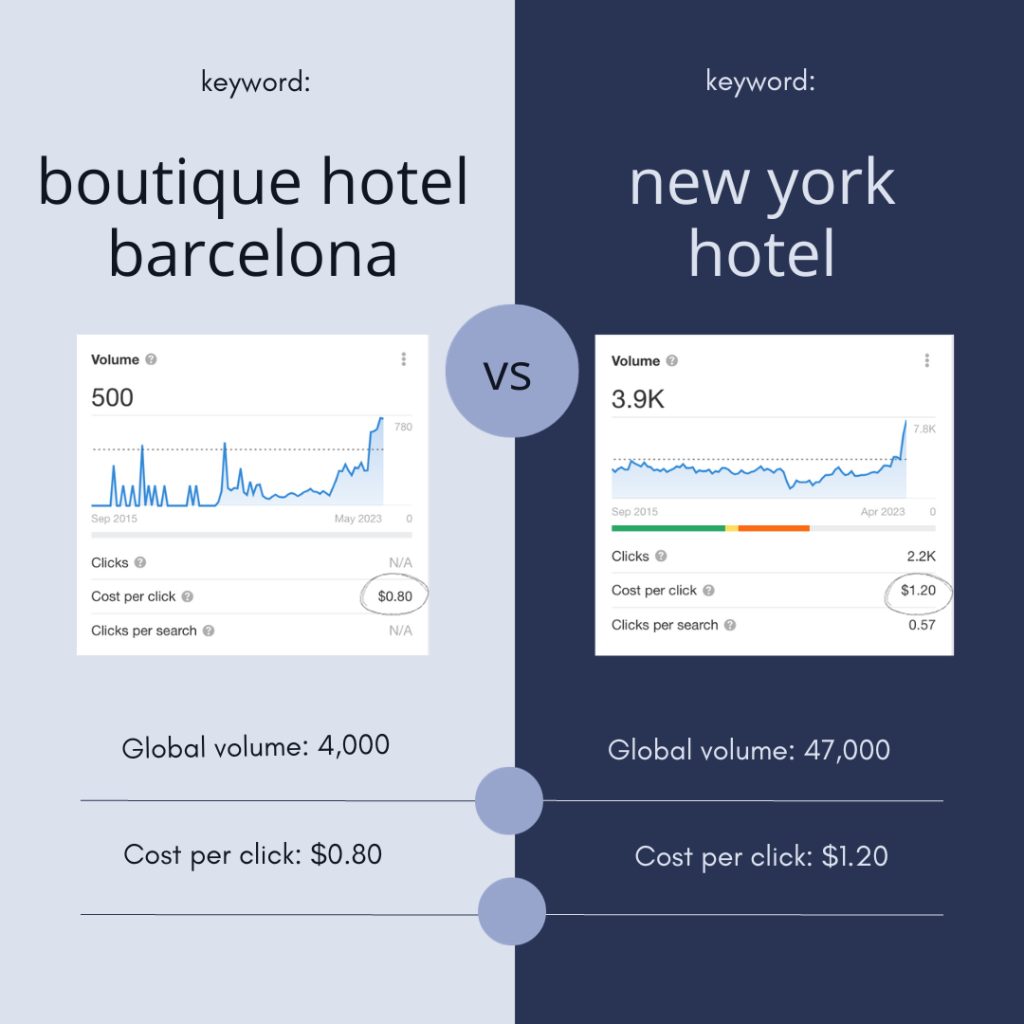
Source: WebBookingPro
Try to be descriptive with the keywords you’d like to bid on.
For example, the phrase “hotel with spa in Vienna” is much more effective than just “hotel in Vienna” as it will attract more targeted customers, who are more likely to become your guests.
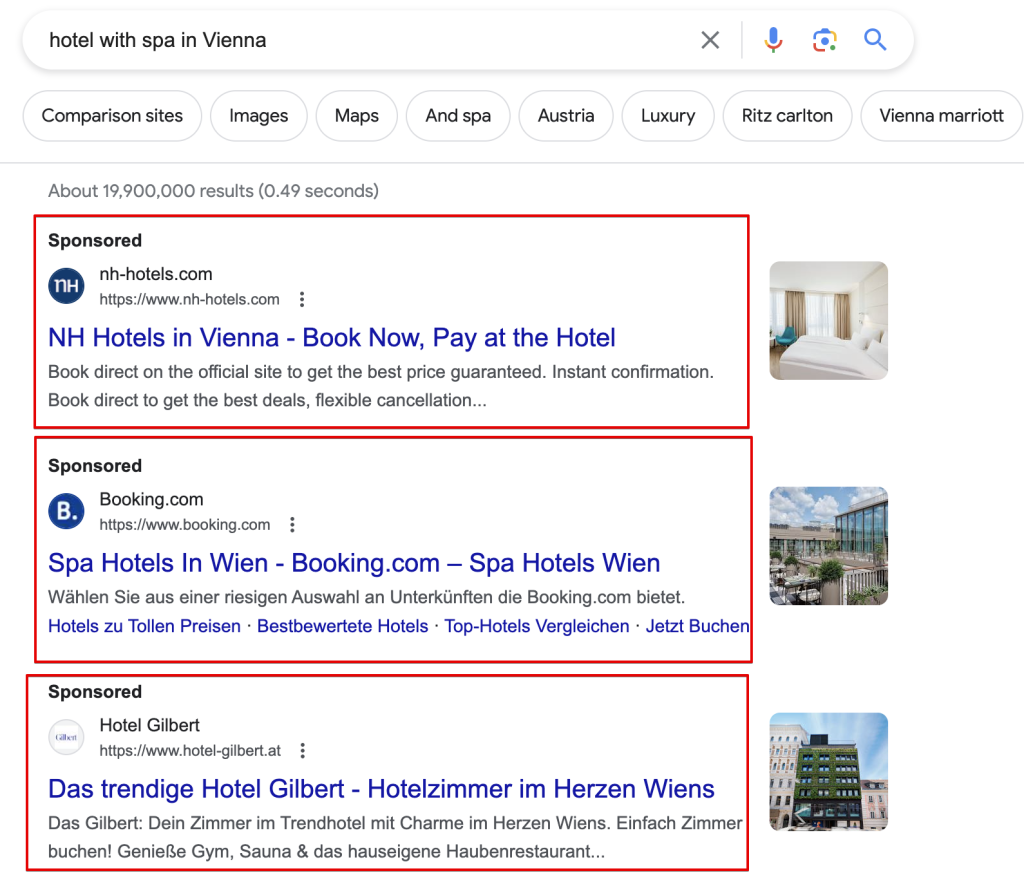
Source: Google
When you have identified the keywords that your target audience uses and created an ad, you have to connect the ad to the page potential guests will land on after clicking.
This page should be your booking page, which will invite leads to book rooms and convert them into paying guests.
That’s where our booking engine, WebBookingPro, can help you.
Since our tool can be easily integrated into your website, your guests will be able to book a room directly on your website through an inviting call to action like the Reserve button below.
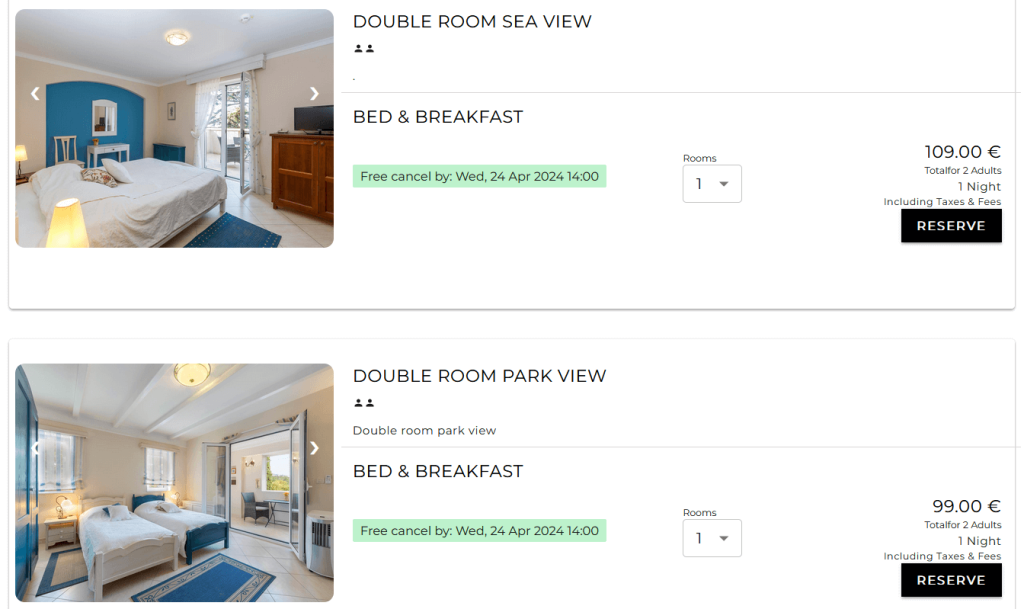
Source: Abalone Hotel
This holds significant importance in terms of security—after all, no one wants to be redirected to third-party websites, especially when providing payment details.
Additionally, when customers are already on the booking page and encounter enticing offers, they are more likely to book a room promptly.
From your perspective, direct bookings are more profitable as they help you avoid any extra fees that online travel agencies charge if you do booking through them.
In summary, in a landscape where every click counts, PPC is a great lead-generation tool for your hotel, regardless of its size. It increases your hotel’s visibility and brings you more direct bookings.
SEO
Search engine optimization (SEO) is another powerful method for maximizing lead generation in the hospitality industry.
In essence, it involves being discovered on search engines through certain keywords that are related to your website content.
However, unlike paid advertising, once you achieve good rankings on search engines, SEO can generate organic traffic perpetually, while PPC functions only until you pour money into it.
Let’s explain SEO for hotels in more depth.
Optimizing certain elements of your website such as titles, headings, meta descriptions, and even your blog content, can improve your search engine rankings. That is called on-page SEO.
For example, if you write a blog with advice for hotel guests or tricks for better traveling, targeting a specific keyword that potential travelers are searching for, you can rank that page on Google.
For example, these are organic, non-sponsored results for the keyword “boutique hotel bucuresti”.
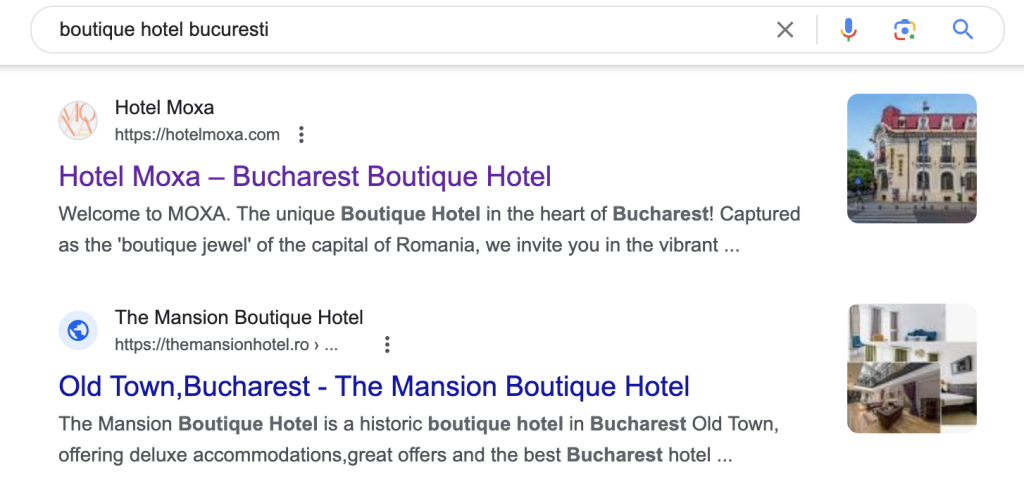
Source: Google
If you provide engaging and informative content, which is also SEO optimized, you not only gain credibility but also secure a higher rank on search engines.
For hotels, that is particularly advantageous, considering that not every prospective guest wants to click on a sponsored ad.
Also, not every hotel can afford to compete for PPC keywords, especially given their average cost.
Did you know that you’ll pay $1.53 per click in the travel and hospitality sector?
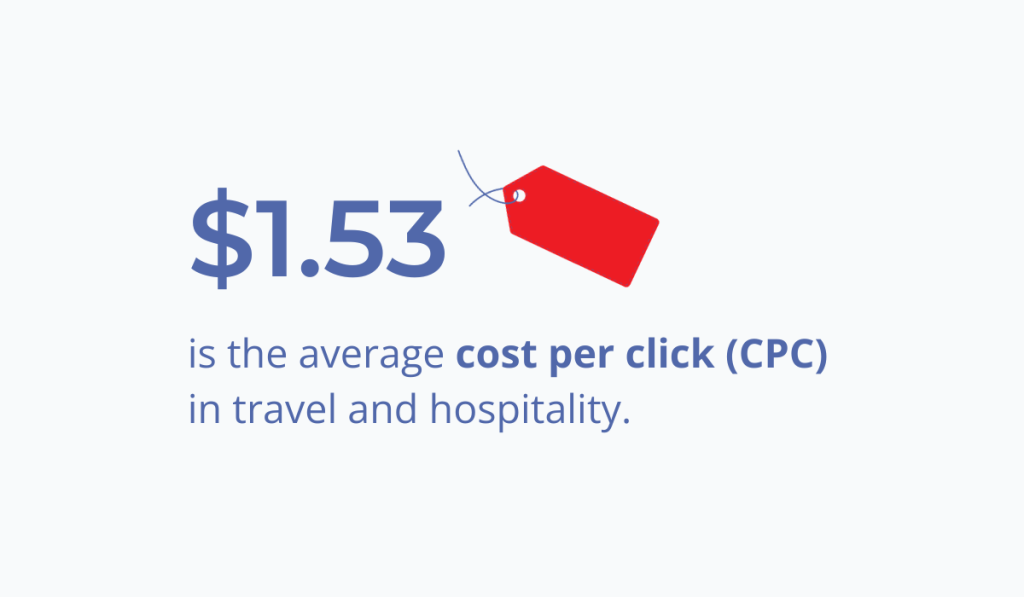
Illustration: WebBookingPro / Data: Word Stream
SEO offers a more cost-effective alternative, although it demands some time and effort.
In addition to on-page SEO, which involves optimizing a website and its content, local SEO is also crucial if you want your hotel to appear in local searches.
It includes creating a Google My Business account, providing accurate business information, and encouraging positive reviews.
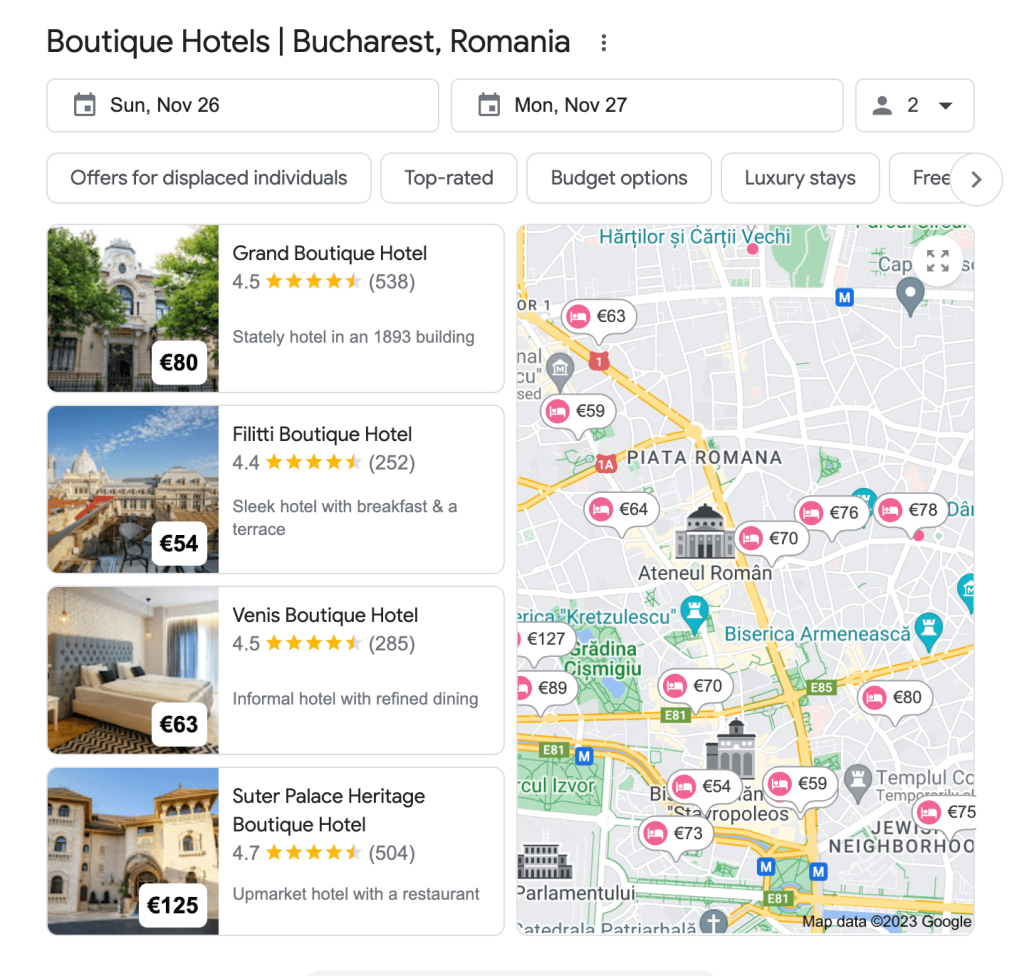
Source: Google
Essentially, when users search for hotels in a specific location, search engines evaluate your hotel’s relevance, influencing its ranking.
While implementing SEO strategies may require extensive work, the investment is definitively worthwhile.
What’s more, you can collaborate with SEO experts for your niche to fully reap the benefits of search engine optimization.
After all, when Google recognizes that you are trustworthy and helpful to users, you will get more website visits, which means a higher opportunity to generate more leads and convert them, too!
Content Marketing
Content marketing is another excellent strategy to draw potential guests to your hotel website and encourage conversions.
This approach involves crafting top-notch, captivating content around topics relevant to your hotel’s target audience.
Content creation and various content formats offer endless possibilities—blogs, videos, images, podcasts, virtual tours—you name it. And they all work towards one objective—building trust in your hotel and increasing conversion rates.
For instance, if sustainability aligns with your hotel’s values, you can follow the example of Altstadt Hotel Vienna, and create content showcasing your commitment to sustainability.
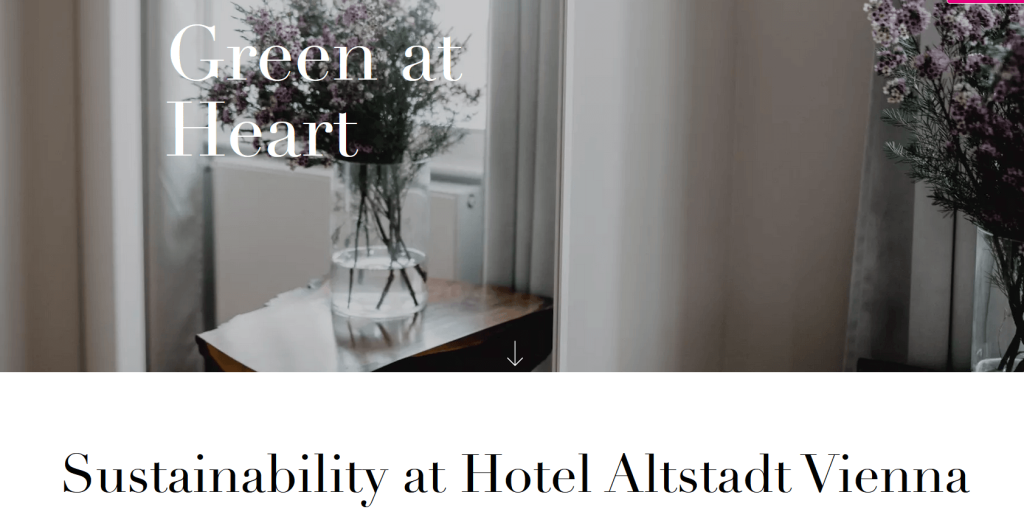
Source: Hotel Altstadt Vienna
Although this hotel writes about other topics as well, such as arts, culture, and sightseeing tips, a big part of its brand identity is sustainability, so they have a lot of content around that topic.
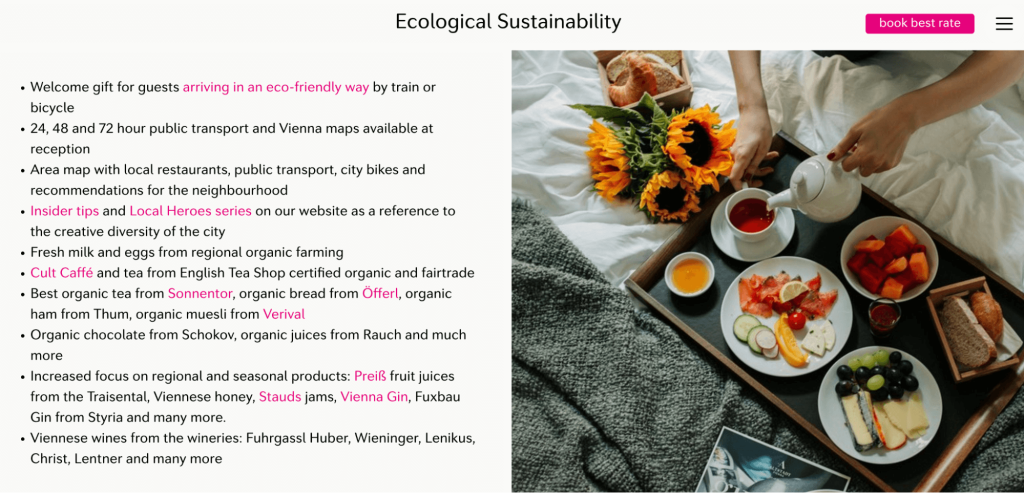
Source: Hotel Altstadt Vienna
Given that they invested a lot in content marketing on this specific topic, it’s not surprising that when a prospective guest searches for “sustainable hotels in Vienna,” this hotel pops up at the top of the search results.
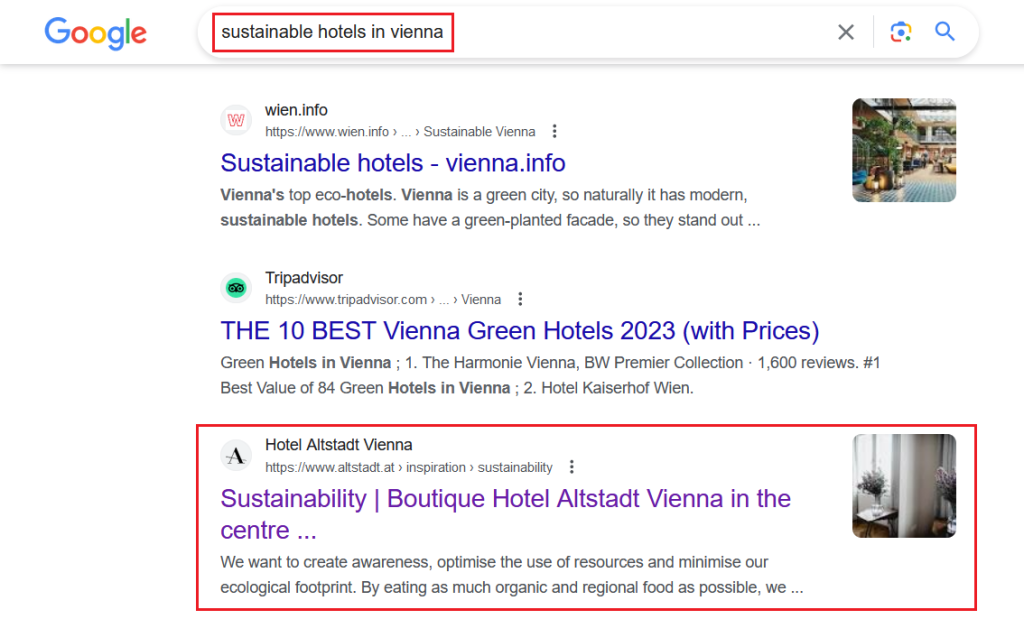
Source: Sustainable hotels in Vienna on Google
Such content resonates with like-minded travelers because it is, above all else, helpful.
Alternatively, if your hotel is pet-friendly, you can focus on content that caters to pet owners. Share information about pet-friendly places nearby, offer travel tips or highlight guest experiences with pets.
The key is to tailor your content to your unique offerings and share it regularly, always keeping it fresh and up-to-date.
And if you also optimize your blog for SEO, as we discussed above, you will increase the chances of your hotel appearing on top of the search results. Content marketing and SEO often go hand in hand.
The possibilities of content marketing for hotels are endless. So it would be a shame not to mention another great example — Marriott Hotels, one of the most recognizable names in the hotel industry, and its innovative content strategy.
They have gone as far as to film a whole movie!
In 2016, this hotel chain filmed the short film “Two Bellmen.” This humorous production, above all customer-centric, showed how committed they are to exceptional guest care.
Source: Two Bellmen on YouTube
Naturally, their prospective guests recognized this, which brought them a significant 65% increase in searches!
When the film (which also has a second part!) came out, executive producer David Beebe noted:
“(The film) propels our strategy of providing entertaining and informative content that adds value and helps build a community of people passionate about travel who ultimately drive commerce for Marriott’s global brands, such as JW Marriott.”
To conclude, good, helpful, high-quality content goes a long way in the hospitality industry.
When you create content that engages your audience, puts their needs in the spotlight, and helps them, people will feel confident that your hotel is the perfect place for their stay.
Social Media Marketing
Social media’s popularity has been on the rise for years, and it’s no surprise that it not only generates but also converts hotel leads.
Moreover, an increasing number of people are using social media as search engines. So, if your social media profiles grab attention, you have a higher chance of converting that audience into your guests.
Of course, you can’t just post random content. Social media marketing demands a good strategy, too.
Let’s explore what you should do to maximize your hotel leads through social media platforms.
The first step is to identify your target guests, which will also influence which platform is most suitable for your social media marketing.
For example, if you are a hostel targeting younger travelers, focus on Instagram, TikTok, or Snapchat, as these are the platforms that such guest groups use the most.
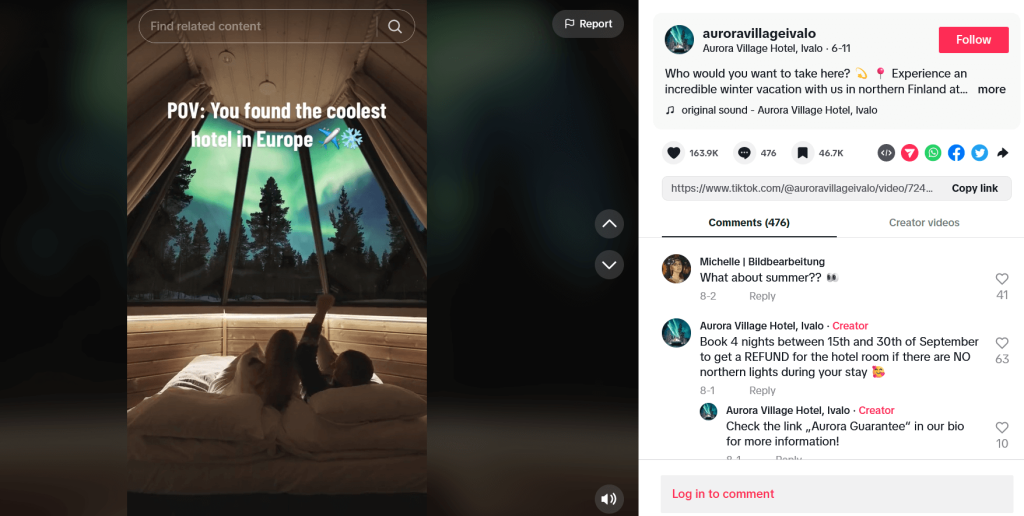
Once you select the right platform, you can start by posting photos and videos showcasing your hotel’s amenities. Then, add relevant hashtags and location tags to enhance your posts’ visibility and engagement.
Aurora Village Hotel from Ivalo, Finland, did this on TikTok, and it brought them 2.5 million views in just one post!
Source: Aurora Village Hotel on TikTok
What’s more, they have highlighted their hotel’s perfect location to see the northern lights—something that definitely makes them stand out.
Another great way to enhance your social media marketing and generate more interest in your hotel is partnering with social media influencers.
The survey by Afterpay showed almost half of Gen Z customers would buy a product or service based on the influencer’s recommendation—so they would book a room based on their advice, too.
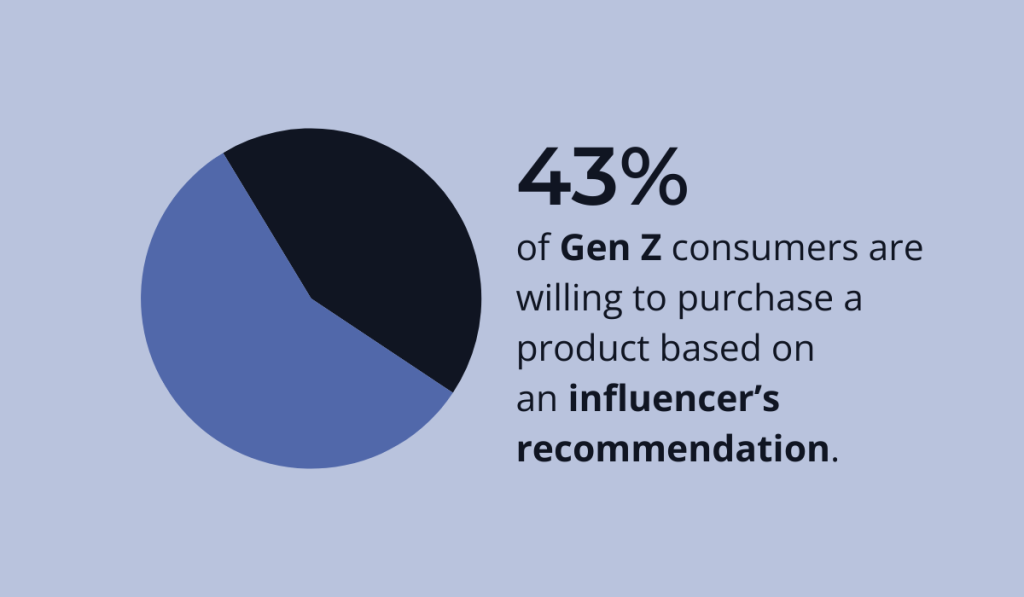
Illustration: WebBookingPro / Data: Afterpay
But what people also love—even more than influencer content—is user-generated content or UGC.
In fact, an online survey by EnTribe from April showed that almost everyone—90% of consumers—prefer to see brand content from actual customers. Moreover, 83% of them would be more inclined to make a purchase or, in the case of hotels, book a room.
Why? Content generated by people with needs like yours builds more trust, and people can relate to it better.
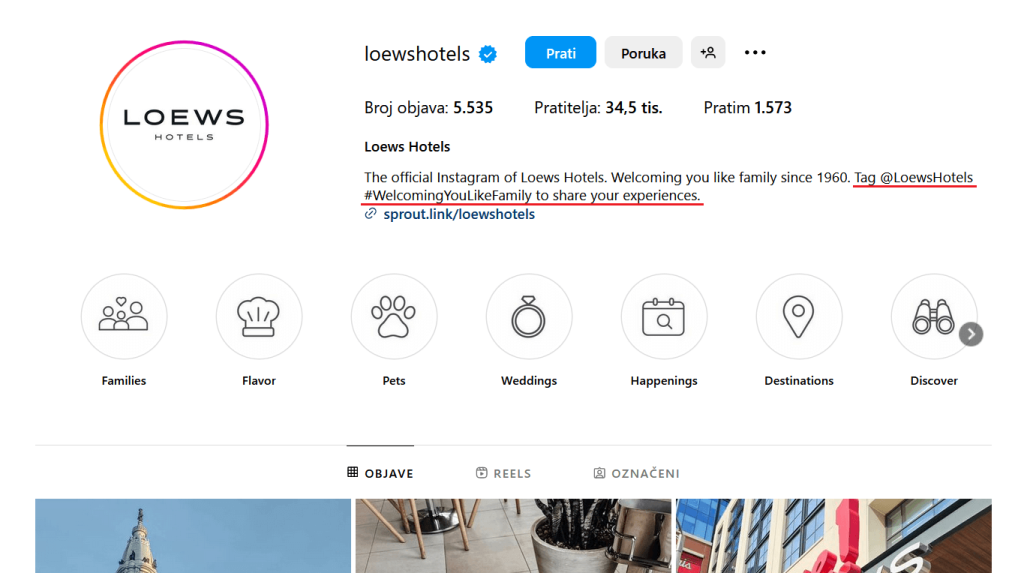
Hotels like Loews and Hyatt use this strategy for their social media marketing.
They invite their guests to share photos and videos of their stay at hotels by tagging them and adding branded hashtags like #InAHyattWorld and #WelcomingYouLikeFamily.
Source: Loews Hotels on Instagram
This raises the awareness of their brands, and people are more interested in what they have to offer, resulting in more clicks. And clicks can soon be converted!
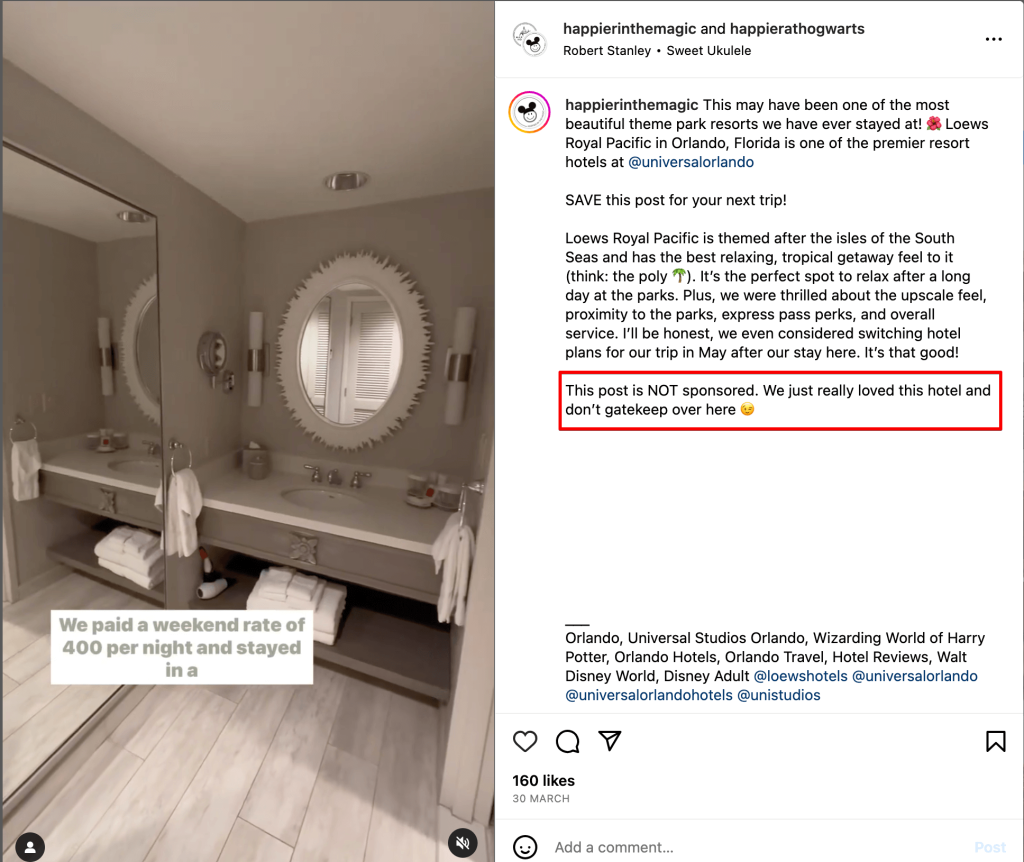
Source: @happierinthemagic on Instagram
In summary, regardless of the social media marketing tactic you choose, the key is to create engaging content that resonates with the target guests and share it on platforms they frequent.
By doing so, you can successfully generate more leads through social media marketing.
Email Marketing
The last but not least strategy for maximizing hotel lead generation is email marketing.
When you get a prospective guest’s email address, you have an open door to build relationships with them and convert them into paying guests.
What’s more, email marketing allows you to maintain relationships with existing customers and turn them into returning guests.
So, the first thing you need for efficient email marketing is getting those emails!
Luckily, getting people to leave you their email addresses is easy if you give them something in return.
We are talking about lead magnets. True to their name, lead magnets act like magnets, enticing individuals to share their email addresses in exchange for something valuable.
That could be PDF travel guides or local language cheat sheets that they could download from your website if they share an email address with you.
Take, for example, Park Grand Paddington Court in London, which takes it a step further by presenting an inviting lead magnet as soon as you open their website.
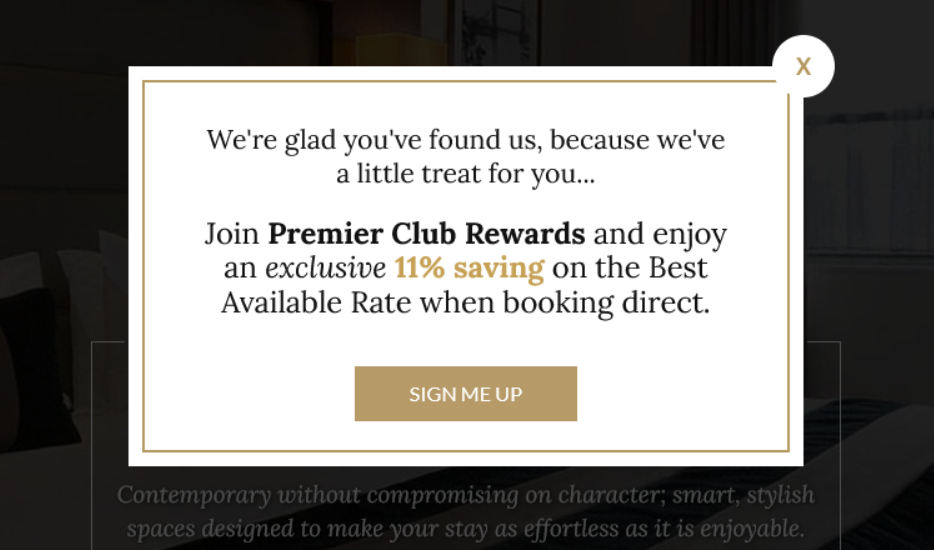
Source: Park Grand Paddington Court
Who wouldn’t be intrigued to hastily write their email address and sign up to receive an exclusive 11% discount on bookings made directly from their hotel’s webpage?
Once you create such attractive lead magnets, email addresses will keep coming. This will give you space to create email campaigns that, if executed well, convert these leads into paying guests.
Email campaigns can, for example, include:
- promoting special offers and seasonal discounts,
- highlighting any upcoming events or activities in and around the hotel,
- sharing authentic customer testimonials,
- informing guests about the hotel’s amenities,
- providing educational content (e.g. mini-courses) on one topic
Segmenting your leads properly will help you determine which campaign is best to use.
For example, for guests who have already stayed at your hotel, you can send emails offering special perks or discounts.
And for those who have never visited your hotel, consider sending more educational content that will excite them about visiting.
In essence, well-crafted, engaging, and attractive email campaigns will increase the likelihood that recipients will not only read your messages but also act on the provided information.
That’s why it would be wise to also add the “Book Now” button to the emails you send out so that your leads can become your guests on the spot.
Conclusion
As you can see, lead generation is not difficult at all—if you use the five ways we discussed today.
In fact, it is precisely these five methods that will maximize the number of your hotel leads and convert them into paying guests.
Whether you opt for PPC or SEO or start creating engaging content to share on your social media, you can’t go wrong. And, of course, don’t overlook the power of alluring lead magnets to collect those email addresses!
So, implement these strategies into your hotel marketing, and you will witness the number of your ideal guests growing steadily day by day!